If on-line assessments are going to change how tests are administered, then is it possible that we may need to change what is being assessed?
Working with a pencil and a paper is a very traditional method of recording and creating in education. How many children have the words to be able to describe a dragon in full flight – but there may well be some children who have the ability to draw the dragon. There could even be some children with the ability to use a paint package on the computer to bring out the essence of an upset dragon in full flight!
One way round the problem of the eleven plus taking place on a specified day and a preset time is that some children may not be feeling well or there could be a problem at home or something that could possibly affect performance in the vitally important examination. The examination authorities may consider an on-line eleven plus solution where the assessment is continuous. The child would sit four or five eleven plus tests which could all add to a cumulative eleven plus score. Of course there would be logistical problems associated with the test – but think how parents would feel as they were offered the results in an open and uncomplicated manner. A traffic light system could be used – Red, Orange and Green. Parents could be offered pretty yet informative graphs.
Parent would naturally fear changing from pen and paper to on-line continuous assessment. We could look back in history. How did the mothers and fathers of children being educated by monks back in the fifteen hundreds feel as their children were taught by books hot from the Gutenburg presses? Before Gutenberg many children were taught from book painstakingly transcribed by monks. There is a long gap and many years between 1436 and 2011 – but we are still using methods that may already be outdated.
We all know we have different vocabularies when we are talking to members of the family, colleagues in business and long lost friends. Our children too have a vocabulary used with teachers at school, with their parents and with friends. The internet and the applications they meet on the net must be offering a vocabulary that is very different from any books provided by loving parents or teachers at school. The eleven plus too offers a new vocabulary – along with pressures of tests, different publishers and some remarkably unimaginative questions.
Parents may be very aware of this as they listen to their child responding to questions. Could my child be actually dumbing down the answers so that I will understand what he or she is trying to say? Take a group of three or four children in the car on a journey to school and you will hear and see a different personality to your child. The repartee may be sharper, the tongue a little more agile and, possibly, less of a defensive tone in the voice. (Peace at last. Mum and Dad are not in my ear all day telling me how important it is to pass the examination! They can’t moan at me when my friends are in the car.)
Is there then a place for assumptions about the eleven plus to be challenged? Do the rather traditional mathematics and verbal reasoning questions actually reflect how children think and react today? Revolution not evolution may be needed!
Showing posts with label Extra Tuition Centre. Show all posts
Showing posts with label Extra Tuition Centre. Show all posts
Saturday, June 18, 2011

Online Assessment and the Eleven Plus
You are cordially invited to a discussion program. We want your views, just before the eleven plus examinations, with a provocative and timely topic.
Is the Eleven Plus a cost or an investment?
We know that the internet and technology is now a large part of our lives. Our eleven plus children can use the internet and digital sources to look at topics, exercises and assessments on-line and in their own homes. Out of interest we have families accessing our tests and exercises in libraries when their network or computer goes down!
We have been using on-line assessments for the past year. There was remarkably little discussion from parents who were used to pen and paper testing from older siblings or discussions with other past parents. Most parents have simply embraced the change – they now feel much closer to the assessment and the results. One major question that still has to be resolved is will pen and paper testing and on-line testing ever be totally equivalent?
A child taught on and through the computer then has to use a pencil to work on multiple choice questions in the examination. Naturally working through a few pen and paper practice tests should help to build confidence and familiarity.
Of course there must be pros and cons of using on-line testing – but there are already schools who use computer technology to select their children. The speed of marking, the ability to analyse and sort data must make life easier for the school. Some children may also find it easier!
The eleven plus is a learning journey. I still have a book called The Essentials of Verbal Reasoning’ by O.B. Gregory 1963 – and some of the types of questions raised in this book are still used to day. Some questions lend themselves to multiple choice answers. What a coup if your child could pass the examination based on 1963 questions and 2011 technology!
One way we could make the eleven plus more interesting for some children is to change the present system of questions to questions where problems have to be solved. We are working with an eleven plus boy at the moment who comes to life when a KS3 5-8 text book is used to present the questions. He only wants to work at Levels 7 and 8! Just in the same way it is sometimes difficult to find learning materials for a ten year old child with learning difficulties, it is also challenging to provide materials for a ten year old who is thinking and acting as a fifteen year old! Questions set in a problem form and delivered digitally may, in time, help to stimulate some children who do not really need the chore of working through endless papers.
There are possibly very few eleven plus children who would find it difficult to work on an on-line exercise whilst simultaneously eating a wholesome snack, drinking, watching a little T.V. and arguing with a sibling. It may even be possible that the only time our candidate is really quiet is when he or she is working through a computer based simulation. Every time we climb into a plane we must worry about the Air Traffic Controller who took six attempts to pass the examination! Is that worse than meeting a driver who had failed the driving test six times? We only, however, are offered one chance with the eleven plus.
Parents, their parents, their parents before them and so on back in recordable history have all used pen and paper to record examination results. It is the safe and well tried option. Are our eleven plus children going into a world where they will meet only safe and well tried options? Our eleven plus children are probably amongst the brightest in the country. In years to come it is likely that remarkably few of them will opt for the safest route – so why not challenge them through the eleven plus?
We hope that we are investing in the future of these bright children. There will, however, naturally be a cost that has to be carried.
Is the Eleven Plus a cost or an investment?
We know that the internet and technology is now a large part of our lives. Our eleven plus children can use the internet and digital sources to look at topics, exercises and assessments on-line and in their own homes. Out of interest we have families accessing our tests and exercises in libraries when their network or computer goes down!
We have been using on-line assessments for the past year. There was remarkably little discussion from parents who were used to pen and paper testing from older siblings or discussions with other past parents. Most parents have simply embraced the change – they now feel much closer to the assessment and the results. One major question that still has to be resolved is will pen and paper testing and on-line testing ever be totally equivalent?
A child taught on and through the computer then has to use a pencil to work on multiple choice questions in the examination. Naturally working through a few pen and paper practice tests should help to build confidence and familiarity.
Of course there must be pros and cons of using on-line testing – but there are already schools who use computer technology to select their children. The speed of marking, the ability to analyse and sort data must make life easier for the school. Some children may also find it easier!
The eleven plus is a learning journey. I still have a book called The Essentials of Verbal Reasoning’ by O.B. Gregory 1963 – and some of the types of questions raised in this book are still used to day. Some questions lend themselves to multiple choice answers. What a coup if your child could pass the examination based on 1963 questions and 2011 technology!
One way we could make the eleven plus more interesting for some children is to change the present system of questions to questions where problems have to be solved. We are working with an eleven plus boy at the moment who comes to life when a KS3 5-8 text book is used to present the questions. He only wants to work at Levels 7 and 8! Just in the same way it is sometimes difficult to find learning materials for a ten year old child with learning difficulties, it is also challenging to provide materials for a ten year old who is thinking and acting as a fifteen year old! Questions set in a problem form and delivered digitally may, in time, help to stimulate some children who do not really need the chore of working through endless papers.
There are possibly very few eleven plus children who would find it difficult to work on an on-line exercise whilst simultaneously eating a wholesome snack, drinking, watching a little T.V. and arguing with a sibling. It may even be possible that the only time our candidate is really quiet is when he or she is working through a computer based simulation. Every time we climb into a plane we must worry about the Air Traffic Controller who took six attempts to pass the examination! Is that worse than meeting a driver who had failed the driving test six times? We only, however, are offered one chance with the eleven plus.
Parents, their parents, their parents before them and so on back in recordable history have all used pen and paper to record examination results. It is the safe and well tried option. Are our eleven plus children going into a world where they will meet only safe and well tried options? Our eleven plus children are probably amongst the brightest in the country. In years to come it is likely that remarkably few of them will opt for the safest route – so why not challenge them through the eleven plus?
We hope that we are investing in the future of these bright children. There will, however, naturally be a cost that has to be carried.
On Line Eleven Plus
Online Assessment
The Massachusetts Institute of Technology is well known throughout the world for the quality and the breadth of their degrees. A glance down their list of online learning material demonstrates just how advanced this sector of the market is in developing universally recognised degree courses. Some students will achieve their degrees without every having to step onto the campus.
There is still face to face teaching with live on line lessons. The video camera allows the students to see the lecturer – and the lecturer can still pick up on individual students. Naturally there is also still a place for one to one seminars. Full access to lecture notes and prescribed books is available through the internet.
Many of us are well used to the breadth and extent of the virtual world. Zones like Face Book, Twitter and the like allow us to communicate and engage in conversations that can range from the intimate to the expansive. This allows students to feel that they are part of the community – and are not divorced from the rest of the university.
The great majority of university students all over the world must hand in their assignments in a type written form. It is to be expected if many more email their work. Can you remember back to when you were a student? You were told that Wednesday 17.00 was the deadline for handing the work in. You ran up the stairs to the lecturer’s room to join five other students trying to push their essays under the door. How were you to prove that you had completed the task by 17.00 and not 17.55? (You suspect that the lecturer was sipping sherry in the common room.) Email is the answer – because your work is date and time stamped. You may miss the camaraderie and wise cracks as you gathered in front of the door – and the speculation about the lecturer’s personal habits - but you may have been able to spend the time better quaffing your own sherry rather than running around with an assignment under your arm.
When the eleven plus was envisaged all those years ogo the architects would not have been able to see a situation where an eleven plus child had access his or her tutor through the internet. Live one to one interaction is still an essential part of learning for many children. A child attending the tutor’s home once a week may have to wait a few days in order to be able to ask a question. A live video hookup with the tutor means the answer can be discussed, mulled over and supplied in seconds.
Of course there will be concerns about the reliability and validity about an online assessment and subsequent lessons. It is possible that many eleven plus parents and children see on-line assessment as no more than completing a multiple choice test – see the mistakes and receiving a result. Is there the ability to have the questions read to their child – because no one will be helping with any questions in the examination. Are the questions bathed in colour with possibly little animations or are the questions simply static without any dynamism.
How do children brought up in a digital age – who can turn a video recorder on and fast forward at three years old, and click on the Cbeebies icon and find the iplayer zone confidently, feel about working on-line?
“Which do you prefer – a mouse or a pencil?”
“Actually I don’t even use a mouse any more – I just tell my computer what to do. Give me pixels any time!”
By the way – will your child opt for an on-line degree in time to come and thus save a lot of money?
The Massachusetts Institute of Technology is well known throughout the world for the quality and the breadth of their degrees. A glance down their list of online learning material demonstrates just how advanced this sector of the market is in developing universally recognised degree courses. Some students will achieve their degrees without every having to step onto the campus.
There is still face to face teaching with live on line lessons. The video camera allows the students to see the lecturer – and the lecturer can still pick up on individual students. Naturally there is also still a place for one to one seminars. Full access to lecture notes and prescribed books is available through the internet.
Many of us are well used to the breadth and extent of the virtual world. Zones like Face Book, Twitter and the like allow us to communicate and engage in conversations that can range from the intimate to the expansive. This allows students to feel that they are part of the community – and are not divorced from the rest of the university.
The great majority of university students all over the world must hand in their assignments in a type written form. It is to be expected if many more email their work. Can you remember back to when you were a student? You were told that Wednesday 17.00 was the deadline for handing the work in. You ran up the stairs to the lecturer’s room to join five other students trying to push their essays under the door. How were you to prove that you had completed the task by 17.00 and not 17.55? (You suspect that the lecturer was sipping sherry in the common room.) Email is the answer – because your work is date and time stamped. You may miss the camaraderie and wise cracks as you gathered in front of the door – and the speculation about the lecturer’s personal habits - but you may have been able to spend the time better quaffing your own sherry rather than running around with an assignment under your arm.
When the eleven plus was envisaged all those years ogo the architects would not have been able to see a situation where an eleven plus child had access his or her tutor through the internet. Live one to one interaction is still an essential part of learning for many children. A child attending the tutor’s home once a week may have to wait a few days in order to be able to ask a question. A live video hookup with the tutor means the answer can be discussed, mulled over and supplied in seconds.
Of course there will be concerns about the reliability and validity about an online assessment and subsequent lessons. It is possible that many eleven plus parents and children see on-line assessment as no more than completing a multiple choice test – see the mistakes and receiving a result. Is there the ability to have the questions read to their child – because no one will be helping with any questions in the examination. Are the questions bathed in colour with possibly little animations or are the questions simply static without any dynamism.
How do children brought up in a digital age – who can turn a video recorder on and fast forward at three years old, and click on the Cbeebies icon and find the iplayer zone confidently, feel about working on-line?
“Which do you prefer – a mouse or a pencil?”
“Actually I don’t even use a mouse any more – I just tell my computer what to do. Give me pixels any time!”
By the way – will your child opt for an on-line degree in time to come and thus save a lot of money?
Tuesday, May 17, 2011
NVR Compass Points Eleven Plus

We know that the new technologies have made the learning revolution in the world of the eleven plus possible. Sadly, however, the new technologies do not automatically guarantee eleven plus results. Most of the new websites and eleven plus offerings are serving to reinforce the old fashioned methods of preparation.
When we think of the eleven plus we often think about information. What does my child need to know to be able to do analogies? What is the best eleven plus course I can follow? Do I need to participate in all the social media websites? What eleven plus information is needed? Is an eleven plus teacher going to be the answer? What kind of lessons and tests off the internet are going to be useful?
It is natural for us to link computers to eleven plus education. Computers and the internet allow teachers, publishers and others to transmit their thoughts, ideas, teaching methods and information packs to the public.
Some children pass their eleven plus with a staple diet of papers. The papers pose question after question. The children work through the papers remorselessly and voraciously. The children and their parents are consumed with paper frenzy and scores. Yet this does work for many children. Good marketing has helped to make working through papers a desirable ambition.
The increasingly effective search engines such as Google, Internet Explorer, Bing, Yahoo and the rest make all of us digitally fluent. If ever a great day arrives, and the decision is made to look into the present structure of the eleven plus, the architects of the `New Eleven Plus Era’ will need to look at internet technology and understand its place in the preparation of children and the role of parents.
There are some eleven plus questions about compass points. Children are asked to turn 90 degrees, and then retreat with 180 degrees. They are then asked which direction they will be facing. The words: “North, South, East and West, where ever you go, home is best” spring to mind. Many children will be able to continue to pass the eleven plus without ever leaving their homes for extra study. The internet enables the classroom to be brought to the home.
Monday, May 16, 2011
NVR Odd One Out Eleven Plus

At this stage of the eleven plus with just a few months to go to the 2011 examinations some parents may be wondering about how well their child will cope in grammar school. The thoughts then may drift languidly to thinking about A Level choices – and then onto university.
A few points may exercise the mind.
Is my child physically and mentally able enough to cope with living on his or her own?
Will my child find it easy to make friends – and will the friends be studious and like minded – or will they drag my child into nefarious activities?
Will the socio-economic background my child comes from mitigate against any social activities or will our lack of millions actually matter?
How well will my child cope with being able to work on his or own without much supervision – or will it come all right on the night? Will he or she take notes? What happens if the contact with the personal tutor is poor or of little impact?
Do I think that my child will come home for holidays or will there be work pursuits, travel opportunities or will there be a desire to study voraciously?
How well will my child fit into the close community of the students’ residence? Will my child share the cooking and cleaning? How well will the washing up be done? Will the bath be cleaned – and by whom? How will my child find time to shop? What happens if there is evidence of political or religious intolerance?
My child has discussed, with me, reasons for attempting the eleven plus examinations. We have looked at local comprehensives and have thought about the impact of independent schools on our finances.
We do want our child to conform and write the eleven plus examination. We just do not want our very precious child to be the `Odd One Out’.
Sunday, May 15, 2011
NVR Codes for the Eleven Plus
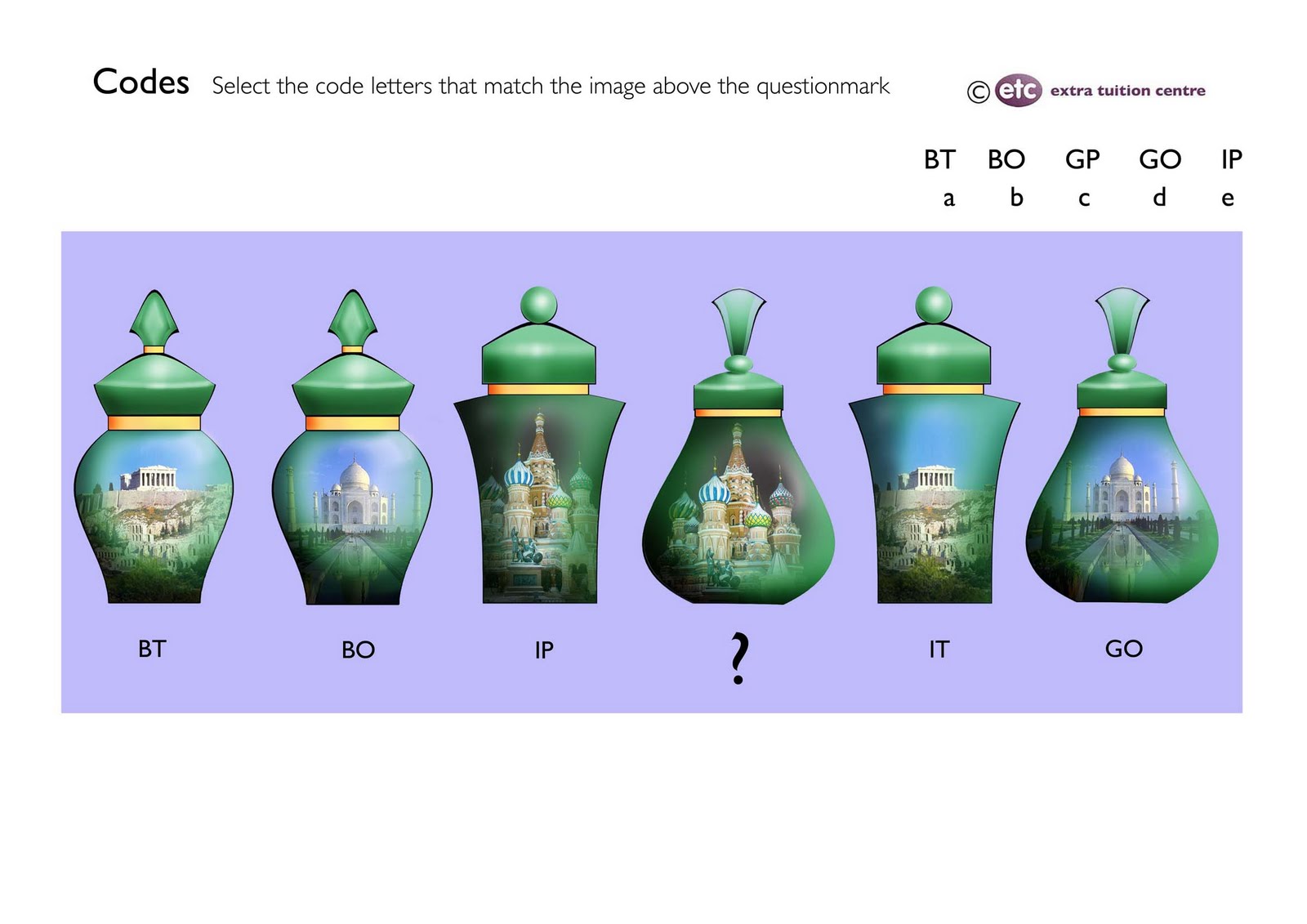
Water diviners used to play a large part in the lives of many. After all the ability to find water is a skill not held by many. It is as skill, however, than can be acquired. Of course there are degrees of attainment – the real water diviner will keep divining while it is likely that a casual learner may lose interest. Like any job – sometimes looking for water can be hard and unrewarding work.
I can remember walking for hours behind a water diviner holding onto a quince divining rod. This is a Y shaped rod made from a single quince twig. Some, less pure diviners, use two strips tied together. In
You hold the spring rod with the tip pointing away from you – and the arms of the Y need to be clasped reasonably firmly – with the palms face up. The rod reacts by moving up and down – and the reaction is the strongest where there is lots of water.
It takes a bit of practice to learn to recognise if the rod is moving because you are walking – or if there really is a reaction to water. As you move over water the twig twitches in your hands. It is an extraordinary sensation as the elements conspire to tell a story.
You need to concentrate on finding water. The mind can not wander. After all finding water is a bit like cracking a code. Follow the rules, follow your heart and persevere. The anthology `Songs of a Sourdough’ by Service has the poem about `The Cremation of Sam McGhee’. Here a trapper promises to cremate a friend as soon as possible after death. We had to learn this poem at school when I was eleven years old. I can easily recall the words: `A promise made is a debt unpaid, and the trail has its own stern code.’
Remind your child that unravelling a code is sometimes a bit of black magic, a bit of luck, a strong desire to find the answer and a realisation that any help in solving a code implies that a debt has been created. “Once you have cracked the code you can move on with the paper.”
Saturday, May 14, 2011
NVR Analogies Eleven Plus

Your child decides that he or she is going to work on an eleven plus paper. You heave a great sigh or relief. This is a momentous occasion. You did not have to any reminding - you did not have to utter the well worn words: “Isn’t time to do your work?”
Your child walked to the table where the eleven plus work had been set out a little earlier. You had dusted the desk and the papers only minutes before the `the decision’. From the doorway you watched him or her pick up a pencil, examine the point, put the pencil down, open paper to the right page – have a last scratch and wriggle and then settle down to work. Your job from now on is easier. Your child has crossed the Rubicon. Common sense says that he or she has willed the start on the paper.
At some stage you surmise that your child’s attention will wander. He or she will need to show great effort to keep concentrating. The words `will power’ spring to mind. When Caesar crossed the Rubicon he declared war and reached a point of no return. Your secret hope changes from: “Will my child pass the eleven plus?” to “At last my child has a chance of passing the eleven plus.”
You and your child have worked through many papers together. You know that the analogies questions are coming up. You know that you have explained that an analogy is to do with similarity on which a comparison may be based. Some analogies can be verbal in nature and some non verbal.
Solving an analogy question involves a complex matrix – as well as sheer ability there are other factors like motivation, interest and anxiety. You can simply hope and pray that when your child sat down to the eleven plus work, without prompting, that another hurdle had been crossed.
Thursday, May 12, 2011
NVR Codes for the Eleven Plus

Do you remember in My Fair Lady when Rex Harrison sang the immortal words:
"Why can't a woman be more like a man?"
At times, when working through eleven plus papers, we may occasionally wish to ring a change of sentiments:
Why can't my child be more like our cat?
Cats are so feline, so calm unless crossed.
Ready to help all our eleven plus woes.
Ready to climb on the paper we are on.
Why can’t a cat do our eleven plus work?
Why is thinking that all our cats do?
Why are cats always right - never wrong?
Thursday, March 10, 2011
Eleven Plus Non Verbal Reasoning Cubes

Some eleven plus children are able to make their own decisions comfortably and positively. Other children seem to prefer some form of committee meeting.
There are committee meetings that are essentially formal in nature. The members of the committee raise issues, speak for and against proposals – but usually have to work within formal rules of engagement. There is often a chairman and a secretary. Their role is to try to help to direct the flow of the meeting. Sometimes there will be committee members who appear to have axes to grind. Some will be ready to jump on any infringement of the rules and regulations, of course it is the chairman’s role to manipulate the proceedings to prevent decisions that are not in `the common interest’ of the chairman!
Show me any mother in the land who has not managed a family meeting. Some will see an eleven plus mother as a prime mover in harmonising proceedings.
When the eleven plus discussion moves to one’s home then it sometimes becomes the role of the hostess to gently become the informal chair person. The other eleven plus mothers may often sit in the same seats – and refer to the same topics. After all many of us are creatures of habit. Bit by bit each of the mothers will work hard to become members of the `inner group’. Too much dissention and the miscreant will not be invited again! Like their children they will need to take it in turns.
There is one emotion that does have the ability to bring a group of mothers together. The same emotion could be present in a family meeting convened to solve an eleven plus problem. The common topic uniting groups of mothers and whole families is one that could be foreign to some unfortunates. The emotion is called `empathy’. Empathy can unite families and less informal groups. There is a topic in non verbal reasoning called cubes. The cubes have to rotate and spin to allow identification of a hitherto hidden side. Rotating and translating a cube is not a skill most of us have to use on a daily basis. When cubes questions have to be solved then family and friends have to unite. We need to feel sorry for those who can not see the solution. We need to be aware of a common urgency.
The cubes chair person will emerge. (Sometimes this could be the person who owns the answer book!)
The cubes secretary will take his or her natural place.
The recipient of the cubes largess will no doubt say: “Thanks, mum, can I have a pan cake now?”
On some occasions it may not be prudent to record the mother’s response!
Friday, February 11, 2011
Nursery Schools and the Eleven Plus
The 1926 Hadlow Report on the Education of the Adolescent was concerned with the urgent need to make better provision for the education of boys and girls after the age of eleven. A school leaving age of fifteen was recommended. The Spens Report of 1938, which looked at Technical Education and Grammar Schools, suggested a school leaving age of 16.
The Next Step was the 1927 Report trying to raise awareness of the needs of the pre school child. In those days there appeared to be little willingness to feel that the needs of children under the age of five were important.
The Next Step felt that the educational system should look beyond the physical welfare of children. It must be recalled that some areas in England were, in the late 1920s, veritable slums. There were many people, with a social conscience, who felt that the price of civilisation must encompass the education and development of young children.
To achieve changes in the nursery school The Next Step wanted the Education Act of 1921 amended to make it compulsorily for Local Authorities to provide nursery schools. It was also mooted that nursery schools should be removed from the category of special school. A further big change was suggested in that nursery schools must provide some form of outside play areas. Teacher had to be trained and medical inspections carried out.
Naturally there was a cost to the provision of nursery education, Cost has always been a large priority in education. Today there is talk of Free Schools and cut backs to the Building Schools for Education program. The cost of a nursery school for forty five children was: Land £1000, buildings £5500 and furniture £300.
The average cost of school day was 3d per head. Parents were expected to pay 2d towards the cost.
A good number of parents are prepared today to pay for the education of their children towards the eleven plus. The cost of tutors, books and assessments is not cheap. It would also be very interesting today to find out how many children contemplating the eleven plus who did not attend a well regulated and properly constituted nursery school.
The Next Step was the 1927 Report trying to raise awareness of the needs of the pre school child. In those days there appeared to be little willingness to feel that the needs of children under the age of five were important.
The Next Step felt that the educational system should look beyond the physical welfare of children. It must be recalled that some areas in England were, in the late 1920s, veritable slums. There were many people, with a social conscience, who felt that the price of civilisation must encompass the education and development of young children.
To achieve changes in the nursery school The Next Step wanted the Education Act of 1921 amended to make it compulsorily for Local Authorities to provide nursery schools. It was also mooted that nursery schools should be removed from the category of special school. A further big change was suggested in that nursery schools must provide some form of outside play areas. Teacher had to be trained and medical inspections carried out.
Naturally there was a cost to the provision of nursery education, Cost has always been a large priority in education. Today there is talk of Free Schools and cut backs to the Building Schools for Education program. The cost of a nursery school for forty five children was: Land £1000, buildings £5500 and furniture £300.
The average cost of school day was 3d per head. Parents were expected to pay 2d towards the cost.
A good number of parents are prepared today to pay for the education of their children towards the eleven plus. The cost of tutors, books and assessments is not cheap. It would also be very interesting today to find out how many children contemplating the eleven plus who did not attend a well regulated and properly constituted nursery school.
Wednesday, February 09, 2011
Eleven Plus Analysis
There is a select group of people who needed to be revered and held with considerable esteem. These are the architects of the `eighty twenty’ rule. There is not an eleven plus mother in the land who does not subscribe to the rule. The proportions may change but the end result is the same.
The 80-20 rule is simple. Twenty percent of the time is spent on analysis and eighty percent in implementation. What the rule does not recognise is that after implementation considerable resources within the family have to be allocated to maintenance and further development. As any mother dealing with the eleven plus will know – much time also needs to be spent determining whether the original analysis was incomplete or even possibly faulty.
The little explanation may help. It is Sunday evening. The family are relaxed and replete from a pleasurable day where togetherness was the keystone of all activities. There have been no arguments, upset discussions or even one little mini tantrum. This draws a picture of a complete family. A fundamental decision is, however, about to be made. The implications are far reaching.
“We are here this evening to talk about the eleven plus.”
“Listen to your mother. This is important.”
“We are going to discuss the eleven plus. Your school marks are good, the grammar school is close by, your father and I would like you to go to grammar, and your teacher at school has indicated that you have a reasonable chance.”
“I am so pleased. My friends all want to go to grammar. What can I do to help?”
“The eleven plus is a complex affair. We need to break it down into component parts. We need to look at all the parts and then reconstitute them into an effective eleven plus plan.”
“You know children with your mother master minding the project she will be approaching the eleven plus as an art not a science. We have never done this before and will probably make some mistakes along the way. All we can do is the best we can. Your mother has never let us down so far.” (Here Dad pauses as he remembers the second bottle of white wine that was enjoyed in the Maldives.)
“The first thing we have to do is to gather information. Then we need to allocate jobs and responsibilities. We will need to pull together as a family.”
“Look Mum, of course I will do my best. I know I have to change. I will only play on my XBox three times a week. I will read improving books every day. I will stop arguing until after the examination. I promise to keep my bedroom tidy. Mother and father – I pledge that I will watch less T.V. and not hit my brother as often.”
“Thank you for your offer. You don’t need to make all those changes. Remember your grandmother? She used to say. `Moderation. Moderation in everything.’ We will all try to follow the eighty twenty rule. We will try to analyse all potential problems and then we will only implement changes after reflection and full discussion. This is a new era for all of us. As a family we can and must pull together.”
“Can I go now?”
“Can I go now?”
“Can I go now?”
Mother is left sitting at the table – happy but anxious. How will she keep her little brood on track? Will it all work out? What lies ahead?
“Can I go now?”
The 80-20 rule is simple. Twenty percent of the time is spent on analysis and eighty percent in implementation. What the rule does not recognise is that after implementation considerable resources within the family have to be allocated to maintenance and further development. As any mother dealing with the eleven plus will know – much time also needs to be spent determining whether the original analysis was incomplete or even possibly faulty.
The little explanation may help. It is Sunday evening. The family are relaxed and replete from a pleasurable day where togetherness was the keystone of all activities. There have been no arguments, upset discussions or even one little mini tantrum. This draws a picture of a complete family. A fundamental decision is, however, about to be made. The implications are far reaching.
“We are here this evening to talk about the eleven plus.”
“Listen to your mother. This is important.”
“We are going to discuss the eleven plus. Your school marks are good, the grammar school is close by, your father and I would like you to go to grammar, and your teacher at school has indicated that you have a reasonable chance.”
“I am so pleased. My friends all want to go to grammar. What can I do to help?”
“The eleven plus is a complex affair. We need to break it down into component parts. We need to look at all the parts and then reconstitute them into an effective eleven plus plan.”
“You know children with your mother master minding the project she will be approaching the eleven plus as an art not a science. We have never done this before and will probably make some mistakes along the way. All we can do is the best we can. Your mother has never let us down so far.” (Here Dad pauses as he remembers the second bottle of white wine that was enjoyed in the Maldives.)
“The first thing we have to do is to gather information. Then we need to allocate jobs and responsibilities. We will need to pull together as a family.”
“Look Mum, of course I will do my best. I know I have to change. I will only play on my XBox three times a week. I will read improving books every day. I will stop arguing until after the examination. I promise to keep my bedroom tidy. Mother and father – I pledge that I will watch less T.V. and not hit my brother as often.”
“Thank you for your offer. You don’t need to make all those changes. Remember your grandmother? She used to say. `Moderation. Moderation in everything.’ We will all try to follow the eighty twenty rule. We will try to analyse all potential problems and then we will only implement changes after reflection and full discussion. This is a new era for all of us. As a family we can and must pull together.”
“Can I go now?”
“Can I go now?”
“Can I go now?”
Mother is left sitting at the table – happy but anxious. How will she keep her little brood on track? Will it all work out? What lies ahead?
“Can I go now?”
Monday, January 24, 2011
Eleven Plus Compassion.
We once had a very bright girl who attended lessons. Her mother was invariably cheerful and upbeat and very positive with her daughter. The daughter achieved all but perfect marks on two papers – but failed one, inexplicably, by one mark.
Mum did not want to appeal. “If she had been meant to pass she would have passed. I am quite happy with the local school.”
Her head teacher said that would support an appeal. I offered to attend an appeal. Her dad said he wanted his daughter to go to grammar. The girl said little. Mum did not want to change her mind. “What will be, will be.”
Both parents were professionals within different fields.
The girl was quiet, modest and very able. She was not one to laugh and joke – she simply wanted to do her work to the best of her ability. She certainly had the necessary tools to be able to argue with her mother about going to a grammar school – but chose to adopt her mother’s advice. If the girl had had a different personality would she have pressed for a place?
We know that a person’s personality alters as he or she grow older. Certain traits must become ingrained while others give way to new ones. The shock of not passing the eleven plus may have helped the girl, mentioned earlier, to almost freeze her thoughts – and listen without question to her mother’s arguments.
Personality is studied through interviews, questionnaires, projective tests and direct observation of behaviour. There will always be some degree of scepticism about the assumptions that the tests are based on. Who needed the personality assessment?
The bright, articulate, well educated and down to earth mother?
The able, hardworking and `super’ little girl?
The human in the local authority who did not pick up the phone - when he or she looked at the wonderful marks on two of the tests – and the strangely out of line mark on the third test?
Should compassion play a part in the eleven plus?
Mum did not want to appeal. “If she had been meant to pass she would have passed. I am quite happy with the local school.”
Her head teacher said that would support an appeal. I offered to attend an appeal. Her dad said he wanted his daughter to go to grammar. The girl said little. Mum did not want to change her mind. “What will be, will be.”
Both parents were professionals within different fields.
The girl was quiet, modest and very able. She was not one to laugh and joke – she simply wanted to do her work to the best of her ability. She certainly had the necessary tools to be able to argue with her mother about going to a grammar school – but chose to adopt her mother’s advice. If the girl had had a different personality would she have pressed for a place?
We know that a person’s personality alters as he or she grow older. Certain traits must become ingrained while others give way to new ones. The shock of not passing the eleven plus may have helped the girl, mentioned earlier, to almost freeze her thoughts – and listen without question to her mother’s arguments.
Personality is studied through interviews, questionnaires, projective tests and direct observation of behaviour. There will always be some degree of scepticism about the assumptions that the tests are based on. Who needed the personality assessment?
The bright, articulate, well educated and down to earth mother?
The able, hardworking and `super’ little girl?
The human in the local authority who did not pick up the phone - when he or she looked at the wonderful marks on two of the tests – and the strangely out of line mark on the third test?
Should compassion play a part in the eleven plus?
Sunday, January 02, 2011
The Authority of the Eleven PLus
The Year 2011 looks as if it has the potential to become a time of great educational change. For years educationalists have tried to make education `child centred’ rather than `teacher centred’ yet the eleven plus seems to continue to trumpet the need for it to be `examination centred’. It does seem very wrong, at times, that children who do not pass the eleven plus can be written off because some old fashioned view of what constitutes ability and intelligence.
We know from our exploration into online teaching and learning that the introduction of technology has the ability to throw doubt on some aspects of traditional eleven plus teaching. For years some parents have been content with the idea of the eleven plus tutor arriving on a bicycle with a basket of books and papers. In all but a few cases the bicycle has probably given way to a comfy saloon and it is either `your place or mine’.
The advent of the internet has allowed children to be able to complete online tests in mathematics, verbal reasoning, English and non verbal reasoning. Some of the online exercises have cunning and satisfying methods of delivering answers and of marking and scoring the tests.
At times it seems as if it is tremendous pity that the eleven plus is aimed at bright and able children. If only the same technology and attitude to striving for success could be offered to the less able.
The very nature of the present eleven plus requires children to learn facts and methods. There is even one verbal reasoning paper which requires children to learn twenty one different types of verbal reasoning question. For better or for worse this must be the most soul destroying examination for children to prepare for.
“If your child learns these twenty one types of verbal reasoning then he or she will have a better chance of passing the eleven plus.”
How sad. How rooted in the educational ethos of fifty years ago! Clearly these must be many kinds of intellect and abstract reasoning that are not covered by the `rule of the twenty one’. If decisions about a child’s future education are based on a narrow system of informed guesses, and a child’s ability to react in a programmed manner to set questions, then a challenge does need to be mounted.
Parents can’t lead the way. Would anyone in authority have the courage to say: “If you don’t like the idea of the examination, and the manner in which it is conducted, then don’t encourage your child to sit the examination?”
We do need an eleven plus examination to sift out bright children who would benefit from an academic education. Does the present form of the examination direct children towards thinking and behaving in conservative patterns? Is there any transfer of training from being able to solve twenty one types of verbal reasoning question to other types of thinking and reasoning? Has there ever been a will to see if there could be an alternative form of the examination? Does any one `in authority’ want to see if there are answers to at least parts of these questions?
We know from our exploration into online teaching and learning that the introduction of technology has the ability to throw doubt on some aspects of traditional eleven plus teaching. For years some parents have been content with the idea of the eleven plus tutor arriving on a bicycle with a basket of books and papers. In all but a few cases the bicycle has probably given way to a comfy saloon and it is either `your place or mine’.
The advent of the internet has allowed children to be able to complete online tests in mathematics, verbal reasoning, English and non verbal reasoning. Some of the online exercises have cunning and satisfying methods of delivering answers and of marking and scoring the tests.
At times it seems as if it is tremendous pity that the eleven plus is aimed at bright and able children. If only the same technology and attitude to striving for success could be offered to the less able.
The very nature of the present eleven plus requires children to learn facts and methods. There is even one verbal reasoning paper which requires children to learn twenty one different types of verbal reasoning question. For better or for worse this must be the most soul destroying examination for children to prepare for.
“If your child learns these twenty one types of verbal reasoning then he or she will have a better chance of passing the eleven plus.”
How sad. How rooted in the educational ethos of fifty years ago! Clearly these must be many kinds of intellect and abstract reasoning that are not covered by the `rule of the twenty one’. If decisions about a child’s future education are based on a narrow system of informed guesses, and a child’s ability to react in a programmed manner to set questions, then a challenge does need to be mounted.
Parents can’t lead the way. Would anyone in authority have the courage to say: “If you don’t like the idea of the examination, and the manner in which it is conducted, then don’t encourage your child to sit the examination?”
We do need an eleven plus examination to sift out bright children who would benefit from an academic education. Does the present form of the examination direct children towards thinking and behaving in conservative patterns? Is there any transfer of training from being able to solve twenty one types of verbal reasoning question to other types of thinking and reasoning? Has there ever been a will to see if there could be an alternative form of the examination? Does any one `in authority’ want to see if there are answers to at least parts of these questions?
Saturday, January 01, 2011
Eleven Plus Events
1614 Napier invented logarithms. (Etc has online calculators)
1801 Joseph-Marie Jacquard developed an automatic loom controlled by punch cards.
1822 Charles Babbage completed his first model for the difference engine
1936 Alan Turing published the mathematical theory of computing
1951 Launch of Ferranti Mark 1 – the first commercially produced computer
1958 The first minichip
1977 Etc (The Extra Tuition Centre in Zimbabwe) put all pupil’s accounts onto punched cards buying time on a micro computer
1981 IBM launched the IBM PC
1990 Microsoft released Windows 3
1993 Intel launched the Pentium chip
1997 Etc developed ACTION – linking standardised test results to National Curriculum
2009 etcACTION delivers online lessons using Microsoft’s Live Meeting using video and white boards
Good luck to all Eleven Plus children and their parents in 2011.
1801 Joseph-Marie Jacquard developed an automatic loom controlled by punch cards.
1822 Charles Babbage completed his first model for the difference engine
1936 Alan Turing published the mathematical theory of computing
1951 Launch of Ferranti Mark 1 – the first commercially produced computer
1958 The first minichip
1977 Etc (The Extra Tuition Centre in Zimbabwe) put all pupil’s accounts onto punched cards buying time on a micro computer
1981 IBM launched the IBM PC
1990 Microsoft released Windows 3
1993 Intel launched the Pentium chip
1997 Etc developed ACTION – linking standardised test results to National Curriculum
2009 etcACTION delivers online lessons using Microsoft’s Live Meeting using video and white boards
Good luck to all Eleven Plus children and their parents in 2011.
Thursday, December 30, 2010
Information about Online Eleven Plus Lessons
Have you ever wondered what happens in your child’s eleven plus lesson? Would you like to see your child’s response to working with a tutor?
You book the online lesson with the Extra Tuition Centre. Each lesson lasts for an hour. In the lesson you cover the subjects you wish your child to follow. This could be:
Mathematics and verbal reasoning,
Mathematics, along with verbal and non verbal reasoning,
Mathematics, English and verbal reasoning
The combinations of subjects are endless – according to the requirements of the school you are aiming at. There are a multitude of eleven plus solutions.
As well as their own bespoke materials, the Extra Tuition Centre uses the Bond 10 – 11 Nonverbal Reasoning book in some online lessons. All parents have to do is purchase a copy of the book from the Extra Tuition Centre’s own store or from any major bookshop.
Online lessons link the tutor, the child and the parents. As their child sits in the lesson parents can hear what the teacher is saying – and also hear their child’s responses. Parents can also see the teacher’s work – and that of their child on the screen.
You book the online lesson with the Extra Tuition Centre. Each lesson lasts for an hour. In the lesson you cover the subjects you wish your child to follow. This could be:
Mathematics and verbal reasoning,
Mathematics, along with verbal and non verbal reasoning,
Mathematics, English and verbal reasoning
The combinations of subjects are endless – according to the requirements of the school you are aiming at. There are a multitude of eleven plus solutions.
As well as their own bespoke materials, the Extra Tuition Centre uses the Bond 10 – 11 Nonverbal Reasoning book in some online lessons. All parents have to do is purchase a copy of the book from the Extra Tuition Centre’s own store or from any major bookshop.
Online lessons link the tutor, the child and the parents. As their child sits in the lesson parents can hear what the teacher is saying – and also hear their child’s responses. Parents can also see the teacher’s work – and that of their child on the screen.
Tuesday, December 28, 2010
Online Eleven Plus Lessons
Etc’s on line tutoring was developed out of an actual demand from parents. Every week calls and messages come in from parents wanting extra tuition for their children. Our traditional method of teaching found itself unable to supply the demand.
Some years ago we asked two psychologists to look at the outcomes of traditional standardised tests. We wanted the tests to tell us where children were up to – and their possible potential. The psychologists then linked up with our teachers to select exercises from the National Curriculum that would help children to do better at school in their work. As a result of this investment our computer program called ACTION took the results of standardised tests and wrote a prescription or an ACTION PLAN.
Technology has gifted us the means to be able to offer individual and group lessons over the internet. We are able to deliver lessons to children any where in the country.
We use our involvement in Investors in People to help our teachers and their assistants to understand and use our well tried and carefully developed lessons. The results of the lessons are measurable.
Some years ago we asked two psychologists to look at the outcomes of traditional standardised tests. We wanted the tests to tell us where children were up to – and their possible potential. The psychologists then linked up with our teachers to select exercises from the National Curriculum that would help children to do better at school in their work. As a result of this investment our computer program called ACTION took the results of standardised tests and wrote a prescription or an ACTION PLAN.
Technology has gifted us the means to be able to offer individual and group lessons over the internet. We are able to deliver lessons to children any where in the country.
We use our involvement in Investors in People to help our teachers and their assistants to understand and use our well tried and carefully developed lessons. The results of the lessons are measurable.
Tuesday, November 09, 2010
The Content of The Eleven Plus
Why can’t the authors of the `Real Eleven Plus Mathematics Tests’ follow the National Curriculum?
A whole lot of time and effort has gone into the National Curriculum – especially in mathematics. It seems that the authors are mightily pretentious to insist that their syllabus is the only one for an eleven plus child to follow. We have all had to follow the same route so that our children are not disadvantaged.
One amazing advantage would be that teachers in schools would be able to pay a much larger part in the eleven plus process. Imagine giving an inspired school teacher a much greater opportunity to contribute towards the outcome of the eleven plus.
A whole lot of time and effort has gone into the National Curriculum – especially in mathematics. It seems that the authors are mightily pretentious to insist that their syllabus is the only one for an eleven plus child to follow. We have all had to follow the same route so that our children are not disadvantaged.
One amazing advantage would be that teachers in schools would be able to pay a much larger part in the eleven plus process. Imagine giving an inspired school teacher a much greater opportunity to contribute towards the outcome of the eleven plus.
Friday, November 05, 2010
Eleven Plus Preferences
Some parents are sometimes faced with which eleven plus tutor to choose. There could be a list ranging from the highly prized specialist tutor who ALWAYS gets results (but lives a long way away) and a tutor who lives less than a mile away.
Another factor is the `before and after’ effect of tutoring. Does one tutor select only strong candidates and another does not mind as long as the child and the parents are willing to work hard?
There was a research experiment based on two towns in America. They were thirty five miles away from each other on the Hudson River. Both towns had a water supply that was fluoride deficient.
One town had its water supply treated with sodium fluoride.
After ten years it was found that the children who had been brought up on fluoridated water all their lives had a fifty eight percent chance of less tooth decay.
These results appear to be conclusive. Yet there could have been other factors that could be compared like bone structure, vision, hearing and ability.
In eleven plus terms the wonderful tutor who lives far away may be a better choice for a parent to approach. The eleven plus child, however, may prefer to spend an hour a week less in the car. The eleven plus child may prefer to follow a highly structured approach. Some parents may prefer not to be told every week just how good the tutor is and what wonderful results had been obtained in the past. Preferences, however, do not help parents make a scientific judgement.
At some stage, however, some parents may prefer to say: “What ever!” and go with the flow.
Another factor is the `before and after’ effect of tutoring. Does one tutor select only strong candidates and another does not mind as long as the child and the parents are willing to work hard?
There was a research experiment based on two towns in America. They were thirty five miles away from each other on the Hudson River. Both towns had a water supply that was fluoride deficient.
One town had its water supply treated with sodium fluoride.
After ten years it was found that the children who had been brought up on fluoridated water all their lives had a fifty eight percent chance of less tooth decay.
These results appear to be conclusive. Yet there could have been other factors that could be compared like bone structure, vision, hearing and ability.
In eleven plus terms the wonderful tutor who lives far away may be a better choice for a parent to approach. The eleven plus child, however, may prefer to spend an hour a week less in the car. The eleven plus child may prefer to follow a highly structured approach. Some parents may prefer not to be told every week just how good the tutor is and what wonderful results had been obtained in the past. Preferences, however, do not help parents make a scientific judgement.
At some stage, however, some parents may prefer to say: “What ever!” and go with the flow.
Thursday, November 04, 2010
Outstanding Eleven Plus Results
Today offers an opportunity for a celebration.
A girl, who attended lessons with us, had test results that were simply extraordinary!
On the Kent 11+ tests she achieved 140 on each of the three tests – mathematics, verbal reasoning and non verbal reasoning.
The Bexley tests cover mathematics and verbal reasoning. We understand that she only dropped one mark.
What an outstanding girl.
What wonderful parents.
What a good school!
A girl, who attended lessons with us, had test results that were simply extraordinary!
On the Kent 11+ tests she achieved 140 on each of the three tests – mathematics, verbal reasoning and non verbal reasoning.
The Bexley tests cover mathematics and verbal reasoning. We understand that she only dropped one mark.
What an outstanding girl.
What wonderful parents.
What a good school!
Subscribe to:
Posts (Atom)