We listened to a father over the weekend. He told us how his little daughter had read before school and loved doing simple sums. She was able to write her name and could even construct simple sentences.
He was concerned because the school year was coming to an end and his daughter could not read any more and had forgotten how to do simple sums. She could now only write her name if she had it written out before her. Her father pointed out that she was popular with her friends at school and that her teacher liked her very much.
He made the point that he thought that his daughter now felt that it was more important to be quiet and conventional rather than demonstrate originality and creativity.
We have much the same problem with our bright children when they are working towards the eleven plus. We try to encourage lessons that allow a child to work quickly and complete tasks before moving on. With our able children we try to do at lest five different activities in the hour. This allows only about twelve minutes per subject or topic. Even so the content of the eleven plus syllabus is remarkably confining to some able children.
When bright children, who are engaged in preparing for the eleven plus, underachieve it is far too easy to blame the child. Perhaps it is a problem with the actual eleven plus examination.
We have children coming to us for lessons who are going to pass the eleven plus with full marks. These are exceptionally bright and able children. We have tested the children and they have achieved extraordinary scores. They do not need to have lessons. Some children then attend lessons for various reasons. Some parents want their children to attend for a wide range of reasons. We have the responsibility of keeping this bright and able children involved.
As teachers we demand and expect neat and tidy work. After all if a child can finish the work well ahead of time then there must be time for neat writing and careful drawings. So if a child draws fantasy pictures in the margins and creates a world far from the classroom we may feel we have to re-channel his or her energy.
The eleven plus examinations look to the acquisition of facts. The examination does not, however, try to encourage children and teachers to develop the ability to manipulate the facts in original and insightful ways.
So now we need a super 11+ examination. Your child can only enter this examination if he or she has passed the traditional eleven plus examination. (Poor children!)
The new eleven plus examination will need to encourage children to study independently. The children must be exposed to various workplaces so that they can see scientists and geologists at work. They must be given the opportunity to spend time in a factory seeing how goods are produced and cars are made. The children should be able to spend time with creative architects and authors – so that they can see how gifted adults spend their daily lives.
The new eleven plus examination will need to set questions where the ability to think and create is examined. This might save some of our brightest feeling bored and unfulfilled.
Monday, July 02, 2007

Sunday, July 01, 2007
A Happy Eleven Plus Story
Mrs. J. walked up to the stand we were running at the Danson Show in Bexleyheath.
Her son did some eleven plus work with us some years ago.
Mrs. J. thanked us for the work we did with him. He is the final year of his studies and so is very nearly qualified as a Doctor.
We hope he goes on to have a happy and successful career as a Doctor.
Dr. J. must have demonstrated great drive and dedication to reach this point. His ability too must have paid a very big part in the long journey.
His parents too will have offered him so many opportunities. This would include far more than the lessons but also unconditional help and support over the years.
His grandparents may also have been given the chance to make a massive contribution to his education and well being. Their pride and joy will have eased his path on many occasions.
We must look too other relatives. The values of the family will have helped to condition and train him – and help him to understand the importance of a good education.
We know too that on his journey through school he will have met gifted and involved teachers and head teachers.
When he finally arrived at university and started his medical studies his lecturers and medical school must have given him support and encouragement.
The eleven plus just marks a starting point for rest of his education.
Her son did some eleven plus work with us some years ago.
Mrs. J. thanked us for the work we did with him. He is the final year of his studies and so is very nearly qualified as a Doctor.
We hope he goes on to have a happy and successful career as a Doctor.
Dr. J. must have demonstrated great drive and dedication to reach this point. His ability too must have paid a very big part in the long journey.
His parents too will have offered him so many opportunities. This would include far more than the lessons but also unconditional help and support over the years.
His grandparents may also have been given the chance to make a massive contribution to his education and well being. Their pride and joy will have eased his path on many occasions.
We must look too other relatives. The values of the family will have helped to condition and train him – and help him to understand the importance of a good education.
We know too that on his journey through school he will have met gifted and involved teachers and head teachers.
When he finally arrived at university and started his medical studies his lecturers and medical school must have given him support and encouragement.
The eleven plus just marks a starting point for rest of his education.
Saturday, June 30, 2007
Home Safely
Sheena brought us all the gear to blow up balloons today. A box of balloons with an Etc label, a large helium canister and detailed instructions on how to release the helium into the balloon.
It rained today. And it rained. Very few people wandered around the show. This was the Danson Show in Bexleyheath, Kent.
We gave most early balloons to little ones. The small children had them tied to their arms and to their prams. There were lots of smiles and thank yous. Occasionally there was a loud shout and people pointed to the sky. The balloons had floated away. We were revisited on three occasions by families with tearful children who wanted another balloon.
There were big smiles from one mother and her son. She’d popped in to say thank you. Her son you, see was in the top 180 children in Bexley. This authority published the names of the top 180 children. This makes for very proud parents and children. Mum left with a balloon and a hug.
Around 5.30, as the show was starting to settle for the evening, a laughing, smiling group of about nine youngsters arrived at our stand. Two girls, around thirteen, smiled and asked for two balloons. On of the boys tore a balloon from the display on the stand, pulled the valve out, and started sniffing the helium in the balloon.
We asked the children to leave and explained that it was not a good idea to sniff helium under any circumstances. One boy, a good head and shoulders above the other children, said that he wanted a balloon for his little brother. The other children stopped drifting away and came back to listen.
I told him that I did not want to give him a balloon for his brother and that I would prefer if he, and his friends, left. He then told me that I was not listening and that he wanted a balloon for his brother. The other children stopped smiling and laughing and gathered around – and crept closer and closer.
He was then told, in my best teacher’s voice, to leave immediately and that neither he nor his brother was to have a balloon.
The mood had changed in seconds from smiles to attempted intimidation. The big boy, around the thirteen year old mark, did not want to back down in front of his friends. We did not want provide him with any helium.
We all know that sniffing helium makes the voice go funny. It may be that this group of pleasant looking children were after no more than a bit of fun, nevertheless rapid sniffing of helium from a balloon can, in a very few cases, cause problems.
But what was interesting was the way the mood of the group changed from laughter to attempted intimidation in seconds. Their mood changed yet again as I started on the `inhalant drug lecture’. The group dispersed and ran off in high spirits – they lost their scowls and `attitude’ within two strides.
I wrote yesterday about how sorry I felt for the family of the boy who had been stabbed in Beckenham.
Today’s youngsters were no more than a group of high spirited children. In spite of their posturing there was very little real menace. I just hope that they got home safely.
It rained today. And it rained. Very few people wandered around the show. This was the Danson Show in Bexleyheath, Kent.
We gave most early balloons to little ones. The small children had them tied to their arms and to their prams. There were lots of smiles and thank yous. Occasionally there was a loud shout and people pointed to the sky. The balloons had floated away. We were revisited on three occasions by families with tearful children who wanted another balloon.
There were big smiles from one mother and her son. She’d popped in to say thank you. Her son you, see was in the top 180 children in Bexley. This authority published the names of the top 180 children. This makes for very proud parents and children. Mum left with a balloon and a hug.
Around 5.30, as the show was starting to settle for the evening, a laughing, smiling group of about nine youngsters arrived at our stand. Two girls, around thirteen, smiled and asked for two balloons. On of the boys tore a balloon from the display on the stand, pulled the valve out, and started sniffing the helium in the balloon.
We asked the children to leave and explained that it was not a good idea to sniff helium under any circumstances. One boy, a good head and shoulders above the other children, said that he wanted a balloon for his little brother. The other children stopped drifting away and came back to listen.
I told him that I did not want to give him a balloon for his brother and that I would prefer if he, and his friends, left. He then told me that I was not listening and that he wanted a balloon for his brother. The other children stopped smiling and laughing and gathered around – and crept closer and closer.
He was then told, in my best teacher’s voice, to leave immediately and that neither he nor his brother was to have a balloon.
The mood had changed in seconds from smiles to attempted intimidation. The big boy, around the thirteen year old mark, did not want to back down in front of his friends. We did not want provide him with any helium.
We all know that sniffing helium makes the voice go funny. It may be that this group of pleasant looking children were after no more than a bit of fun, nevertheless rapid sniffing of helium from a balloon can, in a very few cases, cause problems.
But what was interesting was the way the mood of the group changed from laughter to attempted intimidation in seconds. Their mood changed yet again as I started on the `inhalant drug lecture’. The group dispersed and ran off in high spirits – they lost their scowls and `attitude’ within two strides.
I wrote yesterday about how sorry I felt for the family of the boy who had been stabbed in Beckenham.
Today’s youngsters were no more than a group of high spirited children. In spite of their posturing there was very little real menace. I just hope that they got home safely.
Friday, June 29, 2007
So Sad.
I drove to our centre in Beckenham from Gravesend this afternoon. I had been aware of the deaths of young people over the past few days – but had no idea where the killings had taken place.
I came around a corner and saw a number of people standing in front of a bank of flowers. I realised at once why the flowers and people were there. To my horror a few yards further on there was another bank of flowers.
Another poor child.
I do not know much about what happened and what triggered the violence but my heart goes out to the youngster involved. How sad.
I feel very sorry for the parents and relatives too. To have a loved one taken away must be devastating.
I also feel for the teachers and head teacher of the school involved.
I mentioned the flowers to one of our pupils. He told me that he was at school with one of the boys. He said that he had heard that the fight was about attending a party. Some boys had been refused admission to a party – and had tried to gatecrash the event.
I just hope all the families of our communities are kept safe from violence of this kind.
I came around a corner and saw a number of people standing in front of a bank of flowers. I realised at once why the flowers and people were there. To my horror a few yards further on there was another bank of flowers.
Another poor child.
I do not know much about what happened and what triggered the violence but my heart goes out to the youngster involved. How sad.
I feel very sorry for the parents and relatives too. To have a loved one taken away must be devastating.
I also feel for the teachers and head teacher of the school involved.
I mentioned the flowers to one of our pupils. He told me that he was at school with one of the boys. He said that he had heard that the fight was about attending a party. Some boys had been refused admission to a party – and had tried to gatecrash the event.
I just hope all the families of our communities are kept safe from violence of this kind.
Thursday, June 28, 2007
Eleven Plus Rumours
The way rumours are sweeping the eleven plus world these days is alarming. We had a number of calls yesterday from parents who wanted to see if we could help their child towards the eleven plus. They had heard about the new program `Eleven Plus Space’.
The European Space Agency, you see, is seeking volunteers for a simulated trip to Mars. The chosen children will be isolated in a large chamber. Naturally beds, desks and other facilities will be provided at great expense. The children just won’t have much room to move around.
The benefits of `Eleven Plus Space’ are numerous. First of all there is no T.V. This means that the children have to either work on their eleven plus papers or they have to read. Naturally the children will be able to broadcast messages to their parents and tutors but they just won’t be able to watch any of their favourite T.V. shows.
The next important element of `Eleven Plus Space’ is that all of the books are uplifting in nature. The books have been specially chosen by a team of eminent eleven plus specialists. Many of the books will have a strong moral message: “Success comes through hard work” will become a mantra for the children during their period if isolation and incarceration.
All food will be carefully selected to try to ensure that the children have the best possible opportunity of living healthily. To reassure the mothers of prospective candidates the children are offered lots of greens and vegetables. The children are only allowed red meat once a week – and even then the potions sizes are carefully controlled.
Sleep is carefully regulated too. Children are not allowed to nap during the day. They have to keep bright and alive until bed time. Researchers have found that taking naps can reduce intelligence.
Naturally every child will have to follow a carefully prepared program of studies while the simulated flight takes place. Every free down load paper, every epaper, every single eleven plus publisher will represented. The one relieving factor for the children is that they will be able to alternate between doing traditional papers and multiple choice papers. This should help the boredom and test fatigue.
At this stage parents must be asking why European Community money is involved. It is simple. A Professor has found that children from selected Independent schools have a better chance of winning places in grammar school. The research also found out that the more parents paid tutors for lessons the better the chance. These two facts were brought before the attention of a commissioner of the European Union who decreed that a pilot study should be set up to investigate the effects of concentrated study on children.
Children from five other European countries will be included in the pilot study to ensure that one nation is not favoured over another. Translators from all over Europe are rubbing their hands at the idea of all those papers being translated.
And now to the entry requirements.
To wine one of the coveted places all children have to do is to complete the following statement:
“I want to pass my Eleven Plus …….. “
Judging is done by a panel drawn from all the represented countries. Late entries are not allowed. Children are only allowed to write three entries – and have to place their entries in order of importance.
Oh, one final requirement. Children will have to prove that they will be able to do complex calculations while they are weightless. Constant trips to amusement parks are both essential and recommended. Parents can apply to the European Community for a `Pre Eleven Plus Space’ grant. Details of this special offer are in all the major supermarkets.
The European Space Agency, you see, is seeking volunteers for a simulated trip to Mars. The chosen children will be isolated in a large chamber. Naturally beds, desks and other facilities will be provided at great expense. The children just won’t have much room to move around.
The benefits of `Eleven Plus Space’ are numerous. First of all there is no T.V. This means that the children have to either work on their eleven plus papers or they have to read. Naturally the children will be able to broadcast messages to their parents and tutors but they just won’t be able to watch any of their favourite T.V. shows.
The next important element of `Eleven Plus Space’ is that all of the books are uplifting in nature. The books have been specially chosen by a team of eminent eleven plus specialists. Many of the books will have a strong moral message: “Success comes through hard work” will become a mantra for the children during their period if isolation and incarceration.
All food will be carefully selected to try to ensure that the children have the best possible opportunity of living healthily. To reassure the mothers of prospective candidates the children are offered lots of greens and vegetables. The children are only allowed red meat once a week – and even then the potions sizes are carefully controlled.
Sleep is carefully regulated too. Children are not allowed to nap during the day. They have to keep bright and alive until bed time. Researchers have found that taking naps can reduce intelligence.
Naturally every child will have to follow a carefully prepared program of studies while the simulated flight takes place. Every free down load paper, every epaper, every single eleven plus publisher will represented. The one relieving factor for the children is that they will be able to alternate between doing traditional papers and multiple choice papers. This should help the boredom and test fatigue.
At this stage parents must be asking why European Community money is involved. It is simple. A Professor has found that children from selected Independent schools have a better chance of winning places in grammar school. The research also found out that the more parents paid tutors for lessons the better the chance. These two facts were brought before the attention of a commissioner of the European Union who decreed that a pilot study should be set up to investigate the effects of concentrated study on children.
Children from five other European countries will be included in the pilot study to ensure that one nation is not favoured over another. Translators from all over Europe are rubbing their hands at the idea of all those papers being translated.
And now to the entry requirements.
To wine one of the coveted places all children have to do is to complete the following statement:
“I want to pass my Eleven Plus …….. “
Judging is done by a panel drawn from all the represented countries. Late entries are not allowed. Children are only allowed to write three entries – and have to place their entries in order of importance.
Oh, one final requirement. Children will have to prove that they will be able to do complex calculations while they are weightless. Constant trips to amusement parks are both essential and recommended. Parents can apply to the European Community for a `Pre Eleven Plus Space’ grant. Details of this special offer are in all the major supermarkets.
Wednesday, June 27, 2007
Eleven Plus Children Fingerprinted!
The need for `end point’ security is growing within the narrow world of the eleven plus. It has become a growing concern to more and more parents that stories about `proxy’ children winning places for less able candidates are true. Well off parents are paying for look alike eleven plus children. The actual transaction is simple.
The `proxy’ child submits a photo and a c.v. to the central website `sickofthis.com’. Parents upload their child’s particulars to the site including a photo and their own child’s c.v.
Key elements on both c.v.’s are SATs results from previous years. A minimum requirement of a `proxy’ child is to have passed Level 2 in Reception, Level 3 in Year 1, Level 4 in Year 2 and Level 5 in Year 3. This will have left the proxy pupil time to do a certified one thousand two hundred and thirty four 11+ papers with an average of over 92%.
The `sickofthis.com’ software looks first of all for gender. It matches girls to girls and boys to boys. The next match is made on size. If a six foot eight `proxy’ candidate wandered into an eleven plus examination then suspicions would be raised. The computer then looks for other physical similarities including colour of eyes.
Once the match has been made all parents have to do is to supply the time and day of the examination. The computer will know what the eleven plus syllabus is and will brief the `proxy’ student. The parent hands over a large amount of money. Job done. No stress. Money back guarantee. Place in a Grammar School a cinch.
Thankfully Local Authorities are aware of this new trend. Eleven plus children in the week before the examination are fitted with a SECURE ID holder on their belts. This uses an electronic token which changes the pin every thirty seconds. Only children wearing the special belt are allowed into the eleven plus examination rooms. (The belts change place on ebay for around three thousand pounds. Look for eleven plus security.)
Authorities have one further use of technology. Naturally they use finger print technology. Every Eleven Plus examination room will have a finger print reader just inside the door. This is an important back up because some children may forget their belts or even send them through the wash.
So if your child arrives at an eleven plus examining centre this year and finger print technology is not in place then make sure you register an official complaint to the `Eleven Plus Ombudsman’.
We heard that good drivers can charge around five hundred pounds to take a driving test. To arrange for a `proxy’ eleven plus child is a lot more than that! You certainly don’t want to miss out!
The `proxy’ child submits a photo and a c.v. to the central website `sickofthis.com’. Parents upload their child’s particulars to the site including a photo and their own child’s c.v.
Key elements on both c.v.’s are SATs results from previous years. A minimum requirement of a `proxy’ child is to have passed Level 2 in Reception, Level 3 in Year 1, Level 4 in Year 2 and Level 5 in Year 3. This will have left the proxy pupil time to do a certified one thousand two hundred and thirty four 11+ papers with an average of over 92%.
The `sickofthis.com’ software looks first of all for gender. It matches girls to girls and boys to boys. The next match is made on size. If a six foot eight `proxy’ candidate wandered into an eleven plus examination then suspicions would be raised. The computer then looks for other physical similarities including colour of eyes.
Once the match has been made all parents have to do is to supply the time and day of the examination. The computer will know what the eleven plus syllabus is and will brief the `proxy’ student. The parent hands over a large amount of money. Job done. No stress. Money back guarantee. Place in a Grammar School a cinch.
Thankfully Local Authorities are aware of this new trend. Eleven plus children in the week before the examination are fitted with a SECURE ID holder on their belts. This uses an electronic token which changes the pin every thirty seconds. Only children wearing the special belt are allowed into the eleven plus examination rooms. (The belts change place on ebay for around three thousand pounds. Look for eleven plus security.)
Authorities have one further use of technology. Naturally they use finger print technology. Every Eleven Plus examination room will have a finger print reader just inside the door. This is an important back up because some children may forget their belts or even send them through the wash.
So if your child arrives at an eleven plus examining centre this year and finger print technology is not in place then make sure you register an official complaint to the `Eleven Plus Ombudsman’.
We heard that good drivers can charge around five hundred pounds to take a driving test. To arrange for a `proxy’ eleven plus child is a lot more than that! You certainly don’t want to miss out!
Tuesday, June 26, 2007
Should we try for the eleven plus?
We are often asked the question: “How ready is my child to pass the eleven plus?”
Well we can draw from far more than test results or the school’s assessment. We can draw on an every day happening in the home.
The mail comes in at breakfast time. The obvious circulars are easy to spot. The recycling bin gets a workout. Bills are naturally scanned very quickly to be dealt with later on as are the mountains of correspondence from the bank and credit card companies. Personal letters, birthday cards could all flow in on a particular day. For one reason or another you have no time to sort off the paper work out as it comes in. You may land up with a conscious decision to leave everything that is not urgent until it suits you – rather than when mail has arrived.
You now come to Sunday afternoon. You have a huge pile – at least six inches high - of unsorted paper work stuck tidily in a drawer.
You hand the job of sorting to your ten year old child and explain that he or she has just twenty minutes to do the job. As well asking for the pile to be sorted you demand that there is system to prioritise the items that you need to act on.
This will give you a picture of how well your child will be able to cope. As the mail is jumbled you will be able to see how you child will cope. Will he or she sort the mail into neat common piles? Will all the bills be placed in one pile? Are any letters sorted into another? Does your child simply throw away unwanted circulars or place them into a pile so that you can go though them to see if anything catches your attention?
Halfway through the exercise start organising tension in the room where all the work is being done. Make sure the dog starts eating the curtains so that you can yell at the dog and inject some noise and disruption. Does your child join in the condemnation of the dog or just keep working steadily?
Ask a favourite aunt or family friend to telephone just after the dog has been ejected and invite your child for trip to the cinema. You child will need to leave the sorting task and prepare to go out. Does your child dump everything and rush off to prepare for a visit or does he or she explain that a visit to the cinema is out because there is work to be done?
When the work has been completed ask for a five point written assessment of the problem of mail. Ask too for verbal feedback on the nature and scope of the problem. In the middle of the feedback remind your child that the cat has not been fed – and that there had been a promise that the cat would be fed every day.
We can see where this is leading. To do well in grammar school you must hope that your child has the ability to follow instructions. You child must be able to cope with conflicting instructions from a variety of sources.
It is essential that noise, confusion and disorder are coped with calmly. There is a lot of homework and extra study coming up at the grammar school. Your child must be able to focus on the task in hand.
Decisions have to make. Your child will at times have to make unpopular choices. Work or play? Study or chill? Some decision you will be able to help your child with. Other decisions will simply have to be made by your child.
The grammar school will expect your child to be able to prioritise assignments. This is all part of growing up.
If you can feel that you and your child can cope with at least some of this mayhem then do not hesitate - just go for it. Go for the eleven plus!
Well we can draw from far more than test results or the school’s assessment. We can draw on an every day happening in the home.
The mail comes in at breakfast time. The obvious circulars are easy to spot. The recycling bin gets a workout. Bills are naturally scanned very quickly to be dealt with later on as are the mountains of correspondence from the bank and credit card companies. Personal letters, birthday cards could all flow in on a particular day. For one reason or another you have no time to sort off the paper work out as it comes in. You may land up with a conscious decision to leave everything that is not urgent until it suits you – rather than when mail has arrived.
You now come to Sunday afternoon. You have a huge pile – at least six inches high - of unsorted paper work stuck tidily in a drawer.
You hand the job of sorting to your ten year old child and explain that he or she has just twenty minutes to do the job. As well asking for the pile to be sorted you demand that there is system to prioritise the items that you need to act on.
This will give you a picture of how well your child will be able to cope. As the mail is jumbled you will be able to see how you child will cope. Will he or she sort the mail into neat common piles? Will all the bills be placed in one pile? Are any letters sorted into another? Does your child simply throw away unwanted circulars or place them into a pile so that you can go though them to see if anything catches your attention?
Halfway through the exercise start organising tension in the room where all the work is being done. Make sure the dog starts eating the curtains so that you can yell at the dog and inject some noise and disruption. Does your child join in the condemnation of the dog or just keep working steadily?
Ask a favourite aunt or family friend to telephone just after the dog has been ejected and invite your child for trip to the cinema. You child will need to leave the sorting task and prepare to go out. Does your child dump everything and rush off to prepare for a visit or does he or she explain that a visit to the cinema is out because there is work to be done?
When the work has been completed ask for a five point written assessment of the problem of mail. Ask too for verbal feedback on the nature and scope of the problem. In the middle of the feedback remind your child that the cat has not been fed – and that there had been a promise that the cat would be fed every day.
We can see where this is leading. To do well in grammar school you must hope that your child has the ability to follow instructions. You child must be able to cope with conflicting instructions from a variety of sources.
It is essential that noise, confusion and disorder are coped with calmly. There is a lot of homework and extra study coming up at the grammar school. Your child must be able to focus on the task in hand.
Decisions have to make. Your child will at times have to make unpopular choices. Work or play? Study or chill? Some decision you will be able to help your child with. Other decisions will simply have to be made by your child.
The grammar school will expect your child to be able to prioritise assignments. This is all part of growing up.
If you can feel that you and your child can cope with at least some of this mayhem then do not hesitate - just go for it. Go for the eleven plus!
Monday, June 25, 2007
Positive Eleven Plus Thoughts
One aim when working with your child towards the eleven plus is to try to help your child to feel better about him or her self. You want your child to have a positive self image and feel as good and as happy as you can. When you tell your child: “Of course you will pass,” you could be putting unnecessary pressure on your child. This extra pressure in turn could turn to stress.
Make sure that you get your proper sleep every night. If you have a heavy workload it will not do your children much good if you are tired and irritable. In the same way try to help your child to have a much regular sleep as possible. Remember that sleep deprivation is used to try to break suspects down – so don’t allow yourself, or your child, to fall victim to lack of sleep.
Another thing is try to have at least some time in the week where neither you nor your child mention the words eleven plus and examination. If your child has a sensible study schedule you will have built breaks into the system. You will also have built time for yourself. We have seen situations where parents put themselves under a lot of pressure and stop thinking about them selves.
If you set out to build an `out of school’ lifestyle for your child around that revolves around work, exercise and hobbies then try to take your own advice. This is not a plea for every aspiring eleven plus mother to take up marathon running, but is a suggestion that you try to build a life for yourself where you do not sacrifice yourself for your children. We met a mum last year who was taking the whole family to Disney Land, in America, for a month. She mapped out eleven plus work for her son to do every day – Jet Lag days included. She took papers, answer books and exercises. Every day before the family went to the park she sat with her son doing papers. A truly inspiring mother. Poor child!
Some parents start putting extra pressure on them selves and their children as the examinations approach. They appear to be demanding extra papers and extra work. We had a mother last year you did a NFER mathematics paper with her son – and the poor boy only reached 58% on the paper. In the very next lesson she wanted us to go over at least twenty topics. The actual examination was still around eight weeks away – and it was his first timed NFER paper – but the mum wanted results – and she wanted them NOW!
For the duration of the eleven plus be very careful with any friends who send out negative vibes. You don’t need negative thoughts in your head that you want transfer to your child. Think about some positive words you could employ.
Use words like: “Let us see what we can do together.”
Try not to use the words: “I told you how to do that last week. How will you every pass your examination if keep making mistakes like that?”
Make sure that you get your proper sleep every night. If you have a heavy workload it will not do your children much good if you are tired and irritable. In the same way try to help your child to have a much regular sleep as possible. Remember that sleep deprivation is used to try to break suspects down – so don’t allow yourself, or your child, to fall victim to lack of sleep.
Another thing is try to have at least some time in the week where neither you nor your child mention the words eleven plus and examination. If your child has a sensible study schedule you will have built breaks into the system. You will also have built time for yourself. We have seen situations where parents put themselves under a lot of pressure and stop thinking about them selves.
If you set out to build an `out of school’ lifestyle for your child around that revolves around work, exercise and hobbies then try to take your own advice. This is not a plea for every aspiring eleven plus mother to take up marathon running, but is a suggestion that you try to build a life for yourself where you do not sacrifice yourself for your children. We met a mum last year who was taking the whole family to Disney Land, in America, for a month. She mapped out eleven plus work for her son to do every day – Jet Lag days included. She took papers, answer books and exercises. Every day before the family went to the park she sat with her son doing papers. A truly inspiring mother. Poor child!
Some parents start putting extra pressure on them selves and their children as the examinations approach. They appear to be demanding extra papers and extra work. We had a mother last year you did a NFER mathematics paper with her son – and the poor boy only reached 58% on the paper. In the very next lesson she wanted us to go over at least twenty topics. The actual examination was still around eight weeks away – and it was his first timed NFER paper – but the mum wanted results – and she wanted them NOW!
For the duration of the eleven plus be very careful with any friends who send out negative vibes. You don’t need negative thoughts in your head that you want transfer to your child. Think about some positive words you could employ.
Use words like: “Let us see what we can do together.”
Try not to use the words: “I told you how to do that last week. How will you every pass your examination if keep making mistakes like that?”
Sunday, June 24, 2007
Eleven Plus Blogs
I should imagine that that some of you have children who are already writing their personal eleven plus blogs. If your child is still thinking about writing a blog then you may care to help with a little background to blogging.
A blog is a website that has software that enables almost anyone to make frequent updates. The content is usually presented in date order.
A key word in blogging is blogapathy – because this is when you, or your child, become apathetic about posting to a blog.
Another important term is blogstipation – because this blog writers bloc. Sometimes it is caused by not being able to find something to talk about – and sometimes blogstipation is caused by too much blogging.
So with this as background we can now start developing our own blog language and vocabulary.
Top of the list must be `blogseleven’. This is an accumulation of bogs about the eleven plus. Some blogseleven will be serious, others will flow from the heart and others will be drawn from the depths of despair.
A `blogverb’ is the ability to think up new ways to test verbal reasoning. This is essential. Imagine another fifty years of measuring ability by virtue of the skill in finding two words that are in the wrong order: “Some pointless reasoning questions seem verbal.”
A `blognon’ is a blog where there are no words. There are just pictures, patterns and lots of shapes to rotate and transform. Some ten years old can cope with a blognon quicker that his or her parents.
Finally we meet the term `blogversation’. This is when parents forget to have any conversation with their eleven plus child other than reminding them about the importance of the eleven plus. “The honour of the family is in your hands.”
If you do `get into your blog’ you are very welcome to link to this site. To have a blog link is one of the most important things that can happen in the life of a blogger. If you want your children to have happy lives try to find them some links.
A blog is a website that has software that enables almost anyone to make frequent updates. The content is usually presented in date order.
A key word in blogging is blogapathy – because this is when you, or your child, become apathetic about posting to a blog.
Another important term is blogstipation – because this blog writers bloc. Sometimes it is caused by not being able to find something to talk about – and sometimes blogstipation is caused by too much blogging.
So with this as background we can now start developing our own blog language and vocabulary.
Top of the list must be `blogseleven’. This is an accumulation of bogs about the eleven plus. Some blogseleven will be serious, others will flow from the heart and others will be drawn from the depths of despair.
A `blogverb’ is the ability to think up new ways to test verbal reasoning. This is essential. Imagine another fifty years of measuring ability by virtue of the skill in finding two words that are in the wrong order: “Some pointless reasoning questions seem verbal.”
A `blognon’ is a blog where there are no words. There are just pictures, patterns and lots of shapes to rotate and transform. Some ten years old can cope with a blognon quicker that his or her parents.
Finally we meet the term `blogversation’. This is when parents forget to have any conversation with their eleven plus child other than reminding them about the importance of the eleven plus. “The honour of the family is in your hands.”
If you do `get into your blog’ you are very welcome to link to this site. To have a blog link is one of the most important things that can happen in the life of a blogger. If you want your children to have happy lives try to find them some links.
Saturday, June 23, 2007
Success for Children
We went to Rochester Castle to day.
I wonder how many of our eleven plus children will have the ability and opportunity to be able to create and build a castle one day?
The whole history of the castle is that of fighting off attackers, being rebuilt and of religion and wars.
Please email me with what jobs you would like your children to do.
shaun@extratuition.com
This could make interesting reading.
I wonder how many of our eleven plus children will have the ability and opportunity to be able to create and build a castle one day?
The whole history of the castle is that of fighting off attackers, being rebuilt and of religion and wars.
Please email me with what jobs you would like your children to do.
shaun@extratuition.com
This could make interesting reading.
Friday, June 22, 2007
The Eleven Plus Entrepreneur
So what are you going to do now? You have identified, yet again, in your own mind that you have an exceptionally bright child. You know that in a few years time your child will be going to university. You know that is going to cost `lots of money’. How are you going to cope?
It is quite simple you are going to work hard to ensure that you turn your child into a budding entrepreneur. You will need a business plan. You will need an idea or a product. You need to raise around £30 000.00, (You may need an inflation blanket – so probably trying to raise £45 000.00 may be more helpful.
The big problem for you and your child is that what ever your product or idea you will need a market. How much will you charge? How many do you need? Will you try to sell a lot very quickly so that you and your child will be able to retire from raising money?
Most of all you need a team.
You need an M.D. with vision and drive -preferably one with a Harvard MBA – but failing that a warm loving person.
You need a Finance Director with links to the city. You may need to raise lots of cash very quickly. Some grandparents, however, are able to act as guarantors for collateral. This keeps it neatly in the family. In any event the Finance Director should help you to build your business plan.
You will need a Production Manager. On some day your production manager will be doing no more than producing meals – but on other days the production manager will play a vital role.
The one person all entrepreneurs are likely to rate very strongly is the cleaning services. This role will involve washing clothes, cleaning floors and dusting. `Cleaning Services’ are expected to act 24 hours a day. (A bit like the staff at a big airport.)
Because your entrepreneur will be under age for driving you must build in a chauffeur. The chauffeur will be expected to work all the hours of the day – from school trips and sporting event to social activities like parties.
So as you work with your child on eleven plus papers at home think of all the different roles you have had to play to be a mum or a dad. Think about what academic success has done for you and your family. Think about the drive and ambition you have had to display to get you and your child to where you are today.
All you can hope is that when you are old and infirm your eleven plus child, now a successful man or a woman, will be able to keep you in some degree of comfort. Pray too that they will not nag you as much as you are nagging your child at the moment.
It is quite simple you are going to work hard to ensure that you turn your child into a budding entrepreneur. You will need a business plan. You will need an idea or a product. You need to raise around £30 000.00, (You may need an inflation blanket – so probably trying to raise £45 000.00 may be more helpful.
The big problem for you and your child is that what ever your product or idea you will need a market. How much will you charge? How many do you need? Will you try to sell a lot very quickly so that you and your child will be able to retire from raising money?
Most of all you need a team.
You need an M.D. with vision and drive -preferably one with a Harvard MBA – but failing that a warm loving person.
You need a Finance Director with links to the city. You may need to raise lots of cash very quickly. Some grandparents, however, are able to act as guarantors for collateral. This keeps it neatly in the family. In any event the Finance Director should help you to build your business plan.
You will need a Production Manager. On some day your production manager will be doing no more than producing meals – but on other days the production manager will play a vital role.
The one person all entrepreneurs are likely to rate very strongly is the cleaning services. This role will involve washing clothes, cleaning floors and dusting. `Cleaning Services’ are expected to act 24 hours a day. (A bit like the staff at a big airport.)
Because your entrepreneur will be under age for driving you must build in a chauffeur. The chauffeur will be expected to work all the hours of the day – from school trips and sporting event to social activities like parties.
So as you work with your child on eleven plus papers at home think of all the different roles you have had to play to be a mum or a dad. Think about what academic success has done for you and your family. Think about the drive and ambition you have had to display to get you and your child to where you are today.
All you can hope is that when you are old and infirm your eleven plus child, now a successful man or a woman, will be able to keep you in some degree of comfort. Pray too that they will not nag you as much as you are nagging your child at the moment.
Thursday, June 21, 2007
Eleven Plus Help - Don't Panic
There are thousands of cookery books. We have hundreds of cookery books. My wife, Susan, enjoys the challenge of cooking sumptuous meals.
We have a copy of the 1942 “Woman’s Home Companion Cook Book.” There are 2600 recipes. We have eaten on some of them. The method that is used is to have a basic recipe and then use your basic knowledge with simple variations. The idea is that if you know and can cook one recipe then you can make a number of easy changes or substitutions.
The book, naturally, goes into service with and without a maid, proper arrangement of silver and centrepieces for Christmas and other occasions. The Food Editor ends her introduction with the words: “Let it be your friend. It will see you through the unending rounds of three meals a day.”
These words must be music to any busy mother’s day. Where to get the car washed. How can you as a mum find time get the children to school, lessons, swimming, dance and friends? Washing machine liquid, bread, mild cheese, cannelloni – the lists are endless. The days are busy.
Compare this with the opening remarks of a book called: Cooking for Blokes (ISBN 0-7515-1563-9) This introduction starts with the words: “The First Rule of this book is don’t panic.”
The introduction goes on to tell us that men do not need to know anything about cooking to be able to use the book. “Millions of people have been doing it for years and most have survived.”
So in these two books we have all the ingredients of the recipe for preparing a child for the eleven plus examinations.
You have 2600 opportunities to help your child – even if it is simple hug.
Once you have some basic knowledge, use it to be able to solve a multitude of variations.
If you do have a maid then use her to help you to prepare.
If you do have to cook three meals a day – day after day – then build in time for yourself.
If you have a partner, then be confident and share the problem.
Remember too that teachers have been preparing millions of children for examinations for hundreds of years. You can ask for help and advice.
We have a copy of the 1942 “Woman’s Home Companion Cook Book.” There are 2600 recipes. We have eaten on some of them. The method that is used is to have a basic recipe and then use your basic knowledge with simple variations. The idea is that if you know and can cook one recipe then you can make a number of easy changes or substitutions.
The book, naturally, goes into service with and without a maid, proper arrangement of silver and centrepieces for Christmas and other occasions. The Food Editor ends her introduction with the words: “Let it be your friend. It will see you through the unending rounds of three meals a day.”
These words must be music to any busy mother’s day. Where to get the car washed. How can you as a mum find time get the children to school, lessons, swimming, dance and friends? Washing machine liquid, bread, mild cheese, cannelloni – the lists are endless. The days are busy.
Compare this with the opening remarks of a book called: Cooking for Blokes (ISBN 0-7515-1563-9) This introduction starts with the words: “The First Rule of this book is don’t panic.”
The introduction goes on to tell us that men do not need to know anything about cooking to be able to use the book. “Millions of people have been doing it for years and most have survived.”
So in these two books we have all the ingredients of the recipe for preparing a child for the eleven plus examinations.
You have 2600 opportunities to help your child – even if it is simple hug.
Once you have some basic knowledge, use it to be able to solve a multitude of variations.
If you do have a maid then use her to help you to prepare.
If you do have to cook three meals a day – day after day – then build in time for yourself.
If you have a partner, then be confident and share the problem.
Remember too that teachers have been preparing millions of children for examinations for hundreds of years. You can ask for help and advice.
Wednesday, June 20, 2007
Eleven Plus Effort
There are two little beaches on either side of the St Andrews Arts Centre on the River Thames in Gravesend.
Even though men and women gave up smoking clay pipes many years ago it is still possible to pick up sections of the stems of the pipes. The tides and the rise and fall of the river – along with the movement between the stones and sand of the little beaches - have rubbed the stems smooth and shiny. We have collected a wide variety of stems over the years – and one day will think of something to do with them.
All those years ago the beach would have been covered with little discarded clay pipe stems – from the tides, passers by and ships going up and down the river.
The building was originally a tavern but then became a school for poor children. I should imagine that facilities were limited and books and paper much in demand. One to one or small group tuition was the preserve of the very rich.
Think of the opportunity available to our eleven plus children today. Our children have access to eleven plus books and papers. The children can ask their teachers at school, pick up the telephone and phone a friend, look answers up on the internet and refer to their parents or tutors.
Our libraries are readily available with knowledgeable and well trained staff to try to help to answer every question.
One hundred and sixty years ago, well before the eleven plus, there will have been able children with a thirst for education. These children will have seen education as a way out of poverty and lack of opportunity.
So the next time you detect an element of dissatisfaction with the `lot of an eleven plus child’ take the opportunity of reminding your child of the effort that bright children one hundred and sixty years ago had to make to learn.
Even though men and women gave up smoking clay pipes many years ago it is still possible to pick up sections of the stems of the pipes. The tides and the rise and fall of the river – along with the movement between the stones and sand of the little beaches - have rubbed the stems smooth and shiny. We have collected a wide variety of stems over the years – and one day will think of something to do with them.
All those years ago the beach would have been covered with little discarded clay pipe stems – from the tides, passers by and ships going up and down the river.
The building was originally a tavern but then became a school for poor children. I should imagine that facilities were limited and books and paper much in demand. One to one or small group tuition was the preserve of the very rich.
Think of the opportunity available to our eleven plus children today. Our children have access to eleven plus books and papers. The children can ask their teachers at school, pick up the telephone and phone a friend, look answers up on the internet and refer to their parents or tutors.
Our libraries are readily available with knowledgeable and well trained staff to try to help to answer every question.
One hundred and sixty years ago, well before the eleven plus, there will have been able children with a thirst for education. These children will have seen education as a way out of poverty and lack of opportunity.
So the next time you detect an element of dissatisfaction with the `lot of an eleven plus child’ take the opportunity of reminding your child of the effort that bright children one hundred and sixty years ago had to make to learn.
Tuesday, June 19, 2007
11 Plus Needs
There is a small group of men and women at this very moment who are feeling very smug. They are the chief executives of the toy manufacturers who have just set the Christmas production targets. They are feeling happy and secure because they hope that the marketing and promotion elements will have created such a demand for their products that they will be able to reach all sales targets.
We know that there are a select few `must have’ Christmas presents. We know that the factories will not produce enough to be able to satisfy the demand. We know that the toy buyers will not have placed enough orders. We know that warehouses will not be stocked with sufficient toys to be able to satisfy the needs of all the children.
Parents can not always be quite sure what makes a one toy into a dead cert for a top Christmas ratings. We know the parents who buy toys in the January sales for next Christmas are likely to be able to disappoint their children in the most spectacular fashion. Telephone and DVD manufacturers have, however, had it easy for past year as they have appeared on the Christmas wish list of every ten year old.
Revision for examinations works much the same way. We have no way of knowing what will be on the pages of the final eleven plus examinations. We can have practised elements of the examination through the medium of different exercises taken from different sources. We know that working in short bursts is often less boring than struggling with eleven plus papers. We also know that our children must do full papers in moderation as the examination approaches. “You can not pass a marathon examination by practising in sprints. You have to put the miles in.”
So how are we going to ensure that we have guided our children to do just the right amount of work?
1. Work backwards from the examination. Work out when you are going to do the full papers in the build up to the examination. We heard of girl who does a full verbal reasoning paper and a full non verbal reasoning paper every night. I wonder if at some stage she will feel some element of test fatigue.
2. Try to build in a little rest before the examination. Perhaps a weekend away? If you can not take the children you could always rationalise a break for yourself!
3. Change the type of papers you are working on. If you know that your child is going to be writing a multiple choice NFER test then try a complete change of paper to relieve potential boredom and stress.
4. Involve the family in mind games. This is not the mind games directed towards a suspect but the mind games that would encourage your child to show animation and interest. Remember that being `cool’ is vital to any self respecting ten year old. Try to find a series of stimulating and interesting games directed towards solving problems.
5. Continue with exercises on timing. Encourage the wearing and the use of a watch. As Lewis Hamilton, the rising Formula One star, prepares for his appearance on the rostrum after gaining more Formula One points he is shown strapping on his watch. We presume he is paid to do that – so negotiate some form of inducement with your child.
So as you prepare for this Christmas put yourself in the shoes of a toy buyer. Create a demand for work. Do not allow your child to do too much work. Allow for production breaks over key periods. Reward yourself excessively if you meet your targets.
We know that there are a select few `must have’ Christmas presents. We know that the factories will not produce enough to be able to satisfy the demand. We know that the toy buyers will not have placed enough orders. We know that warehouses will not be stocked with sufficient toys to be able to satisfy the needs of all the children.
Parents can not always be quite sure what makes a one toy into a dead cert for a top Christmas ratings. We know the parents who buy toys in the January sales for next Christmas are likely to be able to disappoint their children in the most spectacular fashion. Telephone and DVD manufacturers have, however, had it easy for past year as they have appeared on the Christmas wish list of every ten year old.
Revision for examinations works much the same way. We have no way of knowing what will be on the pages of the final eleven plus examinations. We can have practised elements of the examination through the medium of different exercises taken from different sources. We know that working in short bursts is often less boring than struggling with eleven plus papers. We also know that our children must do full papers in moderation as the examination approaches. “You can not pass a marathon examination by practising in sprints. You have to put the miles in.”
So how are we going to ensure that we have guided our children to do just the right amount of work?
1. Work backwards from the examination. Work out when you are going to do the full papers in the build up to the examination. We heard of girl who does a full verbal reasoning paper and a full non verbal reasoning paper every night. I wonder if at some stage she will feel some element of test fatigue.
2. Try to build in a little rest before the examination. Perhaps a weekend away? If you can not take the children you could always rationalise a break for yourself!
3. Change the type of papers you are working on. If you know that your child is going to be writing a multiple choice NFER test then try a complete change of paper to relieve potential boredom and stress.
4. Involve the family in mind games. This is not the mind games directed towards a suspect but the mind games that would encourage your child to show animation and interest. Remember that being `cool’ is vital to any self respecting ten year old. Try to find a series of stimulating and interesting games directed towards solving problems.
5. Continue with exercises on timing. Encourage the wearing and the use of a watch. As Lewis Hamilton, the rising Formula One star, prepares for his appearance on the rostrum after gaining more Formula One points he is shown strapping on his watch. We presume he is paid to do that – so negotiate some form of inducement with your child.
So as you prepare for this Christmas put yourself in the shoes of a toy buyer. Create a demand for work. Do not allow your child to do too much work. Allow for production breaks over key periods. Reward yourself excessively if you meet your targets.
Monday, June 18, 2007
11 Plus Stress
Yesterday morning was taken up with a visit to the Royal Dockyard at Chatham. We went to visit the HMS Ocelot. This was the last submarine built for the Royal Navy at Chatham Dockyard.
When we arrived at the submarine lying in dry dock we were told that the lights were not working. While we waited for fuses to be replaced we met a number of pleasant and helpful men and women who assured that all would be well in due course.
Sixty seven men worked on this submarine. The bunks are very small and close together. You needed to be a well balanced individual to be able to survive a number of tours of duty without having differences of opinion with fellow submariners. Two cooks manned the galley. It is difficult to see how they could have turned out food for over sixty people in such a small working space. The heat and the smell must have been overpowering at times.
To keep the men focused and directed during their time on duty – and their time for rest and recreation - must have taken extraordinary powers of leadership. We are often told that when we get stressed we need to take exercise. In a submarine the size of HMS Ocelot there is simply no room for any one to be able to take a long walk. The bunks are too low to be able to do sit ups. Yoga would be very difficult. Pilates may have been popular – but pilates also requires an amount of room – even if it is a mat on the floor.
So when your ten year old complains about noise while he or she is working – remind him or her about the noise that submariners had to endure. How they had to be absolutely silent while they were being hunted down by a ship on the surface. Put the thought in their minds too of the sound of the water on the hull, the noise of the engines and the ping of the radar. It must have been hard to concentrate at times.
When your ten year old refuse a `nice brisk walk’ to get work off a little steam – remind him or her about having to work in an environment where there is simply no room to be able walk without putting someone else out.
Your ten year old might want to promote an argument about work. Draw the parallel of men under water for periods of time – who could not possible enjoy the luxury of a good argument without putting lives at risk. There is no room for a door to be slammed in anger.
So when it looks as if you and your child are reaching towards a `stressful moment’ consider a trip to a submarine, a potholing experience or a crawl through a cave. All concerned should feel calmer and more able to listen to each other.
When we arrived at the submarine lying in dry dock we were told that the lights were not working. While we waited for fuses to be replaced we met a number of pleasant and helpful men and women who assured that all would be well in due course.
Sixty seven men worked on this submarine. The bunks are very small and close together. You needed to be a well balanced individual to be able to survive a number of tours of duty without having differences of opinion with fellow submariners. Two cooks manned the galley. It is difficult to see how they could have turned out food for over sixty people in such a small working space. The heat and the smell must have been overpowering at times.
To keep the men focused and directed during their time on duty – and their time for rest and recreation - must have taken extraordinary powers of leadership. We are often told that when we get stressed we need to take exercise. In a submarine the size of HMS Ocelot there is simply no room for any one to be able to take a long walk. The bunks are too low to be able to do sit ups. Yoga would be very difficult. Pilates may have been popular – but pilates also requires an amount of room – even if it is a mat on the floor.
So when your ten year old complains about noise while he or she is working – remind him or her about the noise that submariners had to endure. How they had to be absolutely silent while they were being hunted down by a ship on the surface. Put the thought in their minds too of the sound of the water on the hull, the noise of the engines and the ping of the radar. It must have been hard to concentrate at times.
When your ten year old refuse a `nice brisk walk’ to get work off a little steam – remind him or her about having to work in an environment where there is simply no room to be able walk without putting someone else out.
Your ten year old might want to promote an argument about work. Draw the parallel of men under water for periods of time – who could not possible enjoy the luxury of a good argument without putting lives at risk. There is no room for a door to be slammed in anger.
So when it looks as if you and your child are reaching towards a `stressful moment’ consider a trip to a submarine, a potholing experience or a crawl through a cave. All concerned should feel calmer and more able to listen to each other.
Sunday, June 17, 2007
11 Plus Champions
I have just finished watching Lewis Hamilton winning the Indianapolis Grand Prix. I gave up watching Grand Prix races from start to finish when Michael Schumacher kept winning year after year. I did not mind Michael winning – I just could not stand the repetition by the commentators of how great a winner he was.
Apparently a Formula One driver needs:
Fast Reactions
Understanding the car
Plenty of natural ability
A ten year old child doing an eleven plus examination needs:
Fast Reactions
Understanding the subject
Plenty of natural ability
I sincerely hope your child also has the opportunity to become a champion. Good luck!
Apparently a Formula One driver needs:
Fast Reactions
Understanding the car
Plenty of natural ability
A ten year old child doing an eleven plus examination needs:
Fast Reactions
Understanding the subject
Plenty of natural ability
I sincerely hope your child also has the opportunity to become a champion. Good luck!
Saturday, June 16, 2007
Comments on a Correspondent
Graeme Paton, the Education Correspondent of the Telegraph wrote about parents `buying’ places at grammar schools.
The article consisted of a number of quotes from different sources. One was that up to a third of children admitted to grammars in some parts of the country have received tuition at fee-paying preparatory schools.
Many parents would like to be able to send their children to fee paying school – and not just so that their child would win a place in a grammar school. Many parents would like to be able to pay for their child to be able to go to a tutor.
In our work we also meet parents who prefer to let heir child attempt to earn a place in a grammar school on sheer ability. We have met parents who refuse to coach or prepare their children for the eleven plus.
Graeme Paton did bring out the point that 81 of the top 100 schools were grammars – according to league tables published earlier this year.
Well done to the teachers and head teachers in the grammar schools. They have good `raw material' be it from the state or private sectors. It is the teachers and the parents who educate our children to reach the heights.
The article consisted of a number of quotes from different sources. One was that up to a third of children admitted to grammars in some parts of the country have received tuition at fee-paying preparatory schools.
Many parents would like to be able to send their children to fee paying school – and not just so that their child would win a place in a grammar school. Many parents would like to be able to pay for their child to be able to go to a tutor.
In our work we also meet parents who prefer to let heir child attempt to earn a place in a grammar school on sheer ability. We have met parents who refuse to coach or prepare their children for the eleven plus.
Graeme Paton did bring out the point that 81 of the top 100 schools were grammars – according to league tables published earlier this year.
Well done to the teachers and head teachers in the grammar schools. They have good `raw material' be it from the state or private sectors. It is the teachers and the parents who educate our children to reach the heights.
Friday, June 15, 2007
Fame and the Eleven Plus
A number of eleven plus children love to be stimulated. I worked with a charming eleven plus boy yesterday who was trying to master division of fractions. He learnt very quickly why he had to change the sign and invert. What he loved about the exercise was that he was learning something that very few in his class would know how to do. He was not in the least preoccupied with the fact that he would not expect to meet a division of fractions question in the eleven plus examinations.
He simply wanted to know more than any other child in his class about a particular mathematics topic. He thought that he would take one of the questions to school and see if any one would be able to work out the answer. He left his lesson with a spring in his step and a smile. He sits on the top mathematics table so he knows more or less what other children on the table are able to do.
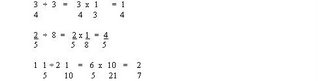
There is a rule which it is as well to remember. When dividing a fraction change the dividing sign to a multiplying sign and invert the divisor.
To invert means turn upside down.
Once he had mastered the technique I asked him why he thought he had to change the sign and invert. He said that he would think about the `problem’ and ask at home. I asked him if he wanted me to try to explain and he told me that his father was good at mathematics and would know.
This type of dialogue makes education into a continuous process. This showed a confident child who enjoyed a challenge – and had every confidence in his parents.
I am sure he will have the answer. He should enjoy his few minutes of fame with the other children in his group at school.
He simply wanted to know more than any other child in his class about a particular mathematics topic. He thought that he would take one of the questions to school and see if any one would be able to work out the answer. He left his lesson with a spring in his step and a smile. He sits on the top mathematics table so he knows more or less what other children on the table are able to do.

There is a rule which it is as well to remember. When dividing a fraction change the dividing sign to a multiplying sign and invert the divisor.
To invert means turn upside down.
Once he had mastered the technique I asked him why he thought he had to change the sign and invert. He said that he would think about the `problem’ and ask at home. I asked him if he wanted me to try to explain and he told me that his father was good at mathematics and would know.
This type of dialogue makes education into a continuous process. This showed a confident child who enjoyed a challenge – and had every confidence in his parents.
I am sure he will have the answer. He should enjoy his few minutes of fame with the other children in his group at school.
Thursday, June 14, 2007
Hot Tips for the Eleven Plus
We are often asked about hot tips for the 11 Plus examinations. Two key areas spring to mind immediately – working through papers and reading.
Papers
Naturally doing a variety of eleven plus selection papers must help your son or daughter. It is also important to have some one to explain any problem areas. You will have watched your child working very happily on a section – and then meet something unfamiliar – and then everything slows down.
Reading
We have started a blog about `Bindon and Bertie’ by the author Magnus McLeod. Parents often ask about what sort of books should be read by children at the eleven plus stage. The blog is presented by the author on our web site. Magnus explains how the plot builds and his reasons for the development and presentation of the story.
We are obviously trying to stimulate children to read – but want to try to help our eleven plus children to feel that reading is more than writing a review or turning over pages. The Bindon and Bertie blog invites comments from children and tries to stimulate discussion.
This is how the author saw the development of the story.
Section 1
In this scene Pandora is persuaded to allow Tilly and the boys to visit strangers in Guernsey. There is information here about all the characters, with clues about the future.
Section 2
In this scene the reader finds out why the killer was waiting. The reader also finds out a great deal about Tilly - some things easy to understand, others more difficult.
The reader also learns about Wilson, her bodyguard, who reveals more about Tilly.
Section 3
Here the kidnap plan is developed and more details revealed. Again, some clues are given which will be picked up later.
http://bindonandbertie.blogspot.com"
To add a comment to the site you simply sign in with a secure Google account. Naturally a Google account ensures as much privacy and security as possible.
This type of interaction through blogging represents a new departure for all of us in Etc. We hope you enjoy the experience.
Papers
Naturally doing a variety of eleven plus selection papers must help your son or daughter. It is also important to have some one to explain any problem areas. You will have watched your child working very happily on a section – and then meet something unfamiliar – and then everything slows down.
Reading
We have started a blog about `Bindon and Bertie’ by the author Magnus McLeod. Parents often ask about what sort of books should be read by children at the eleven plus stage. The blog is presented by the author on our web site. Magnus explains how the plot builds and his reasons for the development and presentation of the story.
We are obviously trying to stimulate children to read – but want to try to help our eleven plus children to feel that reading is more than writing a review or turning over pages. The Bindon and Bertie blog invites comments from children and tries to stimulate discussion.
This is how the author saw the development of the story.
Section 1
In this scene Pandora is persuaded to allow Tilly and the boys to visit strangers in Guernsey. There is information here about all the characters, with clues about the future.
Section 2
In this scene the reader finds out why the killer was waiting. The reader also finds out a great deal about Tilly - some things easy to understand, others more difficult.
The reader also learns about Wilson, her bodyguard, who reveals more about Tilly.
Section 3
Here the kidnap plan is developed and more details revealed. Again, some clues are given which will be picked up later.
http://bindonandbertie.blogspot.com"
To add a comment to the site you simply sign in with a secure Google account. Naturally a Google account ensures as much privacy and security as possible.
This type of interaction through blogging represents a new departure for all of us in Etc. We hope you enjoy the experience.
Wednesday, June 13, 2007
Thank You
I had the pleasure of taking my 4 year old grandson to school today.
We walked into the classroom hand in hand.
He stopped and waited for his teacher to finish talking to her support staff.
She held out her arms to him. She picked him up and hugged him.
She said, with a big smile, “My favourite boy!”
What a wonderful gesture. What a kind teacher.
Thank you so much.
(There isn’t really much wrong with our education system is there?)
We walked into the classroom hand in hand.
He stopped and waited for his teacher to finish talking to her support staff.
She held out her arms to him. She picked him up and hugged him.
She said, with a big smile, “My favourite boy!”
What a wonderful gesture. What a kind teacher.
Thank you so much.
(There isn’t really much wrong with our education system is there?)
Tuesday, June 12, 2007
Pressure
Many years ago public school boys were beaten – sometimes even in public. We all remember the beatings and bullying in Tom Browns Schooldays. The idea was: “I was beaten every day at school and it never did me any harm.”
I should imagine that there are very few parents today who would subscribe to their children being physically beaten for poor marks on a non verbal reasoning test. The idea that physical pain promotes learning is not very attractive.
What about the children who a not physically abused but are feel continually pressured about school work and passing examinations? In the year leading up to the eleven plus their lives are so conditioned to be responsible, hard working and dedicated that they can forget to leave time to be children.
The pressure may not come from the school and teacher.
The pressure may not come from the parents and other relations.
The pressure may not come from other children.
The pressure may simply be building up inside each child.
This is where we need to try to help to take the pressure off. We need to encourage methods of helping children to express their feelings and talk to their parents.
1. We could try to keep everything in its time and place. We could try to avoid any discussion on the eleven plus outside of `eleven plus work time’.
2. Help to develop a quiet zone where your child can not see piles of eleven plus files and work books.
3. Provide opportunities for lots of physical exercise.
4. Feed on lots of fruits and fish.
I should imagine that there are very few parents today who would subscribe to their children being physically beaten for poor marks on a non verbal reasoning test. The idea that physical pain promotes learning is not very attractive.
What about the children who a not physically abused but are feel continually pressured about school work and passing examinations? In the year leading up to the eleven plus their lives are so conditioned to be responsible, hard working and dedicated that they can forget to leave time to be children.
The pressure may not come from the school and teacher.
The pressure may not come from the parents and other relations.
The pressure may not come from other children.
The pressure may simply be building up inside each child.
This is where we need to try to help to take the pressure off. We need to encourage methods of helping children to express their feelings and talk to their parents.
1. We could try to keep everything in its time and place. We could try to avoid any discussion on the eleven plus outside of `eleven plus work time’.
2. Help to develop a quiet zone where your child can not see piles of eleven plus files and work books.
3. Provide opportunities for lots of physical exercise.
4. Feed on lots of fruits and fish.
Monday, June 11, 2007
Personalised and Positive 11 Plus Work
The very next time you are standing in the playground discussing the eleven plus you must bring up the name `Skinner’. In case you are asked any questions a little background about him may be useful.
Skinner was a psychologist who lived many years ago in America. One of his ideas was about the need for some types of learning to be broken down into small steps.
On some verbal reasoning papers, for example, we are given a set of instructions, an example and then a number of questions. If we work through the questions and answers with our children we hope that they will remember how to do similar questions in the examination.
One of the important things we have to do is deliver some form of continuous reinforcement. In eleven plus terms this means that every time your child given the correct answer you must give some form of reward. Traditionally the reward is offered by providing a tick beside the answer. The problem is that if you walk away to do something else then the continuous element suffers and the effects of the reward decrease. (Being a parent is not easy!)
The next type of reinforcement is when you set an interval before you mark and work though the answers. In simple terms it means that your child knows that you will return at 5.15 to mark the work. In other words the reward is offered at preset times – and your child becomes conditioned to expecting you to walk in with a smile to go over the work that has been done.
The third type Skinner talked about was when a ratio of reinforcement is set up. This is where your child will have a set amount of work to be completed before there is any reinforcement. (If you do the first part of this paper we will go to the cinema.)
So in any one eleven plus session you may be exposing your child to at least three different types of reinforcement. We see examples of different kinds of conditioning in many films to day, especially in the `good cop bad cop’ variety. The `bad cop’ wears the suspect down through negative reinforcement then the `good cop’ offers a solution – and the case is solved.
Naturally you want to offer positive reinforcement to your child when ever possible. You do not want to have to go back into the `eleven plus’ room at 5.15 and find that only two questions have been answered – when you were expecting at least 20. Then you could potentially change from a: `good mum to a bad mum’.
It is perfectly possible to say:” Well let us leave the marking of this until dad gets home.” The continuous element of the reinforcement may need to be abandoned until a different solution can be offered.
So the goal now is personalized and positive reinforcement. When you stand at the entrance to the ball dressed in all your finery – long dress, hair done and wearing your best jewels you hope for some positive reinforcement.
“Oh, you do look good.”
“You really do scrub up very well.”
“That outfit has taken years off your age.”
Any one of the above will do as long as you feel the remark is personalized and positive.
Your eleven plus child doing an eleven plus verbal reasoning paper will wish for much of the same.
Skinner was a psychologist who lived many years ago in America. One of his ideas was about the need for some types of learning to be broken down into small steps.
On some verbal reasoning papers, for example, we are given a set of instructions, an example and then a number of questions. If we work through the questions and answers with our children we hope that they will remember how to do similar questions in the examination.
One of the important things we have to do is deliver some form of continuous reinforcement. In eleven plus terms this means that every time your child given the correct answer you must give some form of reward. Traditionally the reward is offered by providing a tick beside the answer. The problem is that if you walk away to do something else then the continuous element suffers and the effects of the reward decrease. (Being a parent is not easy!)
The next type of reinforcement is when you set an interval before you mark and work though the answers. In simple terms it means that your child knows that you will return at 5.15 to mark the work. In other words the reward is offered at preset times – and your child becomes conditioned to expecting you to walk in with a smile to go over the work that has been done.
The third type Skinner talked about was when a ratio of reinforcement is set up. This is where your child will have a set amount of work to be completed before there is any reinforcement. (If you do the first part of this paper we will go to the cinema.)
So in any one eleven plus session you may be exposing your child to at least three different types of reinforcement. We see examples of different kinds of conditioning in many films to day, especially in the `good cop bad cop’ variety. The `bad cop’ wears the suspect down through negative reinforcement then the `good cop’ offers a solution – and the case is solved.
Naturally you want to offer positive reinforcement to your child when ever possible. You do not want to have to go back into the `eleven plus’ room at 5.15 and find that only two questions have been answered – when you were expecting at least 20. Then you could potentially change from a: `good mum to a bad mum’.
It is perfectly possible to say:” Well let us leave the marking of this until dad gets home.” The continuous element of the reinforcement may need to be abandoned until a different solution can be offered.
So the goal now is personalized and positive reinforcement. When you stand at the entrance to the ball dressed in all your finery – long dress, hair done and wearing your best jewels you hope for some positive reinforcement.
“Oh, you do look good.”
“You really do scrub up very well.”
“That outfit has taken years off your age.”
Any one of the above will do as long as you feel the remark is personalized and positive.
Your eleven plus child doing an eleven plus verbal reasoning paper will wish for much of the same.
Sunday, June 10, 2007
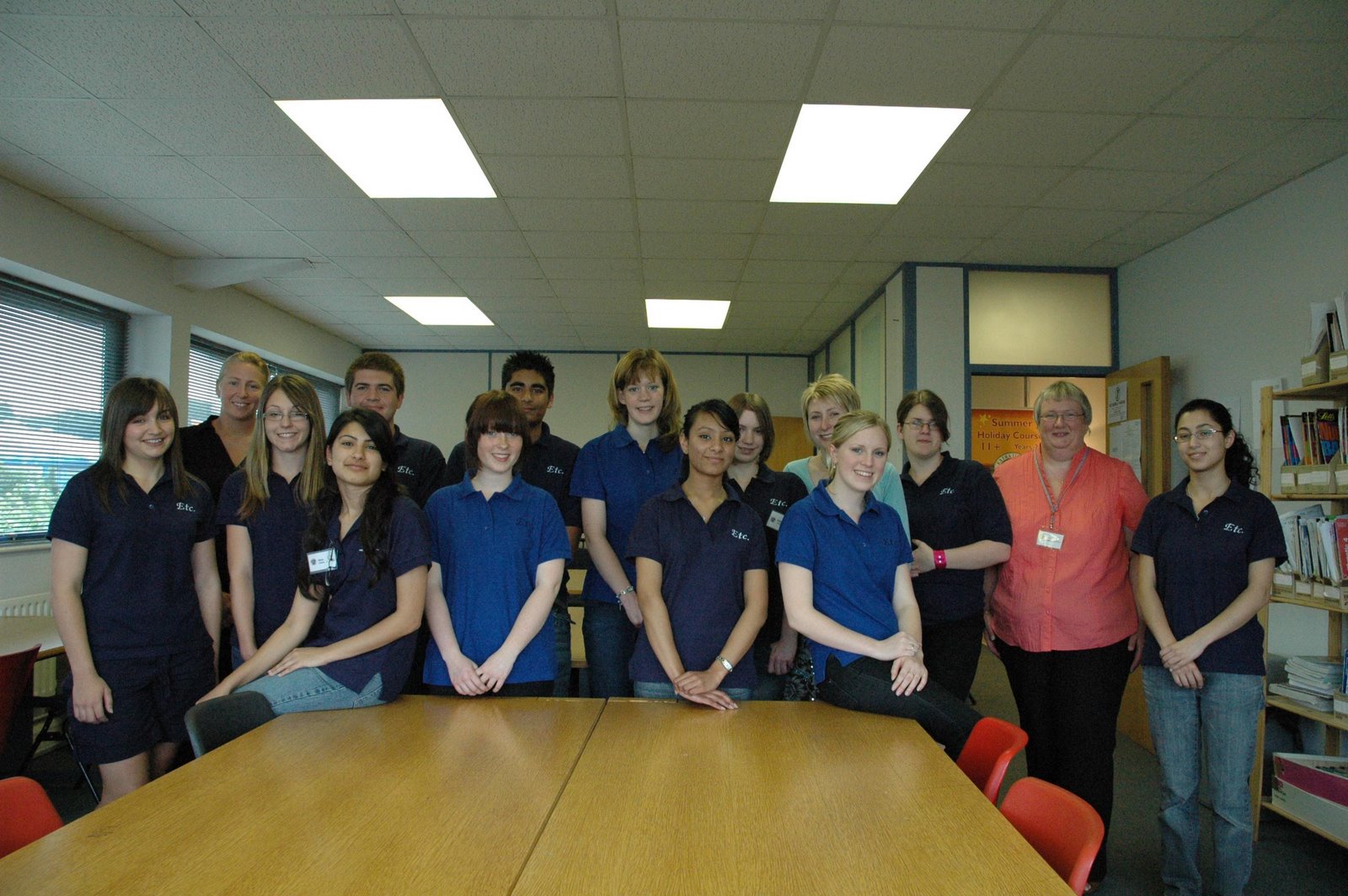
Saturday, June 09, 2007
Driving and the Eleven PLus
As drivers we take driving for granted most of the time. Lots of mothers have to endure the chore of driving children to school in term time. The sight of fathers delivering children brings tears to the eyes. Dads don’t deliver children and help in quite the same way. The school gate ‘chat’ is couched in different language. The topics are the same. The attitude to learning and school is sometimes quite different.
Every single person driving their children to school thinks that they are a good driver. They know that they must not park on double yellow lines. They know that they must not park near the school gates. The parents are very aware of their precious cargoes.
To explain to someone how to become a good and purposeful driver takes time and patience. At one time the Institute of Advanced Drivers called upon drivers to give a running commentary as part of the assessment.
Your ten year old could become a most valuable crew member in the car. A combination of Advanced Driving Awareness and Sat Nav directions could revolutionise the school journey.
“After two hundred metres cross the roundabout at the third exit.”
“A car door is opening. Watch out Mum – a child may be stepping out of the car.”
“Oh dear, I forgot to tell you. We have games today and I forgot my games bag.”
“After four hundred metres, take the next right.
After two hundred metres take the next right.”
“Mum it does not look as if the car ahead has a brake light. Watch out and give the car ahead some room.”
“We are doing a practice verbal reasoning paper today at school. I did not mention it last night because I thought you would make me do an extra Eleven Plus Verbal Reasoning Paper.”
“Mum you can’t stop here. It is too near a corner.”
“Mum don’t push me out of the car. I will always tell you when a test is coming up in future. I PROMISE. I PROMISE.”
Let us swiftly move on to the conversation at the school gates. We now have to work out who is speaking.
“You will never guess what happened to me on the way to school. I was told about the verbal reasoning test. I don’t know why I wasn’t told last night.”
“Did you do the little so and so some harm?”
“No I was driving at the time and had to multi-task. I had directions coming at me, a commentary on the other road users and news about the eleven plus. Anyway I was thinking about our friends coming to dinner tonight. One is a vegetarian.”
“Oh dear. The eleven plus is such a worry. I have another year to go.”
“Well first of all don’t allow any back seat driving from anyone at all. Secondly, start making sure your child uses a little book to write notes down. What are you going to serve? That lovely chocolate pudding?”
“Don’t waste time with a note book. Go straight to a Blackberry. You will have a full communication system – telephone, connection to the net, sat nav directions, email, note taking – and you have the ability to communicate. Every eleven plus child needs one.”
Every single person driving their children to school thinks that they are a good driver. They know that they must not park on double yellow lines. They know that they must not park near the school gates. The parents are very aware of their precious cargoes.
To explain to someone how to become a good and purposeful driver takes time and patience. At one time the Institute of Advanced Drivers called upon drivers to give a running commentary as part of the assessment.
Your ten year old could become a most valuable crew member in the car. A combination of Advanced Driving Awareness and Sat Nav directions could revolutionise the school journey.
“After two hundred metres cross the roundabout at the third exit.”
“A car door is opening. Watch out Mum – a child may be stepping out of the car.”
“Oh dear, I forgot to tell you. We have games today and I forgot my games bag.”
“After four hundred metres, take the next right.
After two hundred metres take the next right.”
“Mum it does not look as if the car ahead has a brake light. Watch out and give the car ahead some room.”
“We are doing a practice verbal reasoning paper today at school. I did not mention it last night because I thought you would make me do an extra Eleven Plus Verbal Reasoning Paper.”
“Mum you can’t stop here. It is too near a corner.”
“Mum don’t push me out of the car. I will always tell you when a test is coming up in future. I PROMISE. I PROMISE.”
Let us swiftly move on to the conversation at the school gates. We now have to work out who is speaking.
“You will never guess what happened to me on the way to school. I was told about the verbal reasoning test. I don’t know why I wasn’t told last night.”
“Did you do the little so and so some harm?”
“No I was driving at the time and had to multi-task. I had directions coming at me, a commentary on the other road users and news about the eleven plus. Anyway I was thinking about our friends coming to dinner tonight. One is a vegetarian.”
“Oh dear. The eleven plus is such a worry. I have another year to go.”
“Well first of all don’t allow any back seat driving from anyone at all. Secondly, start making sure your child uses a little book to write notes down. What are you going to serve? That lovely chocolate pudding?”
“Don’t waste time with a note book. Go straight to a Blackberry. You will have a full communication system – telephone, connection to the net, sat nav directions, email, note taking – and you have the ability to communicate. Every eleven plus child needs one.”
Friday, June 08, 2007
11+ Interview
Archie has attended the same school for all his school life. Most of the children in his class have been his friends since they were three and four years old. In the early days around twenty children used to go to his birthday parties. Now he prefers to spend the time with one or two of his close friends.
His parents try to take him away on holiday at least twice a year. He has been on holiday in Europe, Asia and America. The family will be going to spend a month in Australia next year – but after the eleven plus examinations.
Like any normal boy he likes Star Trek and films about adventure. He reads a little but prefers to play on his lap top.
He is athletic and plays for a local football team every Sunday morning. He has had trials at one of the major clubs – but is waiting to hear the result. He swims very well and plays U13 cricket for a local team. He is a bowler – but thinks that he would prefer to be a batsman.
Archie really likes school. He has always found mathematics easy and sits on the top table. He writes good stories and quite enjoys planning them.
He was interviewed recently by Julie Stone.
What did you feel when your parents told you that they were thinking of the eleven plus examinations?
I have always known that one day I would be writing eleven plus examinations. My grandparents live just over the road from the local grammar school for boys. My granddad used to take me for walks on the school playing fields and tell me that one day I would be able to go to that school. I don’t want to let him down.
You play a lot of sport. How will you be able to find time to fit all the work in?
It is quite easy really. I try to concentrate on one activity at a time. My mind does wander sometimes when my swimming coach makes me swim backwards and forwards. He makes me look at the clock so that my lengths do not get too slow. This keeps me focused.
I don’t have much time to read books – even though my mother keeps nagging me. I can read OK – but I only really reading books about sport. I have started to collect autobiographies – especially one about cricket.
Do your parents nag you much about work?
Sometimes. I don’t really want to have to work every day. When I have been playing cricket all afternoon and evening I am sometimes quite tired – especially if I have been swimming before school on the same day.
My mother keeps telling me to keep a balance in my life. This is very difficult when I like sport so much. I would like to be a sportsman one day. It looks as if it is good life. But I do want to go to university as well. My granddad keeps saying: “Get a good job first.”
Do you have any advice for other children writing their eleven plus examinations?
Well I have not passed mine yet. I think I will pass. I will certainly try hard. My advice to other children is to be organised. I try to do my homework when it is time to do homework. I do bits of eleven plus all the time. I very seldom sit down to do an actual paper.
I am lucky – I like school and my teachers at school. If I was going to make one big suggestion I think that some children should try harder at school.
His parents try to take him away on holiday at least twice a year. He has been on holiday in Europe, Asia and America. The family will be going to spend a month in Australia next year – but after the eleven plus examinations.
Like any normal boy he likes Star Trek and films about adventure. He reads a little but prefers to play on his lap top.
He is athletic and plays for a local football team every Sunday morning. He has had trials at one of the major clubs – but is waiting to hear the result. He swims very well and plays U13 cricket for a local team. He is a bowler – but thinks that he would prefer to be a batsman.
Archie really likes school. He has always found mathematics easy and sits on the top table. He writes good stories and quite enjoys planning them.
He was interviewed recently by Julie Stone.
What did you feel when your parents told you that they were thinking of the eleven plus examinations?
I have always known that one day I would be writing eleven plus examinations. My grandparents live just over the road from the local grammar school for boys. My granddad used to take me for walks on the school playing fields and tell me that one day I would be able to go to that school. I don’t want to let him down.
You play a lot of sport. How will you be able to find time to fit all the work in?
It is quite easy really. I try to concentrate on one activity at a time. My mind does wander sometimes when my swimming coach makes me swim backwards and forwards. He makes me look at the clock so that my lengths do not get too slow. This keeps me focused.
I don’t have much time to read books – even though my mother keeps nagging me. I can read OK – but I only really reading books about sport. I have started to collect autobiographies – especially one about cricket.
Do your parents nag you much about work?
Sometimes. I don’t really want to have to work every day. When I have been playing cricket all afternoon and evening I am sometimes quite tired – especially if I have been swimming before school on the same day.
My mother keeps telling me to keep a balance in my life. This is very difficult when I like sport so much. I would like to be a sportsman one day. It looks as if it is good life. But I do want to go to university as well. My granddad keeps saying: “Get a good job first.”
Do you have any advice for other children writing their eleven plus examinations?
Well I have not passed mine yet. I think I will pass. I will certainly try hard. My advice to other children is to be organised. I try to do my homework when it is time to do homework. I do bits of eleven plus all the time. I very seldom sit down to do an actual paper.
I am lucky – I like school and my teachers at school. If I was going to make one big suggestion I think that some children should try harder at school.
Thursday, June 07, 2007
Eleven Plus Decisions
At some time in your life you may decide that you quite simply would like to start your own school for your children. You sit there with some friends over a couple of bottles and a good meal and make a life changing statement: “I am going to start my own school.”
Your friends agree and ask to meet again in the near future with an outline plan. Your competitive juices start flowing. Nothing, but nothing will allow you to fail in this new project.
You ask for two weeks leave. No, you demand two weeks leave. You agree to two days unpaid because the H.R. department are simply being difficult.
You start with your feasibility project. You begin your initial research. You start thinking of land, premises, management structure and staff recruitment. Your dreams take you into furniture and teaching materials.
You decide you want huge classrooms capable of taking sixty or seventy children an hour. You want the best possible suite of wi-fi enabled laptops.
You demand that your school should have the best possible teachers. You decide that you are going to pay for the best. You are going to set out the best possible terms and conditions of employment.
Your folders become thicker and thicker. The `Report Back’ to friends date grows closer and closer.
Two days before the meeting you meet an Educational Consultant to give a professional evaluation of areas in your plan that may need further development and to point out any possible areas of weakness. You walk away from the consultant with stirring words and thoughts on the financial position, a view on the general management of the enterprise and ideas of the overall potential.
You meet with your friends. You have prepared six copies of the report. Your Bank Manager has promised qualified support. You all decide to eat first. Wine and alcohol is banned until after the meeting. You drink lots of water very nervously. In a mere two weeks you will have developed and delivered a plan that will change not only your life but the lives of thousands of children in years to come.
Just as the last plates and cutlery are cleared away you receive a phone call from your daughter. “Mum, I have decided that I do not want to do the eleven plus. I really want to go to boarding school. Your new school does not have any place for boarders. I really want to go to that boarding school that will allow me to take my horses. Remember – you did say that I could choose. Thanks Mum.”
Your heart sinks. Losing your daughter to boarding school and horses is a calamity. There will be no eleven plus success for the family to enjoy. What on earth are you going to say to your friends? Your six copies of the report are lying beside you. You don’t want to be a failure in their eyes. The plea from your daughter is strong in your ears.
You turn to your friends. You rest your hand on the six copies of the report. You open your mouth – still a little undecided. Do you go for the greater glory of starting your own school or do you follow your daughter’s plans. And what on earth are you going to be doing about the eleven plus?
Your best friend turns to you: “Well, what do you think?”
Your friends agree and ask to meet again in the near future with an outline plan. Your competitive juices start flowing. Nothing, but nothing will allow you to fail in this new project.
You ask for two weeks leave. No, you demand two weeks leave. You agree to two days unpaid because the H.R. department are simply being difficult.
You start with your feasibility project. You begin your initial research. You start thinking of land, premises, management structure and staff recruitment. Your dreams take you into furniture and teaching materials.
You decide you want huge classrooms capable of taking sixty or seventy children an hour. You want the best possible suite of wi-fi enabled laptops.
You demand that your school should have the best possible teachers. You decide that you are going to pay for the best. You are going to set out the best possible terms and conditions of employment.
Your folders become thicker and thicker. The `Report Back’ to friends date grows closer and closer.
Two days before the meeting you meet an Educational Consultant to give a professional evaluation of areas in your plan that may need further development and to point out any possible areas of weakness. You walk away from the consultant with stirring words and thoughts on the financial position, a view on the general management of the enterprise and ideas of the overall potential.
You meet with your friends. You have prepared six copies of the report. Your Bank Manager has promised qualified support. You all decide to eat first. Wine and alcohol is banned until after the meeting. You drink lots of water very nervously. In a mere two weeks you will have developed and delivered a plan that will change not only your life but the lives of thousands of children in years to come.
Just as the last plates and cutlery are cleared away you receive a phone call from your daughter. “Mum, I have decided that I do not want to do the eleven plus. I really want to go to boarding school. Your new school does not have any place for boarders. I really want to go to that boarding school that will allow me to take my horses. Remember – you did say that I could choose. Thanks Mum.”
Your heart sinks. Losing your daughter to boarding school and horses is a calamity. There will be no eleven plus success for the family to enjoy. What on earth are you going to say to your friends? Your six copies of the report are lying beside you. You don’t want to be a failure in their eyes. The plea from your daughter is strong in your ears.
You turn to your friends. You rest your hand on the six copies of the report. You open your mouth – still a little undecided. Do you go for the greater glory of starting your own school or do you follow your daughter’s plans. And what on earth are you going to be doing about the eleven plus?
Your best friend turns to you: “Well, what do you think?”
Wednesday, June 06, 2007
Eleven Plus Phishing
We have been phished at one time or another. This, as you well know, is being a recipient of hundreds of randomly sent out emails. The object of phishing is to try to engage with an unwary potential customer. Once the phishing enterprise has captured your interest – and your email – then the force is directed towards you.
Web developers some years ago worked out a method of calculating how long we had spent on a site – and whether we had visited the site before.
We will all have watched an attack on an eleven plus question by the method of shooting off many different answers. “If a tennis match lasts for 3 hours and 20 minutes, and ends at 18.10, what time did the match start?”
The first round of phished questions could revolve around the make up of the mens final at Wimbledon. This could delay answering the question by some minutes. The second attack could come from the unlikely source of which rackets the men were using. We would now get into the realm of types of medication, remedies for injuries to wrists and elbows, congratulatory telegrams informing us of our winnings and ending up with requests for our bank details from unverified sources.
So many contradictory adverts and pleas for information could flood the mind.
Keep calm and focus. We can empty the contents of the deleted items with one click of the bottom. We can open a new folder to keep information. We can set up safe gateways to ensure that unseemly sites are rebuffed.
What we really have to do is set up a system that filters unwanted demands on our time. The question is not about who, where, when and what was playing tennis, it was about simple manipulation of time. In other words we have to cut out as much phishing as possible.
We simply have to remember that there are sixty minutes in an hour – then the whole problem is easy to solve.
So the next time your child wanders off course remind him or her to: `Stop phishing about and think before you answer.”
Web developers some years ago worked out a method of calculating how long we had spent on a site – and whether we had visited the site before.
We will all have watched an attack on an eleven plus question by the method of shooting off many different answers. “If a tennis match lasts for 3 hours and 20 minutes, and ends at 18.10, what time did the match start?”
The first round of phished questions could revolve around the make up of the mens final at Wimbledon. This could delay answering the question by some minutes. The second attack could come from the unlikely source of which rackets the men were using. We would now get into the realm of types of medication, remedies for injuries to wrists and elbows, congratulatory telegrams informing us of our winnings and ending up with requests for our bank details from unverified sources.
So many contradictory adverts and pleas for information could flood the mind.
Keep calm and focus. We can empty the contents of the deleted items with one click of the bottom. We can open a new folder to keep information. We can set up safe gateways to ensure that unseemly sites are rebuffed.
What we really have to do is set up a system that filters unwanted demands on our time. The question is not about who, where, when and what was playing tennis, it was about simple manipulation of time. In other words we have to cut out as much phishing as possible.
We simply have to remember that there are sixty minutes in an hour – then the whole problem is easy to solve.
So the next time your child wanders off course remind him or her to: `Stop phishing about and think before you answer.”
Tuesday, June 05, 2007
An Eleven Plus Letter
When Etc sends a report out to parents and children there is always a letter that is addressed to the child. Here is an example:
Dear William
Congratulations on these results. You have tried hard and done well. Continue to ask for help if you do not understand.
Communication with your parents is vitally important. You have to try to understand what they are saying to you. Be patient. Let them finish sentences and try not to interrupt what they are saying. A discussion about work is not the same as being `told off’.
You really do need to try to do some regular revision. You may have heard about some children who say they never do any work or revision. There are some exceptionally bright children who are able to pass examinations with little work – but most of us need to do some work.
Working through eleven plus papers can help. Don’t worry about timing in the early stages. When you are confident that you have covered most of the different types of question then you can put pressure on yourself and do some timed work.
Naturally you should wear and use your watch while you are working. If you use your watch while you are revising then you may decide to use your watch in the actual examination.
There some useful revision aids that you can purchase from a supplier or a local bookshop. Have a look, with your parents, at the various websites for information and availability.
This is a useful book. It is the Revision Guide called `Maths Key Stage 2’. The guide gives clear explanations of topics at the Key Stage 2 level.
There are:
* Worked examples
* A summary of key points to remember
* A test yourself section
* Illustrations and diagrams that help to make revision simple
* Tips for tests
ISBN 0-7217-0953-2 www.schofieldandsims.co.uk. Price £3.95.
This is a very different approach from doing papers. This is a more deliberate preparation for the basics of the eleven plus examination. To use this book effectively you will need to read the examples. There are valuable clues on how to remember key points. You could work through the book systematically or cover each topic in turn.
Some topics that you meet on papers will not be in this book. If you do come across a topic that is not in the Revision Guide try to make sure you have notes that you can refer to. You will find it very difficult to revise a topic unless you have full notes and a worked example.
Sit quietly for a few minutes each day reading over the Revision Guide examples. Use the `Test Yourself’ section when you are confident.
Above all be patient with yourself and with your parents. When it looks as if your mother or father is getting worked up, try to set out to be pleasant. If you snarl at them they will need to respond.
This is not telling you to stop arguing. This letter is suggesting that you argue when you are sure that you are aright – and when you can back your argument up.
Enjoy this time. You are on a great adventure trail. Sometimes you will be right. Sometimes you will make mistakes. Just do your best when it counts. Good luck!
Yours sincerely
EXTRA TUITION CENTRE
Dear William
Congratulations on these results. You have tried hard and done well. Continue to ask for help if you do not understand.
Communication with your parents is vitally important. You have to try to understand what they are saying to you. Be patient. Let them finish sentences and try not to interrupt what they are saying. A discussion about work is not the same as being `told off’.
You really do need to try to do some regular revision. You may have heard about some children who say they never do any work or revision. There are some exceptionally bright children who are able to pass examinations with little work – but most of us need to do some work.
Working through eleven plus papers can help. Don’t worry about timing in the early stages. When you are confident that you have covered most of the different types of question then you can put pressure on yourself and do some timed work.
Naturally you should wear and use your watch while you are working. If you use your watch while you are revising then you may decide to use your watch in the actual examination.
There some useful revision aids that you can purchase from a supplier or a local bookshop. Have a look, with your parents, at the various websites for information and availability.
This is a useful book. It is the Revision Guide called `Maths Key Stage 2’. The guide gives clear explanations of topics at the Key Stage 2 level.
There are:
* Worked examples
* A summary of key points to remember
* A test yourself section
* Illustrations and diagrams that help to make revision simple
* Tips for tests
ISBN 0-7217-0953-2 www.schofieldandsims.co.uk. Price £3.95.
This is a very different approach from doing papers. This is a more deliberate preparation for the basics of the eleven plus examination. To use this book effectively you will need to read the examples. There are valuable clues on how to remember key points. You could work through the book systematically or cover each topic in turn.
Some topics that you meet on papers will not be in this book. If you do come across a topic that is not in the Revision Guide try to make sure you have notes that you can refer to. You will find it very difficult to revise a topic unless you have full notes and a worked example.
Sit quietly for a few minutes each day reading over the Revision Guide examples. Use the `Test Yourself’ section when you are confident.
Above all be patient with yourself and with your parents. When it looks as if your mother or father is getting worked up, try to set out to be pleasant. If you snarl at them they will need to respond.
This is not telling you to stop arguing. This letter is suggesting that you argue when you are sure that you are aright – and when you can back your argument up.
Enjoy this time. You are on a great adventure trail. Sometimes you will be right. Sometimes you will make mistakes. Just do your best when it counts. Good luck!
Yours sincerely
EXTRA TUITION CENTRE
Monday, June 04, 2007
New Eleven Plus Trends
I was fascinated to read today about the Metyktire tribe who live in Brazil about 1200 miles north-west of Rio Janeiro. The tribe has about 87 members. We are not quite sure how many children there are.
I immediately started wondering when the major publishers of eleven plus papers would try to make contact with the tribe. What a coup it would be if the children who worked on the Bond papers did better than the children on the nferNELSON papers. I wonder if the children on the free download papers would be able to score higher marks than those children on the more expensive papers.
Information of this kind could change our approach to the eleven plus examinations for ever.
Here we have a group of children who have survived without having to learn to read or even learn tables. Very few of the children living in the Metyktire tribe will have heard about grammar schools. The great `Grammar School’ debate will have passed the families by.
Who knows – this tribe may, in time, force a change of fashion amongst mothers. The women of the tribe, we believe, shave the top of their heads.
It will be easy to see in the future which women have children of eleven plus age. If all the Metyktire children pass the eleven plus examination a new trend will emerge.
The eleven plus mothers will stand out in the playground by virtue of their shaven heads. What a pretty sight!
I immediately started wondering when the major publishers of eleven plus papers would try to make contact with the tribe. What a coup it would be if the children who worked on the Bond papers did better than the children on the nferNELSON papers. I wonder if the children on the free download papers would be able to score higher marks than those children on the more expensive papers.
Information of this kind could change our approach to the eleven plus examinations for ever.
Here we have a group of children who have survived without having to learn to read or even learn tables. Very few of the children living in the Metyktire tribe will have heard about grammar schools. The great `Grammar School’ debate will have passed the families by.
Who knows – this tribe may, in time, force a change of fashion amongst mothers. The women of the tribe, we believe, shave the top of their heads.
It will be easy to see in the future which women have children of eleven plus age. If all the Metyktire children pass the eleven plus examination a new trend will emerge.
The eleven plus mothers will stand out in the playground by virtue of their shaven heads. What a pretty sight!
Sunday, June 03, 2007
Uniting A Family
When the eleven plus examinations were first promoted England was a very different land. The country was recovering from the war and many families had become disposed or were forced to move.
England was an industrialised country in those days. Agriculture was also important. Children writing eleven plus examinations today are living in an England where agriculture and industry have declined. For some families the land they once depended on was worth more as a housing estate.
Some families and communities have become so fragmented that the state has had to take on roles that the community would have traditionally performed.
It does seem that the eleven plus examinations, however, bring out the very best in people. When parents are working with a child towards the eleven plus they can not say: “We didn’t do it like that in my day.” Mum or Dad has to settle down and find out how it is done – and then help their child.
We have grandparents who routinely pay the fees for lessons. Grandparents drop child off at lessons and pick them up. They do their best to help their grandchildren – and their own children.
It s not just the immediate family who become involved in the preparation for the eleven plus examinations. Aunts and uncles deliver children to lessons – and collect them afterwards. They are the rocks that other members of the family can rely on.
Neighbours also bring children to lessons – so this is the community working at its very best.
So all is not lost. England has not become completely fragmented. We can safely regard the eleven plus as a positive force for good. I can think of no other activity that would unite the family so much as an impossible verbal reasoning question or a stinker of a mathematics topic.
England was an industrialised country in those days. Agriculture was also important. Children writing eleven plus examinations today are living in an England where agriculture and industry have declined. For some families the land they once depended on was worth more as a housing estate.
Some families and communities have become so fragmented that the state has had to take on roles that the community would have traditionally performed.
It does seem that the eleven plus examinations, however, bring out the very best in people. When parents are working with a child towards the eleven plus they can not say: “We didn’t do it like that in my day.” Mum or Dad has to settle down and find out how it is done – and then help their child.
We have grandparents who routinely pay the fees for lessons. Grandparents drop child off at lessons and pick them up. They do their best to help their grandchildren – and their own children.
It s not just the immediate family who become involved in the preparation for the eleven plus examinations. Aunts and uncles deliver children to lessons – and collect them afterwards. They are the rocks that other members of the family can rely on.
Neighbours also bring children to lessons – so this is the community working at its very best.
So all is not lost. England has not become completely fragmented. We can safely regard the eleven plus as a positive force for good. I can think of no other activity that would unite the family so much as an impossible verbal reasoning question or a stinker of a mathematics topic.
Saturday, June 02, 2007
Tricky Questions
How literally can you take some verbal reasoning questions?
Suppose we are faced with:
Tomato is to red as pea is to …….
Now any good convergent thinker would be able to work out that the first term is talking about food and the second about colour. Peas are, of course, green. So the answer is green. But what happens when your bright nine year old argues that you can have green tomatoes or even yellow tomatoes? Then the logic of the question tends to collapse.
A more divergent thinker, however, would argue that we know that a tomato is a fruit but it is eaten as a vegetable. A pea, however, is a small, edible round green bean. So neither the tomato nor the pea are what they appear to be – unless we categorise them both as food.
So your nine year old is not arguing with you to stop the two of you doing any work – there may be a genuine concern that their point of view is not taken into account. These then are the questions that you need to enjoy and spend time on. Enjoy the discussion!
Suppose we are faced with:
Tomato is to red as pea is to …….
Now any good convergent thinker would be able to work out that the first term is talking about food and the second about colour. Peas are, of course, green. So the answer is green. But what happens when your bright nine year old argues that you can have green tomatoes or even yellow tomatoes? Then the logic of the question tends to collapse.
A more divergent thinker, however, would argue that we know that a tomato is a fruit but it is eaten as a vegetable. A pea, however, is a small, edible round green bean. So neither the tomato nor the pea are what they appear to be – unless we categorise them both as food.
So your nine year old is not arguing with you to stop the two of you doing any work – there may be a genuine concern that their point of view is not taken into account. These then are the questions that you need to enjoy and spend time on. Enjoy the discussion!
Friday, June 01, 2007
Eleven Plus Questions
We had a science teacher at school. We thought that he was a really pleasant man. He never shouted at us or got angry. The experiments were always ready when we walked into his lab. He always wore a clean white coat. His coat never seemed to look dirty – and his coat did not have the little acid holes so beloved by science teachers.
He always seemed to start the day in a good mood. If our class was first period he was happy and he made lots of jokes. The lessons seemed to fly by.
He did have one characteristic; he used to disappear into the equipment room behind his raised desk. We knew that he was conducting experiments because sometimes we were very aware of sweet smells.
Over the course of the morning his sentences seemed to be a little disconnected and he appeared to lose his place at times. When he was walking round his laboratory looking at our work he would occasionally stumble. We were also aware of a faint but unfamiliar smell.
One morning, alas not in our period, he did not return from the little room behind his desk. The boys called a teacher from the second science room who found the teacher lying on the floor.
Our teacher had set up a still and was using distillation to make alcoholic drinks. We understand that in the early days he used starch and sugar to turn into ethanol through the process called fermentation. This was carried out by the micro organism yeast. He met a problem when he tried to develop stronger alcohol because it is impossible to achieve an ethanol concentration over 15% by fermentation. For the strong stuff he needed to ferment the liquid using distillation.
Now we all know that an excise licence is needed for commercial production. Our science teacher, however, was producing for his own consumption. I am sure the whole school benefited from his dedication to the act of brewing.
We can now buy a range of equipment that will allow us to measure the amount of alcohol in our blood. We know that the police force have campaigns about safe driving. The majority of adults are very knowledgeable about units. Some may even know more about units than calories.
So if this is the sort of content that will excite children’s interest then we need to change some of the element of eleven plus examination questions. A typical Eleven Plus question – aimed at the more able child – would be:
“Henry is three years older than Tom, and in four years Henry will be three times as old as Tom was five years ago. Find their present ages.”
I know there is a very good reason to include questions of this nature in examinations. I suppose a question like this identifies children who can think and reason. Surely our eleven plus children would also benefit from questions relating to calories and units of consumption? I urge the next generation of eleven plus test writers to think carefully about the children and adults who will be using their books. This is not a plea for topical eleven plus questions that will become less relevant over the years – but a demand for questions and topics that children may actually use in their daily life.
Do we need to feel sorry for the teacher on the floor? I hope so because most teachers at one time or another will have felt the need for a little `pick me up’. If there are any teachers or parents out there with suggestions on interesting flavours to share …….
He always seemed to start the day in a good mood. If our class was first period he was happy and he made lots of jokes. The lessons seemed to fly by.
He did have one characteristic; he used to disappear into the equipment room behind his raised desk. We knew that he was conducting experiments because sometimes we were very aware of sweet smells.
Over the course of the morning his sentences seemed to be a little disconnected and he appeared to lose his place at times. When he was walking round his laboratory looking at our work he would occasionally stumble. We were also aware of a faint but unfamiliar smell.
One morning, alas not in our period, he did not return from the little room behind his desk. The boys called a teacher from the second science room who found the teacher lying on the floor.
Our teacher had set up a still and was using distillation to make alcoholic drinks. We understand that in the early days he used starch and sugar to turn into ethanol through the process called fermentation. This was carried out by the micro organism yeast. He met a problem when he tried to develop stronger alcohol because it is impossible to achieve an ethanol concentration over 15% by fermentation. For the strong stuff he needed to ferment the liquid using distillation.
Now we all know that an excise licence is needed for commercial production. Our science teacher, however, was producing for his own consumption. I am sure the whole school benefited from his dedication to the act of brewing.
We can now buy a range of equipment that will allow us to measure the amount of alcohol in our blood. We know that the police force have campaigns about safe driving. The majority of adults are very knowledgeable about units. Some may even know more about units than calories.
So if this is the sort of content that will excite children’s interest then we need to change some of the element of eleven plus examination questions. A typical Eleven Plus question – aimed at the more able child – would be:
“Henry is three years older than Tom, and in four years Henry will be three times as old as Tom was five years ago. Find their present ages.”
I know there is a very good reason to include questions of this nature in examinations. I suppose a question like this identifies children who can think and reason. Surely our eleven plus children would also benefit from questions relating to calories and units of consumption? I urge the next generation of eleven plus test writers to think carefully about the children and adults who will be using their books. This is not a plea for topical eleven plus questions that will become less relevant over the years – but a demand for questions and topics that children may actually use in their daily life.
Do we need to feel sorry for the teacher on the floor? I hope so because most teachers at one time or another will have felt the need for a little `pick me up’. If there are any teachers or parents out there with suggestions on interesting flavours to share …….
Thursday, May 31, 2007
New Style Eleven Plus Examinations
We certainly need to think of new way of presenting eleven plus examinations. The idea of thousands of clever little ten year old sitting down to starchy papers in strict rows is no longer tenable.
We need every child to bring their wireless enabled lap top to a series of central points. The children then fire their computers up and down load the first set of questions. Naturally the children will have full access to all the facilities of the internet. If they are stuck on reflection all they need to do is type the key word `reflection’ into the search engine and up comes the answer.
Surely it is better for a ten year old to be able to find the answer than simply be able to remember a series of key facts or techniques?
Naturally the vast network of eleven plus tutors would be able to tap into this new system of examining children. They would be able to sponsor sites that could supply eleven plus answers. Parents would be queuing up to add credits to Pay Pal accounts to make sure that their child was able to get a fast track answer. No sure how to do analogies? No problem. If you press the `fast track’ logo you will be able to beat all the other children to find the answer.
Want to be able to talk to your own tutor on line while you are working through the examination paper? No problem. Slip your headphones on. Load Skype. Turn your video camera on and chat to your tutor who has been anxiously waiting for your call. (Like driving instructors tutors get paid extra while the test is taking place.)
Need a bit of love a reassurance from your parents? No problem. Build a conference call with your parents. Dad will help with the questions he is good at. Mum is naturally much better at maths – so go over the few problems that remain on your paper with her.
Want to see if your multiple choice answer is right? Load the `Answer Checker’ program. This program calculates the odds of the answer being right. The problem is that your child will only be able to use the program four times during the entire paper. (If you pay extra you can buy four more attempts!)
So let us now picture the eleven plus examination room. Groups of children will be wearing headphones balancing their computers on their knees. White coated technicians will be helping with connection problems. Children will be muttering to themselves: “Well I know that Yahoo is best for technical questions – but I really do prefer Google.”
Suddenly the power goes down.
The resilient children place their headphones on the computers and move to the adjacent room. Kindly, smiling teachers hand out papers with reassuring words. Children sit in silence doing their best. Rows of cars wait outside with confident parents smiling in anticipation.
The eleven plus organisers mutter to themselves. “Well I had an extra generator on standby. I just did not expect that sudden surge for information. Oh well, the children seemed to do O.K. We will see about next year.”
i
We need every child to bring their wireless enabled lap top to a series of central points. The children then fire their computers up and down load the first set of questions. Naturally the children will have full access to all the facilities of the internet. If they are stuck on reflection all they need to do is type the key word `reflection’ into the search engine and up comes the answer.
Surely it is better for a ten year old to be able to find the answer than simply be able to remember a series of key facts or techniques?
Naturally the vast network of eleven plus tutors would be able to tap into this new system of examining children. They would be able to sponsor sites that could supply eleven plus answers. Parents would be queuing up to add credits to Pay Pal accounts to make sure that their child was able to get a fast track answer. No sure how to do analogies? No problem. If you press the `fast track’ logo you will be able to beat all the other children to find the answer.
Want to be able to talk to your own tutor on line while you are working through the examination paper? No problem. Slip your headphones on. Load Skype. Turn your video camera on and chat to your tutor who has been anxiously waiting for your call. (Like driving instructors tutors get paid extra while the test is taking place.)
Need a bit of love a reassurance from your parents? No problem. Build a conference call with your parents. Dad will help with the questions he is good at. Mum is naturally much better at maths – so go over the few problems that remain on your paper with her.
Want to see if your multiple choice answer is right? Load the `Answer Checker’ program. This program calculates the odds of the answer being right. The problem is that your child will only be able to use the program four times during the entire paper. (If you pay extra you can buy four more attempts!)
So let us now picture the eleven plus examination room. Groups of children will be wearing headphones balancing their computers on their knees. White coated technicians will be helping with connection problems. Children will be muttering to themselves: “Well I know that Yahoo is best for technical questions – but I really do prefer Google.”
Suddenly the power goes down.
The resilient children place their headphones on the computers and move to the adjacent room. Kindly, smiling teachers hand out papers with reassuring words. Children sit in silence doing their best. Rows of cars wait outside with confident parents smiling in anticipation.
The eleven plus organisers mutter to themselves. “Well I had an extra generator on standby. I just did not expect that sudden surge for information. Oh well, the children seemed to do O.K. We will see about next year.”
i
Wednesday, May 30, 2007
Happy Eleven Plus Thoughts
Wonder of wonders! I have met a truly happy child working towards the eleven plus. He smiled through the lesson, contributed to the discussion with his parents after the lesson and left with the words: “See you next week!”
I remember reading about Margaret Mead’s work as a young student. She went to Samoa to observe young people. She had noted that young adolescents in America were often full of anxiety and anger. She lived in Samoa so that she could study the youngsters as they progressed form childhood into adolescence. She found that there was remarkably little emotional distress or confusion. I wonder if it was because the children living in Samoa did not have to work towards the eleven plus examinations!
I see many parents with a positive attitude to their children. They are positive about school, the teachers the head teacher and the whole school environment. They are not concerned about the `ranking’ of the school. They simply really hope that their child will be happy at school. They accept that the teachers are doing the best they can. These parents would not dream of running the school down in front of their children.
There are people who do believe that everything they have done in their lives has made them the person that they are. They would like their children to grow up just the same way – if possible. These are mothers and fathers who try to put a positive spin on life and study. They accept their children for what they are – warts and all! These are parents who do not blame the school for everything that has gone wrong in their child’s life.
Some parents do make a point of trying to encourage their children to lighten up. They insist that their children do not take the eleven plus examinations too seriously. I heard a mother this morning say: “Even if he does not pass the eleven plus it does not matter. There are two or three other good schools around.”
It will help your children if you can find some happy positive friends for them. Every parent fears that their children will make friends with undesirables. It may mean that you will need to make a big effort to help your child cultivate new friends. But pleasant children should have pleasant parents – so who knows!
We all know how important it is to keep healthy with good food, exercise and a well balanced life. These elements give your ten year old an advantage over other children. It is essential too that children have good breaks and holidays.
This brings us back to Margaret Mead. The very next time your child looks peaky or run down why not book a trip to Samoa? There your child will be able to see other happy smiling children. A refreshing two weeks lying on the beach and sipping a succession of cool drinks may be good for you too.
The Samoans, and any visitors, drink Kava. I understand that it is vitally important for any visitors to drink vast quantities of Kava because it promotes cheery thoughts along with slightly a numb feeling. We all know that cheery thoughts and a numb feeling are essential ingredients of an eleven plus diet.
I remember reading about Margaret Mead’s work as a young student. She went to Samoa to observe young people. She had noted that young adolescents in America were often full of anxiety and anger. She lived in Samoa so that she could study the youngsters as they progressed form childhood into adolescence. She found that there was remarkably little emotional distress or confusion. I wonder if it was because the children living in Samoa did not have to work towards the eleven plus examinations!
I see many parents with a positive attitude to their children. They are positive about school, the teachers the head teacher and the whole school environment. They are not concerned about the `ranking’ of the school. They simply really hope that their child will be happy at school. They accept that the teachers are doing the best they can. These parents would not dream of running the school down in front of their children.
There are people who do believe that everything they have done in their lives has made them the person that they are. They would like their children to grow up just the same way – if possible. These are mothers and fathers who try to put a positive spin on life and study. They accept their children for what they are – warts and all! These are parents who do not blame the school for everything that has gone wrong in their child’s life.
Some parents do make a point of trying to encourage their children to lighten up. They insist that their children do not take the eleven plus examinations too seriously. I heard a mother this morning say: “Even if he does not pass the eleven plus it does not matter. There are two or three other good schools around.”
It will help your children if you can find some happy positive friends for them. Every parent fears that their children will make friends with undesirables. It may mean that you will need to make a big effort to help your child cultivate new friends. But pleasant children should have pleasant parents – so who knows!
We all know how important it is to keep healthy with good food, exercise and a well balanced life. These elements give your ten year old an advantage over other children. It is essential too that children have good breaks and holidays.
This brings us back to Margaret Mead. The very next time your child looks peaky or run down why not book a trip to Samoa? There your child will be able to see other happy smiling children. A refreshing two weeks lying on the beach and sipping a succession of cool drinks may be good for you too.
The Samoans, and any visitors, drink Kava. I understand that it is vitally important for any visitors to drink vast quantities of Kava because it promotes cheery thoughts along with slightly a numb feeling. We all know that cheery thoughts and a numb feeling are essential ingredients of an eleven plus diet.
Tuesday, May 29, 2007
Selective Listening
Occasionally we hear of children who wonder why they simply have to do so much work when they are preparing for the eleven plus. Sometimes a child may need to be reminded: “This is for your own good!”
Parents do not need to tolerate rudeness or apathy during a discussion over work. The child, however, may not be trying to be rude or apathetic – the lack of direction in the discussion may be due to other causes. Lack of sleep, feeling ill, bullying could all cause a normally pleasant child to react unfavourably when hearing the words `eleven plus’.
It is not worth trying to win every argument. If your child does not feel like work on one particular day it is simply not worth fighting over it.
Make a big effort to help your child know what is expected and planned during the `eleven plus study’ time. Write down the page number and the examples you want to be covered. Prepare a similar exercise for the next time that eleven plus work is scheduled. Spend a little extra time merging the two bits of work together. Your child may decide that in the end it is better to get the work out of the way.
Beware of unfulfilled promises. Ten year old children have extraordinary memories of promises and half promises. They may have difficulty in remembering that they promised to do the work – but will be able to recall every broken promise that you have made over the past ten years! It is much safer to use the standby of every parent: “We’ll see”.
Try to listen to your child. You may be hearing that they do are refusing to do any eleven plus work. They may actually be saying that they don’t mind doing eleven plus work – but they just do not want to do that particular piece of work on that particular day. Your child may have selective listening – but does not expect you to have a similar problem.
Parents do not need to tolerate rudeness or apathy during a discussion over work. The child, however, may not be trying to be rude or apathetic – the lack of direction in the discussion may be due to other causes. Lack of sleep, feeling ill, bullying could all cause a normally pleasant child to react unfavourably when hearing the words `eleven plus’.
It is not worth trying to win every argument. If your child does not feel like work on one particular day it is simply not worth fighting over it.
Make a big effort to help your child know what is expected and planned during the `eleven plus study’ time. Write down the page number and the examples you want to be covered. Prepare a similar exercise for the next time that eleven plus work is scheduled. Spend a little extra time merging the two bits of work together. Your child may decide that in the end it is better to get the work out of the way.
Beware of unfulfilled promises. Ten year old children have extraordinary memories of promises and half promises. They may have difficulty in remembering that they promised to do the work – but will be able to recall every broken promise that you have made over the past ten years! It is much safer to use the standby of every parent: “We’ll see”.
Try to listen to your child. You may be hearing that they do are refusing to do any eleven plus work. They may actually be saying that they don’t mind doing eleven plus work – but they just do not want to do that particular piece of work on that particular day. Your child may have selective listening – but does not expect you to have a similar problem.
Monday, May 28, 2007
11+ Memories
The vogue for landscaped gardens did not start with the advent of televised make over programs – it started hundreds of years ago. The creation of market gardens also changed the appearance of the country side. The Industrial Revolution altered the look of the land with quarries, mines and large mountains of waste. Some of biggest changes occurred on the roads. Large Motorways have carved up the countryside sweeping through valleys and brushing hills aside. The small winding roads are still there – but they were not built to carry the vast volume of traffic that exists today.
These are all physical changes to the fabric of England. Equivalent changes have taken place in education. When the eleven plus was first mooted the country was just coming out of the austerity of the war. There was a great need for poor but able children to be given the opportunity of an academic education. The need for very bright children to be educated still exists – but in a rather different way.
The eleven plus today is not a simple make over of the eleven plus of yesteryear. The curriculum of the eleven plus remains basically the same – with challenging questions aimed at identifying bright children.
There can not be a return, however, to the questions that were put to children fifty years ago. Times, language and vocabulary have all moved on.
Today we phase the question using these a vocabulary similar to this: “Mandeep wants a stretchy alien toy that opens up to become a mobile phone costing £15.00. Becky needs a glow in the dark Yo-yo costing £2.50. Express the Yo-yo as a percentage of the alien. Fifty years ago we would have used different words – but the task would have been similar. We still have to solve an essential problem.
There will be men and women around today who will remember how the original eleven plus questions were phrased. Why not encourage your children to challenge their memories?
These are all physical changes to the fabric of England. Equivalent changes have taken place in education. When the eleven plus was first mooted the country was just coming out of the austerity of the war. There was a great need for poor but able children to be given the opportunity of an academic education. The need for very bright children to be educated still exists – but in a rather different way.
The eleven plus today is not a simple make over of the eleven plus of yesteryear. The curriculum of the eleven plus remains basically the same – with challenging questions aimed at identifying bright children.
There can not be a return, however, to the questions that were put to children fifty years ago. Times, language and vocabulary have all moved on.
Today we phase the question using these a vocabulary similar to this: “Mandeep wants a stretchy alien toy that opens up to become a mobile phone costing £15.00. Becky needs a glow in the dark Yo-yo costing £2.50. Express the Yo-yo as a percentage of the alien. Fifty years ago we would have used different words – but the task would have been similar. We still have to solve an essential problem.
There will be men and women around today who will remember how the original eleven plus questions were phrased. Why not encourage your children to challenge their memories?
Sunday, May 27, 2007
11+ Preparation
I made a number of runs to the `dump’ today. The recycling effort of the council is to be commended. The team of men in smart clean looking yellow coats were helpful and pleasant. Every thing had to go in the right bin. It was a pleasure to be part of such a concerted effort.
Nearly every other car had parents and their ten year olds unloading well used furniture and throwing away boxes of accumulated `treasures’.
This is the weekend where the ten year old changes from being a child into a student. The eleven plus examinations are now reality. They are no longer a dream – but are just around the corner. Different cultures al over the world employ a wide variety of initiation practices, In England the initiation is marked by transformation of the bedroom.
Old beds, desks and book cases were thrown away.
The packaging of the replacement furniture was also being off loaded. Wood went into one bin, mattresses into another and carpets into a third. Cardboard went into a fourth container and plastic into a fifth. Every one worked happily through the rain.
So those families who have not quite finished the job still have one day of the holiday to go. Good luck. Happy recycling. Sweep out the old and bring in the new.
Nearly every other car had parents and their ten year olds unloading well used furniture and throwing away boxes of accumulated `treasures’.
This is the weekend where the ten year old changes from being a child into a student. The eleven plus examinations are now reality. They are no longer a dream – but are just around the corner. Different cultures al over the world employ a wide variety of initiation practices, In England the initiation is marked by transformation of the bedroom.
Old beds, desks and book cases were thrown away.
The packaging of the replacement furniture was also being off loaded. Wood went into one bin, mattresses into another and carpets into a third. Cardboard went into a fourth container and plastic into a fifth. Every one worked happily through the rain.
So those families who have not quite finished the job still have one day of the holiday to go. Good luck. Happy recycling. Sweep out the old and bring in the new.
Saturday, May 26, 2007
Hot Eleven Plus Tips
“I heard of a really hot eleven plus tip today.”
The word `tip’ is said to originate from tipping waiters and waitresses in English 17th-century coffee houses. Boxes were provided for gratuities. The boxes were marked ‘To Insure Promptness’ hence TIP.
These are tips that parents could give to their children. There is no need to go through the whole list with your childIf ever you are offered an "Eleven Plus Grumble" ten you could just pick out one of these `hot’ tips to work on. I am quite sure that you will never need to remind your child of any of these tips.
TIP 1: Make sure that you bring your teacher or tutor an apple every day. If you forget to bring something you could always say thank you as you leave the lesson.
TIP2: Organise your work into a tuition bag. Keep a set of special pens and pencils along with your file of work. It is your responsibility to get your bag to your lesson. It not the `duty’ of your mother to pick your bag up and carry it for you. As a bright ten year old try to think for yourself.
TIP 3: If you want your teacher to be able to prepare some special work for you then ask your one of your parents to telephone with your request ahead of time. You only need to ask for `area’ or `analogies’. It only takes a moment to telephone but it does give your teacher or tutor time to prepare some work for you.
TIP 4: Enjoy the lesson. Be enthusiastic. Remember that you want to pass the examination – if you can. So just do your best in the lessons. It is no good grumbling that you do not like mathematics or story writing. Remember that it is: “For your own good!”
TIP 5: Before you ask for help try to read the question fist. It would be much better to tell your teacher or tutor what you have done to try to solve the problem rather than just grumble that you can’t do it.
TIP 6: Take the time to write down notes on topics you may need to remember how to do. You will be able to revise from an example you have written out for yourself. If you persist in simply writing answers with no working out then you have nothing to read over when you are trying to revise.
TIP 7: Speak up for yourself. Tell your parents about your hopes and dreams. Speak up about fears and worries. Tell them if you think that you have been unfairly treated – but always try to offer a solution. It is no good yelling, “It is not fair!” You have to say what is not fair and how you think that the wrong can be righted.
TIP 8: If someone has made an effort to get you to a lesson then just turn to them and say something nice. Try to avoid walking into your lesson without turning with a smile to say something pleasant.
TIP 9: Work neatly in the lesson. In an appeal situation a panel may look at your books and the work you have done in the lessons. You can not afford to be untidy.
TIP 10: All you are doing is your best. If you find something hard one day then you may find the same thing easier on another day. You can not expect to be able to learn all new topics immediately. Sometimes you will be learning things that are hard. Be prepared to be patient.
I doubt that any parent would ever have to say any of the above things to their children, so these “hot tips” are not offered to insure Promptness but to insure Politeness.
The word `tip’ is said to originate from tipping waiters and waitresses in English 17th-century coffee houses. Boxes were provided for gratuities. The boxes were marked ‘To Insure Promptness’ hence TIP.
These are tips that parents could give to their children. There is no need to go through the whole list with your childIf ever you are offered an "Eleven Plus Grumble" ten you could just pick out one of these `hot’ tips to work on. I am quite sure that you will never need to remind your child of any of these tips.
TIP 1: Make sure that you bring your teacher or tutor an apple every day. If you forget to bring something you could always say thank you as you leave the lesson.
TIP2: Organise your work into a tuition bag. Keep a set of special pens and pencils along with your file of work. It is your responsibility to get your bag to your lesson. It not the `duty’ of your mother to pick your bag up and carry it for you. As a bright ten year old try to think for yourself.
TIP 3: If you want your teacher to be able to prepare some special work for you then ask your one of your parents to telephone with your request ahead of time. You only need to ask for `area’ or `analogies’. It only takes a moment to telephone but it does give your teacher or tutor time to prepare some work for you.
TIP 4: Enjoy the lesson. Be enthusiastic. Remember that you want to pass the examination – if you can. So just do your best in the lessons. It is no good grumbling that you do not like mathematics or story writing. Remember that it is: “For your own good!”
TIP 5: Before you ask for help try to read the question fist. It would be much better to tell your teacher or tutor what you have done to try to solve the problem rather than just grumble that you can’t do it.
TIP 6: Take the time to write down notes on topics you may need to remember how to do. You will be able to revise from an example you have written out for yourself. If you persist in simply writing answers with no working out then you have nothing to read over when you are trying to revise.
TIP 7: Speak up for yourself. Tell your parents about your hopes and dreams. Speak up about fears and worries. Tell them if you think that you have been unfairly treated – but always try to offer a solution. It is no good yelling, “It is not fair!” You have to say what is not fair and how you think that the wrong can be righted.
TIP 8: If someone has made an effort to get you to a lesson then just turn to them and say something nice. Try to avoid walking into your lesson without turning with a smile to say something pleasant.
TIP 9: Work neatly in the lesson. In an appeal situation a panel may look at your books and the work you have done in the lessons. You can not afford to be untidy.
TIP 10: All you are doing is your best. If you find something hard one day then you may find the same thing easier on another day. You can not expect to be able to learn all new topics immediately. Sometimes you will be learning things that are hard. Be prepared to be patient.
I doubt that any parent would ever have to say any of the above things to their children, so these “hot tips” are not offered to insure Promptness but to insure Politeness.
Friday, May 25, 2007
The Eleven Plus Interview
As May draws to an end it is time for the Big Interview. Here we conduct an in depth interview with a celebrated ten year old.
Corine, a bright and zesty ten year old, agreed to the interview – and made time for us in her busy schedule. She reached fame in her school recently when she recited “Daffodils” by William Wordsworth. What drew attention her feat was that she was able to explain much of the poet’s imagery and use of language.
She explained why Wordsworth wandered lonely as a cloud. She was able to comment of the significance of words like “host” and “jocund”. When she came to the words: “the bliss of solitude” she was able to relate this to her busy day. Her teachers and head teacher were so bowled over by the depth of her understanding that they had no hesitation in awarding her the coveted “Pupil of the Year” award.
How do you mange to fit it all in?
I just love to be busy. One day I want to achieve 14 GCSE passes – with at least 6 at A* level. I like to find out new things. One day I want to learn Japanese. We went to a Japanese restaurant once and had tapinaki and I loved hearing the cook speak in Japanese. I would really like to be a cook one day.
What do you like about doing eleven plus work?
I like the challenge of being timed and trying to get as much right as possible. I always aim to complete the test papers in less than the time allowed so that I give myself time to go over the answers. I love to find mistakes in my work. The algebra is the best part. I know that very little complex algebra will come up in the eleven plus examinations but I really enjoyed learning about straight line graphs and solving simultaneous equations with graphs.
What do you do for exercise?
Well I dance four times a week. I have been doing that since I was three years old. My brother goes riding twice a week – and sometimes the riding teacher has a spare horse and allows me to ride. I love being so high off the ground. I have been rock climbing a number of times and that is wonderful. It is so scary but exhilarating.
What is the most embarrassing thing that has every happened to you?
I went to a party once and had to pay a forfeit. There were boys and girls at the party. We had to draw names out of a hat and then pair up to sing together. I drew a boy and he would not do what he was supposed to do. He kept laughing and messing up. I was so embarrassed. My friends keep reminding me – and every time I see the boy he is horrible to me.
What school do you want to go to?
My dad keeps saying he does not mind where I go as long as I do not talk while he is watching football. My mum wants me to go to grammar. She went there and she keeps showing me her old photographs. My older brother is at grammar, the same one my dad went to, and my younger brother, the one who likes riding, does not really care. I suppose I want grammar. I did hear about one of my cousins who went on exchange to America – but she is much older that me. May be one day I could get some education in Japan.
Corine, a bright and zesty ten year old, agreed to the interview – and made time for us in her busy schedule. She reached fame in her school recently when she recited “Daffodils” by William Wordsworth. What drew attention her feat was that she was able to explain much of the poet’s imagery and use of language.
She explained why Wordsworth wandered lonely as a cloud. She was able to comment of the significance of words like “host” and “jocund”. When she came to the words: “the bliss of solitude” she was able to relate this to her busy day. Her teachers and head teacher were so bowled over by the depth of her understanding that they had no hesitation in awarding her the coveted “Pupil of the Year” award.
How do you mange to fit it all in?
I just love to be busy. One day I want to achieve 14 GCSE passes – with at least 6 at A* level. I like to find out new things. One day I want to learn Japanese. We went to a Japanese restaurant once and had tapinaki and I loved hearing the cook speak in Japanese. I would really like to be a cook one day.
What do you like about doing eleven plus work?
I like the challenge of being timed and trying to get as much right as possible. I always aim to complete the test papers in less than the time allowed so that I give myself time to go over the answers. I love to find mistakes in my work. The algebra is the best part. I know that very little complex algebra will come up in the eleven plus examinations but I really enjoyed learning about straight line graphs and solving simultaneous equations with graphs.
What do you do for exercise?
Well I dance four times a week. I have been doing that since I was three years old. My brother goes riding twice a week – and sometimes the riding teacher has a spare horse and allows me to ride. I love being so high off the ground. I have been rock climbing a number of times and that is wonderful. It is so scary but exhilarating.
What is the most embarrassing thing that has every happened to you?
I went to a party once and had to pay a forfeit. There were boys and girls at the party. We had to draw names out of a hat and then pair up to sing together. I drew a boy and he would not do what he was supposed to do. He kept laughing and messing up. I was so embarrassed. My friends keep reminding me – and every time I see the boy he is horrible to me.
What school do you want to go to?
My dad keeps saying he does not mind where I go as long as I do not talk while he is watching football. My mum wants me to go to grammar. She went there and she keeps showing me her old photographs. My older brother is at grammar, the same one my dad went to, and my younger brother, the one who likes riding, does not really care. I suppose I want grammar. I did hear about one of my cousins who went on exchange to America – but she is much older that me. May be one day I could get some education in Japan.
Thursday, May 24, 2007
Eleven Plus Relationships
I have always liked the idea of our ten year old children being able to appoint their own Relationship Managers (RM). The ever changing eleven plus world has created a need for children to be able to negotiate the complex issues surrounding the examination. Some children may feel that they need some support.
The Relationship Manger’s role is to enhance the co-ordination of the relationship between the key stakeholders. On the one side the ten year old is faced with understanding the needs of his or her parents. The other key stakeholder is naturally the actual 11+ examination. For the child the examination involves papers, peers, school, possibly tutors, and the actual content of the examination.
The Relationship Manager (RM) must be able to demonstrate the ability to acquire a deep understanding of the needs of the parents and of the child. The RM must be able to network extensively. Ideally the RM will have a sound knowledge or understanding of what it is like to be a parent and also some appreciation of the problems and difficulties faced by children.
Ideally the RM will have a Doctorate in Parent Management and a second qualification in Child Understanding. The RM must have experience in the eleven plus examination – or the ability to acquire knowledge quickly and effectively. Skills in Information Technology will be essential.
Above all the RM must be able to demonstrate exceptional relationship management skills, real leadership ability and proven acumen. Naturally this will be a post conforming to all known Equal Opportunities requirements – especially those set by Europe.
If all this sound very familiar to you – then so it should. After all you are a parent and with this you have had extensive on the job training. If the relationship between you and your child breaks down at times try to take it in your stride. Promoting even more extra lessons or work on timed examination papers will only serve a short term problem. If you come on too strong with your ten year old you are going to have to have very deep reserves when you try to deal with a rebellious seventeen year old facing the `A’ Level examinations. There is an old saying drawn from warfare and hunting: “Keep your powder dry.”
When you feel a strain on your relationship try to take a step back. Try to understand both points of view. If necessary why not ask for a mediator to help take the pressure off both parties.
If in the end you do decide to take on the role of Relationship Manager remember that the salary is within the range of £68000 - £83000. You may not be paid in cash – but if you do negotiate the whole experience successfully then you will certainly deserve a large bonus.
The Relationship Manger’s role is to enhance the co-ordination of the relationship between the key stakeholders. On the one side the ten year old is faced with understanding the needs of his or her parents. The other key stakeholder is naturally the actual 11+ examination. For the child the examination involves papers, peers, school, possibly tutors, and the actual content of the examination.
The Relationship Manager (RM) must be able to demonstrate the ability to acquire a deep understanding of the needs of the parents and of the child. The RM must be able to network extensively. Ideally the RM will have a sound knowledge or understanding of what it is like to be a parent and also some appreciation of the problems and difficulties faced by children.
Ideally the RM will have a Doctorate in Parent Management and a second qualification in Child Understanding. The RM must have experience in the eleven plus examination – or the ability to acquire knowledge quickly and effectively. Skills in Information Technology will be essential.
Above all the RM must be able to demonstrate exceptional relationship management skills, real leadership ability and proven acumen. Naturally this will be a post conforming to all known Equal Opportunities requirements – especially those set by Europe.
If all this sound very familiar to you – then so it should. After all you are a parent and with this you have had extensive on the job training. If the relationship between you and your child breaks down at times try to take it in your stride. Promoting even more extra lessons or work on timed examination papers will only serve a short term problem. If you come on too strong with your ten year old you are going to have to have very deep reserves when you try to deal with a rebellious seventeen year old facing the `A’ Level examinations. There is an old saying drawn from warfare and hunting: “Keep your powder dry.”
When you feel a strain on your relationship try to take a step back. Try to understand both points of view. If necessary why not ask for a mediator to help take the pressure off both parties.
If in the end you do decide to take on the role of Relationship Manager remember that the salary is within the range of £68000 - £83000. You may not be paid in cash – but if you do negotiate the whole experience successfully then you will certainly deserve a large bonus.
Wednesday, May 23, 2007
Eleven Plus Green Code
Some parents need some words of caution before starting on an eleven plus course of action. Some parents start off with good intentions and then allow the effort to tail off. The result of this is that there is a concerted effort by all parties just before the examinations along with tears, recriminations and “I told you so”.
To help avoid this problem why not adopt the “Green Cross Code for the Eleven Plus”.
Stop
Don’t go out to buy armfuls of eleven plus papers. Instead step back and discuss the whole affair. Make sure that the whole family will be able to co-operate in the eleven plus saga. You can not allow all the pressure to lie on your shoulders. Every single relevant person needs to be involved.
Your child is the one key person in the whole process. If he or she has never done much extra work at home then simply saying the words “Eleven Plus” is not going to excite the work and study juices. Help your child to understand just what is involved in the whole process.
If you are buying papers you must do it together. You can not expect a ten year old to sit meekly in front of a pile of papers if he or she has not been part of the buying process. By all means purchase every single paper that has been produced over the course of time – but do this when the additional work is needed.
Think
There are a number of key questions that you need to answer:
1. Who is actually going to do the eleven plus work?
2. Does your child really have the ability to pass the examination?
3. Is a grammar school really the right place for your child?
If you have clear answers to these questions then you will be able to focus your decision making.
Look
Look at all the different schools around. You child may be happier at the top of the local school rather than near the bottom of the grammar school.
Look at many different types of papers. It may be better to start at home with papers aimed at 9 – 10 year old rather than full blown eleven plus papers.
It may be better to build confidence by working through methods of approaching reasoning and mathematics papers rather than start on full papers from the start.
Listen
Listen to your child. If there are grumbles and moans there may be a reason.
Listen to the rest of the family. You can not make every single decision on your own. Others may have valid opinions.
Please listen to your teacher. You are not trying to prove your teacher is right or wrong – you simply want the best possible advice. If your teacher says that your child is border line accept that the remarks are made in good faith. Being boarder line should not stop you working with your child – but may help to take some of the pressure off.
Listen to your friends – and the other parents on the school gates.
It is quite simple. All you want is eleven plus results – but not at any price. Too much pressure on your child – and on your self – can not be good for the health of the family.
To help avoid this problem why not adopt the “Green Cross Code for the Eleven Plus”.
Stop
Don’t go out to buy armfuls of eleven plus papers. Instead step back and discuss the whole affair. Make sure that the whole family will be able to co-operate in the eleven plus saga. You can not allow all the pressure to lie on your shoulders. Every single relevant person needs to be involved.
Your child is the one key person in the whole process. If he or she has never done much extra work at home then simply saying the words “Eleven Plus” is not going to excite the work and study juices. Help your child to understand just what is involved in the whole process.
If you are buying papers you must do it together. You can not expect a ten year old to sit meekly in front of a pile of papers if he or she has not been part of the buying process. By all means purchase every single paper that has been produced over the course of time – but do this when the additional work is needed.
Think
There are a number of key questions that you need to answer:
1. Who is actually going to do the eleven plus work?
2. Does your child really have the ability to pass the examination?
3. Is a grammar school really the right place for your child?
If you have clear answers to these questions then you will be able to focus your decision making.
Look
Look at all the different schools around. You child may be happier at the top of the local school rather than near the bottom of the grammar school.
Look at many different types of papers. It may be better to start at home with papers aimed at 9 – 10 year old rather than full blown eleven plus papers.
It may be better to build confidence by working through methods of approaching reasoning and mathematics papers rather than start on full papers from the start.
Listen
Listen to your child. If there are grumbles and moans there may be a reason.
Listen to the rest of the family. You can not make every single decision on your own. Others may have valid opinions.
Please listen to your teacher. You are not trying to prove your teacher is right or wrong – you simply want the best possible advice. If your teacher says that your child is border line accept that the remarks are made in good faith. Being boarder line should not stop you working with your child – but may help to take some of the pressure off.
Listen to your friends – and the other parents on the school gates.
It is quite simple. All you want is eleven plus results – but not at any price. Too much pressure on your child – and on your self – can not be good for the health of the family.
Tuesday, May 22, 2007
If you are asked at work to develop an action plan for the division you are working in you would be able to follow a reasonably straight forward and well tried path. You would probably start by finding a consultant. Or you would find and read books on current theories and you could naturally research your topic through the internet.
You would be urged to start with a SWOT analysis.
SWOT stands for:
Strengths
Weaknesses
Opportunities
Threats
Using this tool you start to sketch out your Eleven Plus plan.
Strengths
What are your strengths? (Patience, determination, clear vision, organised your own wedding with 580 guests.)
What are your child’s strengths? (Brains, beauty and a sharp tongue.)
What strengths exist in the family? (Granddad is a maths teacher!)
The strengths of the school (26 out of 30 children passed last year.)
A tutor’s strengths (helped a number of children to pass last year.)
Weaknesses
What are your weaknesses? (Everything must be just right or you do tend to explode.)
Your child’s weaknesses? (Won’t read, won’t work at home for you, loves sport too much, and no longer thinks that you are always correct.)
Weaknesses in the family (Older sister passed last year and always lets everyone know, younger bother has a behaviour problem.)
Opportunities
Your child is able. Your child is capable.
The school have never let you down.
Your child loves work once he or she gets started.
Your partner is supportive and is very good at verbal reasoning.
Threats
Listening to other mothers and fathers who have every single thing organised in great detail.
Your child will only work if there is a big enough bribe.
Grandmother keeps saying: “Oh don’t keep pushing the little dear. You never did any work at school so why are you forcing your child.”
The big five: Sport, TV, Computers, Obstinacy and hatred of extra work outside of school.
Your ACTION Plan
Write down your ACTION plan.
Agree your ACTION plan with your child, the rest of the family and your teachers at school.
Take a deep breath.
Step back from the plan to see if it really is feasible.
Revise and rework the plan.
Adhere to the plan – when it is convenient to you.
Use the plan as a tool to whip your child and the rest of the family into shape.
Monitor and evaluate through observation, work sampling and reviews.
Revise your targets.
Allow for variation. (Especially when it suits you.)
It all dead easy. It is just what being a parent is all about anyway. There is no mystique about the eleven plus.
You would be urged to start with a SWOT analysis.
SWOT stands for:
Strengths
Weaknesses
Opportunities
Threats
Using this tool you start to sketch out your Eleven Plus plan.
Strengths
What are your strengths? (Patience, determination, clear vision, organised your own wedding with 580 guests.)
What are your child’s strengths? (Brains, beauty and a sharp tongue.)
What strengths exist in the family? (Granddad is a maths teacher!)
The strengths of the school (26 out of 30 children passed last year.)
A tutor’s strengths (helped a number of children to pass last year.)
Weaknesses
What are your weaknesses? (Everything must be just right or you do tend to explode.)
Your child’s weaknesses? (Won’t read, won’t work at home for you, loves sport too much, and no longer thinks that you are always correct.)
Weaknesses in the family (Older sister passed last year and always lets everyone know, younger bother has a behaviour problem.)
Opportunities
Your child is able. Your child is capable.
The school have never let you down.
Your child loves work once he or she gets started.
Your partner is supportive and is very good at verbal reasoning.
Threats
Listening to other mothers and fathers who have every single thing organised in great detail.
Your child will only work if there is a big enough bribe.
Grandmother keeps saying: “Oh don’t keep pushing the little dear. You never did any work at school so why are you forcing your child.”
The big five: Sport, TV, Computers, Obstinacy and hatred of extra work outside of school.
Your ACTION Plan
Write down your ACTION plan.
Agree your ACTION plan with your child, the rest of the family and your teachers at school.
Take a deep breath.
Step back from the plan to see if it really is feasible.
Revise and rework the plan.
Adhere to the plan – when it is convenient to you.
Use the plan as a tool to whip your child and the rest of the family into shape.
Monitor and evaluate through observation, work sampling and reviews.
Revise your targets.
Allow for variation. (Especially when it suits you.)
It all dead easy. It is just what being a parent is all about anyway. There is no mystique about the eleven plus.
Monday, May 21, 2007
Early Selection
What would happen if top football managers were not allowed to purchase players capable of winning championships? I read some where that 500 million people would have watched the recent game between Chelsea and Manchester United in the New Wembley Stadium.
We all know that one side had some star players missing – but still went on to clinch the championship. Both sides had strength in depth.
Suppose that all the mangers had to pick players who had not passed through a selection process. In football players are identified early and given every opportunity to develop and expand their skills. They are given special diets and the best possible training. The very young gifted players are not allowed to play football matches all the time – they are nurtured and cosseted. Some young players are drafted into top squads at an early age. Very few players seem to make it to the very top of playing in a championship team if they have had to work their way through various teams at all the different levels of football.
So how does a top manager select his players he wants in his squads? Information is passed to him about emerging players all over the world. Sometimes he will want to buy an established international star to add a new dimension to his existing squad. At other times the talent scouts recommend a youngster to add value to the team.
A number of children who are trying to reach the grammar schools will have been identified well before time. To add to the grammar school selection process we are just lacking the system of talent scouts. A talented footballer would be seen by a talent scout in some form of a local game. To help the eleven plus selection process the talent scouts would need to able to go into a school and pick out the children they feel are worthy of a place in a grammar school.
Imagine how the children would feel if the word went round the classroom: “The scouts are here!” Think how hard teachers would try to present the sort of lesson that would allow the talents of their bright children to shine through. The School Governors would be anxiously waiting by the school gate for little hints of reflected glory.
We all know that one side had some star players missing – but still went on to clinch the championship. Both sides had strength in depth.
Suppose that all the mangers had to pick players who had not passed through a selection process. In football players are identified early and given every opportunity to develop and expand their skills. They are given special diets and the best possible training. The very young gifted players are not allowed to play football matches all the time – they are nurtured and cosseted. Some young players are drafted into top squads at an early age. Very few players seem to make it to the very top of playing in a championship team if they have had to work their way through various teams at all the different levels of football.
So how does a top manager select his players he wants in his squads? Information is passed to him about emerging players all over the world. Sometimes he will want to buy an established international star to add a new dimension to his existing squad. At other times the talent scouts recommend a youngster to add value to the team.
A number of children who are trying to reach the grammar schools will have been identified well before time. To add to the grammar school selection process we are just lacking the system of talent scouts. A talented footballer would be seen by a talent scout in some form of a local game. To help the eleven plus selection process the talent scouts would need to able to go into a school and pick out the children they feel are worthy of a place in a grammar school.
Imagine how the children would feel if the word went round the classroom: “The scouts are here!” Think how hard teachers would try to present the sort of lesson that would allow the talents of their bright children to shine through. The School Governors would be anxiously waiting by the school gate for little hints of reflected glory.
Subscribe to:
Posts (Atom)