If your child wants to become a plumber – then you will naturally applaud the intentions and try to make sure that he or she is the best possible plumber around.
A plumber has lots of learn – First Fix, Second Fix, soldering, measuring, bending pipes and dealing with `customers’. The First Fix is laying the pipes and preparing the site. The Second Fix is joining the pipes to the appliances and checking for leaks. Making sure that everything is on site at the right time is a major exercise. Very few plumbers today are going to be able to have a career in plumbing without superb Information Technology skills.
We all know of plumbers who carry a little computer with them and tap into the computer when parts are needed for a particular location. The next day the parts are there – delivered and on time. A different location will have posted an invoice which a third will have despatched the goods. If there any delays the plumber will have been informed – allowing him or her to make the necessary apologies and excuses. This would be information technology working to make life easier for all concerned.
An ambitious plumber will go on to try to win contracts – possibly even working for himself or herself. Skills like quoting and managing a work force will need to be honed and developed. The business could grow and grow and one day the plumber could be the head of a quoted company – rich beyond the widest dreams.
Who is to say that the route of 6th Form and University is better than becoming apprenticed and going to college on day release?
Some children, capable of passing the Eleven Plus, may decide very early on that study and university is not for them. It is possible, however, that they may land up with an employer who argues that all a plumber needs is the ability to solder and bend pipes. Other employers will recognise their ability and understand the role that Information Technology will play in the development of both the individual and the business.
A bright and ambitious young plumber will soon see through a reactionary and backward looking employer. What we hope is that the young plumber will join a concern where there a true circle of opportunity. Older people helping the young, and in time, the young helping the even younger. A young plumber can be happy and creative. A university student on the wrong course can be depressed and disillusioned. Listening skills are essential for parents and teachers alike.
Monday, June 09, 2008

Sunday, June 08, 2008
Eleven Plus Logic
Parents some times have to adopt a rather philosophical approach to their child’s Eleven Plus chances.
We know that philosophy is a technique of thinking. It is to do with examining assumptions. Logic plays a big part in philosophy - because we use logic as a tool. The problem is a mother’s logic can be very different from a father’s. The assumptions made by an eleven year old may not always follow perceived logic. A child talking nonsense may possibly be thinking logically.
“I just don’t know what you are thinking about.”
“No, I am not judging you, I just feel that that you are not thinking logically. Listen to me.”
“We have to try to take emotion out of this discussion. We need to examine the facts.”
With these statements as a background what are some assumptions that could be examined?
Assumption 1
Any child who prepares for the Eleven Plus must automatically pass.
Assumption 2
A child’s dream of winning a place in grammar school is as powerful as the dream of the parents.
Assumption 3
Eleven year old children are ready to take on the responsibility of passing a competitive examination.
Assumption 4
Passing the Eleven Plus is an essential destination in a child’s education.
When your child shrugs his or her shoulders and walks away this may be attempt to be mature and philosophical.
When your partner shrugs his or her shoulders and avoids full blooded confrontation then he or she may be examining and acting on different assumptions.
“Oh yes, he is likely to make the grade,” is the very moment that parents have to accept that reason does not always play a logical part in the Eleven Plus journey.
Saturday, June 07, 2008
Eleven Plus Ratios
The Ancient Greeks still have an influence over Eleven Plus mathematics today.
There is a legend that the Athenians sent a deputation to the oracle at Delos to inquire how they might save themselves from a plague that was ravaging the city. They were instructed to double the size of the altar of Apollo.
The altar, as you will recall from your studies of the Ancient Greeks at school, was cubical in shape. (A cube!)
So the Athenians built a new altar twice as large in each direction. The new altar was eight times the volume of the original.
The gods were un-amused. The plague continued.
Some good Eleven Plus candidates will be able to solve this problem.
A different sort of question could be put to an equally able Eleven Plus child:
“Which fits better, a round peg in a square hole or a square peg in a round hole?
Your bright Eleven Plus child will look forward to the `hard’ questions towards the end of the paper. You will have covered ratio, area of a circle, and possibly used the word `circumscribed’ at some stage.
Your bright and highly motivated child may be able to work out that the problem is actually asking the question:
Which is larger, the ratio of the area of a circle to a circumscribed square, or the area of a square to a circumscribed circle?
If you are working in two dimensions the ratio is π/4 and 2/ π.
Thus a round peg fits better into a square hole than a square peg fits into round hole.
I am not sure if questions on ratio will be expressed in terms of altars or round pegs – but surely it is better to be safe than sorry.
Friday, June 06, 2008
The Eleven Plus and the Apprentice
You want your child to be offered some specialised coaching just before the Eleven Plus examination.
You want to brief the final four candidates – and then select one of them to spend a few hours talking to your child about life, study and the universe. You want a motivated and interesting person to excite your child’s imagination.
Sadly the psychologist, Lucinda Ledgerwood, has gone. Sir Alan thought that she was too zany. It is possible, however, that your child would have benefited from her advice.
That leaves us with the final four:
Claire Young would talk and talk – and your child would need to listen carefully. There would be a lot of good sense.
Lee McQueen would amuse your child with his famous reverse pterodactyl impression. The time together would be light hearted and far ranging. You would, however, need to check his spelling and qualifications.
Alex Wotherspoon may be a little too young. After all he is only 24 and may not have the necessary experience to be able to offer rounded help to your child. He has, however, been at private school for fourteen years – if you think that would help.
Helene Speight would not try to sell anything to your child – but would be able to say what it like to work for an American owned multinational.
Invite the four round for a `nice little chat’. Let your child interview them – and then make his or her choice. After all this is rather like selecting a tutor to work with your child towards the Eleven Plus. You never quite know if your child is going to prefer one approach to another.
Please let me know your thoughts.
Thursday, June 05, 2008
Eleven Plus English
What kind of questions could provoke an eleven year old to write a thoughtful answer to a written paper? Some authorities still use a written response as a method of selecting children – while others use the essay or story in the event of a difficult decision.
What about:
Discuss the effect of seasons on mankind.
Your child would need to be taught to recognise the need to define the word `mankind’. He or she would also need to establish that there are four seasons. The third element is to do with what the word `effect’ means in relation to the question. Finally the word `discuss’ needs to be looked at carefully.
There are three places left in a popular grammar school. Five children all have the same final scores. Only three children can be awarded a coveted place. All eyes turn to the Head of English.
The essays are marked carefully. Strengths and weaknesses are analysed and commented on. A table is drawn up with the children listed in order of merit.
The first account is well planned, carefully written with thoughtful paragraphs. There is a clear attempt at a discussion on how people react to the four seasons. The child brings in a surprising point that she has lived in another country where the seasons are not so well defined as in England.
The last essay is a spirited and imaginative description of how cave dwellers lived thousands of years ago. Changes in vegetation and food are examined. The role of hunting through the seasons is explored. The value of fire is discussed.
The Head of English has a clear mandate. The best possible candidate must be selected. The child who answered the question must win a place. The child who understood the question but chose to interpret how to answer the question in a different manner has to be penalised.
Is this fair?
Wednesday, June 04, 2008
Eleven Plus Games
“I try to make every session with my child into a game. I don’t want it to get all too serious. I know that I would really like my son to get in grammar – but I don’t want to push him. If he gets there he gets there. It is up to him.”
We can just visualise an Eleven Plus session in that house. Mum and her son mark out two lines on the carpet. Two verbal reasoning books are open behind one line while two separate sets of Eleven Plus mathematics questions are behind the other line.
Mum and son get down on their knees. Each has a large onion. The rules are simple. Push the onion with your nose over the line. Answer the question and turn around. This time push a cucumber back. Answer the mathematics question. The first person to complete the task wins.
A different type of Eleven Plus game could be `Woof Woof’. Sit the family and any friends in a big circle on the floor. The first player says: “One dog, two eyes, four legs, goes woof on a roof in Dulwich.”
The next player has to add another dog. “Two dogs, four eyes, eight legs, goes woof on a roof in Dulwich.”
Another dog is added: “Three dogs, six eyes, twelve legs, goes woof on a roof in Dulwich.” Anyone throwing scorn on this activity as an Eleven Plus game will need to play it to understand the value of the exercise.”
I am not sure what the mother had in mind when she talked about, “Making the Eleven Plus a game.”
I would, however, be grateful for any suggestions.
Tuesday, June 03, 2008
Eleven Plus Tests
A mother and I had a little chat today about how a test was standardised. She was concerned to know just how an organisation like NFER went about constructing a standardised test. After all, the tests that are commercially available to parents are not standardised.
Let us take the scenario of a Local Authority wanting to have a new verbal reasoning test to investigate the ability of the children within the borough. (This could be for selection purposes!) An authority like NFER is approached. NFER stands for National Foundation of Educational Research.
The test is written and a draft test is produced.
The draft test is then tested in schools. The length of the test would need to be about the same length as the test used in the final version. When the results come in, NFER would then be able to see how well children coped with the layout of the pages. A `final’ test is then developed.
The test is standardised. Table are drawn up which allow the test results to be compared with other tests within the same family.
There has been a rigorous and exacting examination of the questions within the test and the final scores. The results are either hands scored or machine marked. The results are fed into age-standardisation tables. It is these tables that are used for the Eleven Plus tests.
Try to help your children to understand where the test came from – and why the test was developed.
Monday, June 02, 2008
The Eleven Plus and the National Curriculum
We sometimes meet children who have been given the `4C' label. All that is needed, in Eleven Plus Terms, is to try to help the child to reach `Level 5'.
For some children this is a hard and tortuous journey. Other children relish the opportunity. How then can the magic wand be waved?
Support from the whole family.
A positive learning environment.
Strong self belief.
Good teaching at school.
Good teaching at home.
Access to the right materials.
For some children this is a hard and tortuous journey. Other children relish the opportunity. How then can the magic wand be waved?
Support from the whole family.
A positive learning environment.
Strong self belief.
Good teaching at school.
Good teaching at home.
Access to the right materials.
Sunday, June 01, 2008
Eleven Plus Fairy Tale
When you start worrying about the amount of work that needs to be done between now and the Eleven Plus examinations, just think back to the days when you were reading those `5 Minute Tales’. These were stories about giants, ogres and fairy tale castles. You will remember how you had to tell some of the same stories over and over.
Eager ears were listening. “Read it again, please. I’m not ready for bed. Please read it again.
With these words ringing in our ears we need to try to recreate the same mood and attitude towards Eleven Plus papers.
The Ugly Duckling
Five Minute Story: All about an ugly little duck with no confidence.
Eleven Plus Story: A child with no chance of passing the Eleven Plus, but hard work and dedication worked!
Jack and The Beanstalk
Five Minute Story: A boy who climbed a great big bean, too on a giant and won the gold.
Eleven Plus Story: A boy who was not very good at Verbal Reasoning, but did lots of reading and learnt many new words – and went on to pass!
Sleeping Beauty
Five Minute Story: A dreadful countess who placed a spell on a beautiful girl – who went to sleep – only to be wakened by the kiss of a prince!
Eleven Plus Story: A child who had never done much work at school. Started working through demanding mathematics and challenging non verbal reasoning exercises. Saw the light, worked hard, and passed with flying colours.
Five Minute Ending: The prince asked for the princess’s hand in marriage and they both lived happily ever after.
Eleven Plus Ending: Passed the examination and went to grammar school. Did well at university. Found a wonderful job, made lots of money and bought a fabulous house for parents (you!).
Saturday, May 31, 2008
Eleven Plus Study
You face a real dilemma. The rest of the family want to be a family with lots of noise, hearty discussions and constant movement around the house. Where and how is your most precious Eleven Plus child going to be able to work?
The bed room is out because that particular room is next door to the neighbourhood’s favourite DJ. There will be constant music, loud noise and a pair of speakers that could be heard across the River Thames.
The lounge is out because this is TV territory. No arguments. No discussion. This is the one place in the house were TV can be watched peacefully. (The lounge also has the largest flat screen TV.)
The kitchen is out because quite simply there is too much going on.
Where else could Eleven Plus work take place? The second reception? The study? The spare bedroom? The garage? Where ever you suggest there will be some form of dissention.
The solution of course is easy. Buy and build a shed in the garden. The steps to success are easy.
The shed does not need to be too elaborate – a simple potting shed would do. Build a base. Buy the shed, construct the shed, put in lighting and heating. You only need to furnish the shed with a simple desk, two chairs, a book case and a little fridge. You will need the fridge for the bottled water.
Mount your telescope so that you have a good view of the door. Install the walkie talkie system – as this will save countless trips to the shed.
As a final defensive gesture build a little picket fence around the shed.
Throw an `Eleven Plus Shed Party’.
Pray that the novelty of visiting the shed will wear off the rest of the family.
Have that warm feeling in your heart that you have done everything possible for your child. Have that additional strength in your heart that once the Eleven Plus examinations are over, you will be able to claim the shed for yourself.
Friday, May 30, 2008
Eleven Plus Rhymes
One of our girls was doing a verbal reasoning exercise today. She had to find rhymes for words. Some of the words were a little obscure. Perhaps the whole point of doing some verbal reasoning exercises is to work through a flurry of words and come up with the right answer. The prize goes to the children who can hear sounds and rhyme words.
Suppose that verbal reasoning exercises had to take into account a second language. This would mean that the words would have to rhyme in English and simultaneously in a second language. These are the first and last verses of a little poem from my youth:
First Verse
On my little guitar
With only one string
I play in the moonlight
Any old thing.
Op my ou ramkietjie
Met nog net een snaar
Speel ek in the maanskyn,
Deurmekaar.
Last Verse
On my little guitar
One string to it now,
I play in the moonlight
Any old how.
Op my ou ramkietjie
Met nog net een snaar
Speel ek in the maanskyn,
Deurmekaar.
The English version changes the second line:
With only one string
One string to it now,
The final line is also changed:
Any old thing.
Any old how.
Paying close attention must be a vital part of Eleven Plus work – but so many papers and exercises cover the same ground again and again. Some times the only real difference between one Eleven Plus exercise and another is how the word order in key sentences has changed.
It must be a particularly English foible – where the ability to work through seemingly repetitive exercises to try to pass a competitive examination is deemed to be more relevant than that of curiosity and creativeness.
A child learns vocabulary in a variety of ways, such as poetry and rhyming words. If parents have spent a lot of time teaching their young child to learn nursery rhymes then it may be possible to argue that the child deserves a better chance in the Eleven Plus examinations. After all the amount of effort that a parent puts into the Eleven Plus preparation must be directly proportional to the chance of passing.
Two Tips for Parents:
Put up with rather inane and seemingly stupid questions.
Remind your eleven year old of all the rhymes you sang together when your child was just a year old.
Some amazingly sane and normal people have managed and built good lives without the benefit of passing the Eleven Plus. It is very sad to think that a grammar school place could depend on finding a pointless rhyme to some rather odd word. Adding a second language, however, would invigorate the examination.
Thursday, May 29, 2008
Eleven Plus Dreams
Over the years many philosophers, psychologists and thinkers have analysed dreams.
What you think it means if you dream of jumping over a style?
Quite right. Passing the Eleven Plus.
If your dream has lots of horses jumping over hurdles - until a clear winner emerges - then your child will pass the Eleven Plus.
You could dream about Euro 2008 - and one country withdrawing. A country that plays in a white shirt emerges to take up the missing place. The white shirts go on to win. Your child will pass the Eleven Plus.
You could dream about a visit to the dentist. Your child comes out with a set of braces only costing £3000. Your child will pass the Eleven Plus.
Keep dreaming!
Wednesday, May 28, 2008
The Organic Eleven Plus
Most of us like to think that the argument for organic farming is very strong. The premise is that we should farm with nature rather than against it. Some organic farmers will opt to maintain the fertility of the soil through recycling manures, mulches and composts. Crop rotation is used to rest the soil and restore necessary nitrogen and minerals.
Crop rotation was introduced in England during the Middle Ages. This was the open field system with a different crop in two fields while the third field was fallow. This last field lay empty – and nothing grew these.
Organic farming reduces the need for fields to lie fallow. Farmers look for specific combinations of crops that will enhance productivity. Some farmers also argue that small labour intensive farms help to revive rural communities and curb rural depopulation.
A mother, today, related how her child was able to start working through Eleven Plus papers – but soon tired. She explained how her son had always struggled to maintain a balanced diet. On the occasions she could encourage her child to eat some of the `Five a Day’, she deemed it preferable to try to make sure that the food was wholesome, nutritious and organic.
Summer is approaching. Perhaps the mum can encourage her child to eat a wider selection of food if they work together in the kitchen. Breakfast could be a boiled egg and soldiers. Hens reared in the old fashioned way roam around all finding food. Free range hens lay between 180 and 300 eggs a year. Hens lay a lot more in the summer. Perhaps the family can find a local farm so that the `breakfast egg’ can come from an organic farm – with organic eggs.
I am no great cook – but I do know that if the egg has been kept in the refrigerator it has to be warmed up. Many cooks like to place the egg into cold water and then bring the egg to the boil. The Eleven Plus boy can easily time the egg for the regulatory four minutes – for a runny egg made especially for dipping soldiers. A hard boiled egg needs around seven minutes.
The soldier is made by putting the organic bread into the toaster – and cooking until a golden brown. Soldiers are traditionally made by cutting the bread into four long strips.
Scrambled and poached eggs can follow.
Then can come the culinary adventures with omelettes.
Perhaps the family can even follow some form of `Egg Rotation’. This could be a different egg on two days – with the third day offered as an `egg fallow’ day.
Back in the 1950s the catchy phrase: “Go to work on an egg” was used to promote the idea that it was sensible to eat an egg for breakfast.
Half a century on, we may need to develop an Eleven Plus slogan for picky eaters:
“Go to work on a free range, organic egg.”
This is not particularly catchy – so any suggestions?
Tuesday, May 27, 2008
Eleven Plus Morals
The Telegraph and the Guardian reported today on tactics suggested to try to catch children cheating in examinations – including CCTV, tagging with radio transmitters and microtexting papers during the printing process.
Graeme Paton, Education Editor of the Daily Telegraph, maintained that over four thousand children were caught cheating - out of over a million students taking GCSE and `A’ level examinations.
Apparently there was also an increase in the number of teachers coaching children to answer questions.
What a worrying time for parents. They would obviously be concerned if their own child was offered the opportunity to cheat – but naturally would hate the advantage some other child could gain by cheating.
Most of us will be able to remember the story of the American bank employee who programmed the bank’s computer to take 10 cents off every account – and add the money to the last account in the books. Of course all the bank’s customers were listed alphabetically – so the employee opened an account under an assumed name – starting with the letter `Z’.
Everything went very well until a Mr Zydel opened an account. He noticed that his bank account kept increasing. He was an honest man and reported the facts as he knew them.
Some major banks have schemes where eleven year olds can start saving. All the eleven year old needs is £1. (This varies from bank to bank.) The child is offered a cash card – with the ability to withdraw up to £50 a day.
Nearly every child would immediately notice if their bank account increased, on a regular basis, by mysterious lots of 10p. I am equally sure that nearly every child would mention this to someone in authority.
What happens in the examination if the self same child is able to see, by some chance, the multiple choice answers of the final three questions on the paper? Does the child avert his or her eyes? Should a hand be raised in the final moments of the examination and a statement made that he or she had seen the answers to the final three questions?
We saw an Eleven Plus boy last year who copied out the answers to a section of a verbal reasoning exercise. When he was collected after his lesson he explained excitedly that he had achieved ten out or ten. He was then asked, by the doting parent, if that was ALL the work he had done. This poor child was obviously under great pressure to do well academically. I wonder if the mother every realised that her pressure was forcing her child to behave in a highly inappropriate manner. If the boy felt he had to cheat in an ordinary lesson – he must have felt some strange urges as the day of the actual examination dawned.
Monday, May 26, 2008
Eleven Plus Tricks and Tips
We sometimes hear of children who have been taught the `tricks of the trade’.
If there is too much emphasis on the technique of answering Eleven Plus questions, then some children could possibly struggle when they have to think for themselves.
When a family works together towards the Eleven Plus examinations, most parents will expect, and demand, an all round approach.
All concerned will aim for a widened horizon – in the hope that the human part of the preparation is more important than instruction and rote learning. . Eleven Plus examinations, at the moment, try to assess intellectual progress.
Surely parents will want their child to learn that it is essential to study before an examination. Grammar schools, however, will hope that the content of the Eleven Plus examination will, in the end, bring out children with true intellectual ability.
Some children will always work to incentives with external rewards like:
Good marks at school
Prizes
Striving to climb ranking
Money
Clothes
Holidays.
Most Eleven Plus parents will hope that the discipline of that `little extra regular work’ will be of benefit in later life. Children will respond in different ways.
Some children, for example, love the discipline of homework and study. “Our daughter goes straight to her room after school and works on Eleven Plus papers.”
On the other hand:
“Our daughter refuses to do any work at home. She is always top of the class at school but she won’t do any papers or even any homework. The only thing she likes doing is her gymnastics and dance. She will work at these all day and night.”
For this `extra work refuser’ the incentive of trying to earn a grammar school place may not be as strong as the rewards she obtains by being a long term talented dancer and gymnast.
It is possible that both the girls mentioned above will pass the Eleven Plus. The first girl will not need any tricks. She will have approached the examination in the time honoured way of hard work, ambition and perseverance. The second girl may also reject any `tricks’ as she knows that to be an outstanding dancer and gymnast she needs more than natural ability. She will, by now, have learnt the hard way that there is: `No gain without pain.’
Sunday, May 25, 2008
Eleven Plus Thoughts
“How is he doing?”
Many parents approach their child’s teacher or tutor with these words. This is a very complex question and very few professionals will give their opinion lightly. There are a number of variables that need to be taken into account. So when your child’s teacher or tutor answers you, then you can be sure that you have been offered a thoughtful reply
You could grade your question according to the following criteria:
The teacher may make a casual sounding observation: “Oh yes, he is doing well.”
The teacher, on the other hand, may make a more controlled and qualified answer: “In comparison to other children in the class, he is doing very well.”
Your teacher may go on the make a more clinical observation: “Well, your son achieved 93% - and no one else in the class reached over 72%. This means that in Eleven Plus terms he is doing well.”
You could hear: “We are working on an Eleven Plus paper – and 55% is very good – for your child.”
Then again you could be offered an opinion that you may not want to hear: “I think that you will need to give that cricket bat that you offered for progress. He has done very well.”
There was a famous American psychologist called Skinner. He had many theories on school and children. He wrote:
“In an American School if you ask for salt in good French, you get an `A’. In France you get the salt.”
Many parents are trying to enrich and enhance their child’s education by working as a part of an extended team towards the Eleven Plus. The goal of most parents, however, is not the `A’ grades, or `He is doing well,’ but the actual passing of the examination.
If you ask how your child is doing you may be given the answer that he or she is an `A’ grade pupil.
What you really want to know is if your child will pass the Eleven Plus.
Perhaps the questions should be: “How is he doing in his attempts to pass the Eleven Plus.” This way you may actually get the salt.
Saturday, May 24, 2008
Eleven Plus Success
We went to Groombridge today. The history goes back to the Norman Conquest. The present house was built in 1662. The gardens were planted in 1674. They are a magical place to wander through.
Sir Arthur Conan Doyle used to visit Groombridge Place on a regular basis. His final book, `The Valley of Fear’, was written about and around Groombridge. The story is about Holmes investigating a murder and finding that the body belongs to another man.
Sir Arthur wrote:
About half a mile from the town, standing in an old park
famous for its huge beech trees, is the ancient Manor House of
Birlstone. Part of this venerable building dates back to the time
of the first crusade, when Hugo de Capus built a fortalice in the
centre of the estate, which had been granted to him by the Red
King. This was destroyed by fire in 1543, and some of its
smoke-blackened corner stones were used when, in Jacobean
times, a brick country house rose upon the ruins of the feudal
castle.
We watched hundreds of children playing in the garden and it was not difficult to imagine that one of them could one day become as famous as Sir Arthur Conan Doyle.
Could one day one of the happy children pass the Eleven Plus and go on to become a famous and world renowned author?
Could one day one of the children pass their Eleven Plus and go on to amass a fortune and end up the proud owner of a significant part of history?
Grammar School children do tend to go on to become leaders in politics and the city.
Perhaps one day your child will also fulfill his or her early promise. After all: “It could be you!”
Friday, May 23, 2008
Eleven Plus Questions
It would save some of our Eleven Plus children a lot of time and effort if the answers were printed on the back of the answer sheet. We have been reading articles over the last few days how children writing a GCSE music examination were offered the answers. Some children, we are led to believe, did not turn over and see the final page.
Many years ago, when I was training to be a teacher, our RE lecturer called all the third year students into the hall. This was an unusual event – especially for a Thursday evening. Sheets of paper were handed out – with about ten questions on the page. There were bullet points with the answers under each question. We sat in increasing disbelief as he went through the questions. He avoided all discussion and spoke solidly for around thirty minutes.
We left the hall bemused. (This was not unusual in my case.)
The RE examination the following day had seven of the ten questions. The students that had listened must have done well.
It transpired that the questions were from a paper four years before – but the syllabus had changed. We had not covered the work.
There were heated debates about the ethics of the operation. Was it worse because it was an RE lecturer? Should the lecturer have simply written a new paper? Were the students who could not be bothered to listen disadvantaged? Should the lecturer have explained the problem to us – and thus given everyone an equal opportunity?
It would be a real problem to some parents if something like this happened to their child. In one way it is a little like picking up a twenty pound note in the middle of a supermarket. You can’t hand the money to the nearest person. How do you know that an all invasive camera is not recording your integrity? Many people will either hand the money to the nearest security officer or take it to customer services. (I suppose, however, that some would buy twenty lottery tickets in the hope of even more fortune.)
Scenario One
Half the children in one school have the answers on their Eleven Plus papers. This error is only found out while the children are writing the examination.
Should the children be made to re-write or should the authority make other arrangements?
Scenario Two
All the children in the whole county have some answers printed on the sheets. This means that the children can only be marked on 45 question – and not 75 questions.
Should the children be marked on the 45 answers or should some other arrangement be made?
Abraham Lincoln may have been able to make a contribution.
You can fool some of the people all of the time, and all of the people some of the time, but you can not fool all of the people all of the time.
We can paraphrase this:
You can fool some of the parents all of the time, and all of the parents some of the time, but you can not fool all of the parents all of the time.
Thursday, May 22, 2008
Exciting Eleven Plus Work
Tsoro is a game played in Zimbabwe – and indeed all over Africa – under a variety of names.
Start with a section of a log. Hollow out thirty two holes – in four rows of eight. Two rows for you and two for your opponent. Place two stones in each of the holes. Pick up two stones. Place one in the next hole and one in the next. Then pick up the three stones and place one in one hole, one in the next and pick up all three of the rest. When you stones come to rest against an opponent’s pattern you capture his or her stones.
It is possible for an eleven year old to beat a highly experienced Tsoro player. It is all to do with seeing relationships and planning ahead. The noise comes from the spectators and the advice that is offered freely. The excitement develops as all concerned become aware that one or another is winning. The praise is high and lavish – especially when the eleven year old beats the venerable Tsoro master.
Backgammon, which can also be played to a good level by children, probably came from the Roman two-row game. The introduction of the dice brought both chance and skill into play.
And then there is Monopoly – invented over a hundred years ago by a Quaker. Play a spirited game of monopoly against your eleven year old – and a true competitive spirit will emerge.
It is possible that games are as old as mankind. It is possible too that games bring out deep and multilayered rivalry.
If only you could harness that will to win when you are working together on Eleven Plus exercises. Take a deep and long look at the animation on your child’s face while he or she is playing a board game. Capture the moment. Pray that the same energy is displayed when your child is working through a paper. Think of your reactions to your child winning. Think of your pride. Try to carry that through to tackling an Eleven Plus paper together. If both of you approach the eleven plus work excited and aware, then you will share a memorable moment.
Wednesday, May 21, 2008
Eleven Plus Goals
With just a few months to go to the Eleven Plus examinations parents and children need to re-evaluate their goals. Parents need to think through their Eleven Plus Objectives. Children need to try to focus on their own Eleven Plus goals. Both parties then need to sit down and see where the two forces meet. Parents and children could start by categorising their goals into short, medium and long term.
Short Term Goals of Parents
1. To get some regular work done.
2. To create an atmosphere where there is true communication
Short Term Goals of Children
1. To get that bit of work done and then get on with the rest of life.
2. To make a determined effort to do as good a job as possible.
Medium Term Goal of Parents
1. To continue supporting the much loved `Eleven Plus’ child.
2. To try to continue to listen in any discussions.
Medium Term Children
1. To work to a time table.
2. To co-operate with parents in a determined manner.
Long Term Parents
1. To pass the Eleven Plus
Long Term Children
1. To pass the Eleven Plus
At school we had to learn parts of a poem by James Elroy Flecker. Perhaps these words have some 11+ resonance. The road to Samarkand was along the silk route.
We are the pilgrims, master: we shall go
Always a little further; it may be
Beyond that last blue mountain barred with snow,
Across that angry or that glimmering sea,
White on a throne or guarded in a cave
There lives a prophet who can understand
Why men are born: but surely we are brave,
Who make the Golden Journey to Samarkand.
Common Short Term Goal of Parent and Child
1. To try to go a little further.
Common Medium Term Goal of Parent and Child
1. To aim for something that is achievable – but will take hard work.
Common Long Term Goal of Parent and Child
1. To achieve the pleasure, delight and relief of passing the Eleven Plus
Tuesday, May 20, 2008
Eleven Plus Fitness
The aim of every Eleven Plus parent must be to strive to make sure that their child arrives at the examination fit and rearing to go.
Sadly some children will not be able to do themselves justice. They will quite simply be too unfit to pass the examination. We worked with an Eleven Plus girl last week who managed just over half the reasoning questions and then remarkably few on the second half of the paper. It was almost as if she had stopped reading the questions and had started guessing. Her explanation to her parents was that she had `run out of puff’.
As the family walked down the stairs we heard the mother informing every one that: `We have to get her fit.”
Steps to Eleven Plus fitness
1. Encourage your child to walk with a good posture.
2. Try to help to avoid stress.
3. Work with your child on the amount of sleep that will be needed.
4. Try to avoid periods where you expect your child to concentrate for prolonged time.
5. Try to help your child to appreciate the value of fresh air.
6. Work together to try to create an environment where there are few external distractions.
7. Expect your child to have off-days.
8. Make sure that your child has a comfortable seat to sit on while working.
9. Check the eyes for eyestrain.
10. Help your child to acquire a comfortable wardrobe.
Monday, May 19, 2008
Eleven Plus Bribes
If you are going to bribe your Eleven Plus child – what would be attractive to your child?
1. Money
The problem here is how much money:
A) Under £100?
B) Under £500?
The next part of this problem is how you pay the money. I should imagine that most children would prefer at least some money to be paid upfront. Waiting until the results are out could be a gamble for some. Should the money be paid:
A) Weekly
B) Monthly
C) A substantial deposit and smaller weekly payments
D) Money right at the end – on actually passing
2. Essential Equipment
Define essential
A) Can be taken on holiday
B) Ipod
C) Wii
D) Laptop
E) TV with DVD
3. Clothing
A) Holiday
B) Essential (School)
C) Leisure Wear
D) Party Wear
4. Repayment of Previous Loan
This is where parents try to recoup money loaned earlier:
A) Staged Repayment
B) Partial Repayment
C) Full Repayment
D) Debt paid in full
Why not put these options to your child? Some children will say:
A) I can not take any money from you – you have already done so much for me.
B) Thank you – but what about a bit more?
C) You are so kind. I will do my best. If I pass we can discuss your kind offer.
Sunday, May 18, 2008
Eleven Plus Relationships
Most parents will be able to remember when their Eleven Plus child first started talking. Mothers and fathers will recall every syllable and every utterance. Of course most of our Eleven Plus children will have been talking early. Later on some will have been able to sing or hum little tunes.
One thing that distinguishes humans from all other creatures on earth is the ability of humans to sing together in tune. Other animals and primates can make music – by calling or beating or stamping. But humans have the ability to sing to a steady rhythm.
I remember seeing the Opera Aida when I was a child. It was set outside in the open air in a football stadium. There were even camels to add realism and authenticity. Aida, as you will recall, was about love and passion in Ancient Egypt. It was sung, of course, in Italian but that did not seem to matter as the story unfolded.
It does seem strange that a very `worthy’ performance was seen by no more than around twelve thousand people each night while the Eurovision Finals will be seen by millions. In many of the Eurovision songs there will be small groups singing in tune and to a set rhythm. We will vote for the most harmonious songs and the most fetching looking humans.
For generation parents have been using song to help their children acquire complex language patterns. Take for example the words and rhythms with the song: `Dr Foster went to Gloucester’.
Dr Foster went to Gloucester
In a shower of rain
He stepped in a puddle
Right up to his middle
And never went there again.
Most Eleven Plus children will remember your explanation that the poem is really about a king being stuck in a puddle – and deciding, in a huff, never to return to the town. Most parents will be able to sing the words and remember the tune and the rhythm of this nursery rhyme.
All this is to suggest that when the going gets tough with your most precious Eleven Plus child you could try a little communal singing. You don’t want your child to behave like a love torn Pharaoh or a huffy king. You may also, for one reason or another, not choose for your child to look and sound like some of the rather strange looking Eurovision finalists.
You may, however, be able to build a comfortable relationship based on music – especially if you are singing together. I would be grateful to hear from any sets of Eleven Plus children and Eleven Plus parents who have been able to forge a new relationship based on a little local sing song.
Saturday, May 17, 2008
The Future of the Eleven Plus
Many of our GCSE boys and girls today opted to work through past papers. The first mathematics examination is on Monday. When asked about the teaching and revision they had received at school almost all gave unqualified praise.
This year we have had a much higher number than usual who wanted to move their mathematics from an `A’ to a `A*’. These were highly focused boys and girls who knew what they wanted. They all appeared to be very aware of their strengths and weaknesses. Almost without exception they had brought along a short list of three or four topics to go over.
In a few months time some journalists will be writing inflammatory articles about the value of GCSE examinations. In one hour today we had youngsters from five different grammar schools all striving for top grades. One girl, who was not at grammar school, whispered that she had achieved the best marks in her school for the Higher Mathematics paper she had completed the previous week.
When the journalists start quoting statistics about `easy’ GCSE examinations, it is to be hoped that some of these `experts’ will at least feel a prick of conscience. They will be writing about real children – not just statistics. Some GCSE students will have had dedicated teachers – and will have worked conscientiously.
In a few short years time our present Eleven Plus children will be writing GCSE examinations. Some of them will be writing in Year 10 – and others in Year 11. Some of our Eleven Plus children already know how to work out the `Area of a Trapezium’. Some parts of education are speeding up.
Fifty years ago, in the early days of the Eleven Plus, there were about 600 million people living in cities. Today over 2 billion people live in cities. More and more people are going to be crammed into cities in the years ahead. By the time our Eleven Plus children are forty years old, there could be about 7 billion people living in cities.
Our Eleven Plus children, like the Grammar School youngsters referred to earlier, will be facing very different problems to those we are experiencing today. We expect a grammar school pupil to emerge, in time, as a leader and a manager. Our responsibility is more than a set of formulas and `a way to do verbal reasoning questions’. We owe it to these bright children to try to help them to become caring and thinking leaders.
At some stage there will need to be a rethink of what an Eleven Plus child needs to know in order to earn a place in a grammar school.
Friday, May 16, 2008
Eleven Plus Worries
It is sometimes rather disturbing to hear an adult tell a child, who is about a take an examination, not to worry. Children do have worries. Very few of our Eleven Plus children will be able to approach the examination without some concerns.
Lots of children are told: “Don’t worry; you can only do your best.” It may be far more useful to the child to be given some help in controlling their worries.
Encourage the Eleven Plus child to talk about the worries that are `in the mind’.
Adults can’t brush the worries aside because they are very real to a child. We have to try to listen and understand.
Simply be aware of your child as the examination approaches. You will need to pay attention if anything out of the ordinary happens more regularly. If your child has the occasional headache, for example, then you will need to stay alert - but not over-react. If the headaches persist, or recur regularly, then you have had a warning sign.
One thing that we can be certain about is that too much of the same can lead to boredom. If you offer too many papers that are similar you could inadvertently be guiding your child towards switching off. If you go on and on about the virtues of passing the Eleven Plus then you could be triggering a worry attack.
Lots of friends, family, exercise and a healthy diet must help. Above all don’t demand that your child takes on your own concerns about the future.
Thursday, May 15, 2008
House Prices and the Eleven Plus
There was a lot of traffic today on the River Thames. Our offices are in a modern industrial park overlooking the Thames.
Back in 1086 Gravesend was mentioned in the Domesday Book. The Domesday Book is a fundamental part of English heritage – and is unique in mediaeval history.
The book was a record of a key period in England’s history. It was recorded by careful lettering by eleventh century scribes.
It was written in an abbreviated form of Latin.
ST KEW. 5h but it paid tax for 2h. Land for 22 ploughs, 8 slaves, 59 villages and 26 smallholders with 20 ploughs & 4h. Formally 60s; value now 40s.
It looks as if all those years ago men and women were struggling with the tax man. It does appear that the value of the estate was somewhat diminished – having dropped from 60s to 40s. The gloom and doom of today’s house price and land fluctuations had roots a long time ago!
I am sure that having access to the records would intrigue and stretch our present day Eleven Plus children.
Today’s Eleven Plus children could be asked: Place the following in order of value to society:
Ipod, television, braces on the teeth or a mobile phone
In the time of the Domesday Book a child could have been asked to place the following in order of value.
Corn fed pig, beehive, wheat or fish.
Instead of answering a collection of trumped up and (sometimes) rather point less questions, surely the Eleven Plus should be demanding thoughtful answers from our children?
Question 1
Under what circumstances can a man owe tax on 5h but only actually pay for 2h? (Off shore funds?)
Question 2
When and why is it justified to keep slaves?
Question 3
If the price of our house and land drops by 50%, who should be to blame?
Wednesday, May 14, 2008
Fifty Years of the Eleven Plus
We live in an age of unprecedented change.
The Eleven Plus examinations were conceived over fifty years ago. The questions must have changed – but the answers have probably stayed the same. It is now time for parents to band together and demand a style of Eleven Plus examination that takes into account the present and the future.
After the war there were mobile laundries. Grateful housewives carried their laundry out in baskets and delivered them to the touring wash house. Today we have automatic washing and spin drying machines that can deliver a non iron shirt in minutes.
Some women were still wearing their hair in a `Vingle’. This was a special hairstyle developed during the war so that women could wear their hair short. There were four V shaped partings – hence the V-ingle. Today a Vingle is to do with the Virtual world and Mingling. In other words online dating: “Fancy a little Vingling?”
Then there were classes of fifty children – with one dedicated teacher in charge. The whole class were taught at the same speed – but we must surmise that the children learnt at different speeds. Fifty years on the wheel is turning a full circle. The new Academies are returning to large classes taught by a `Super Teacher’. A Super Teacher is a teacher with the sole job of preparing inspiring lessons and delivering them to receptive children.
To pass the current Eleven Plus children still need to:
Learn their tables
Read enlightening books
Work through examples
Listen to advice from parents.
Today’s children have extra weapons to help them fight the `Eleven Plus Fight’:
The internet
Mobile technology
Downloadable papers
Ninety six television channels
Access to holidays all over the world.
Some problems must still be the same:
Some children will not read willingly
Some parents will still: “Hope for the best.”
The examination comes too early for some and too late for others
Some papers are hard and some appear to be easy.
Some questions from mothers to children will always be the same:
“How was it today?”
“Did you remember to check your work over?”
“How did the other children in your class find the papers?”
“Did your teacher say anything about the examination?”
We need to ask parents with children approaching the Eleven Plus years three or four key questions:
Is there time for a change in the format of the Eleven Plus?
What would you like to include in the examination?
Should parents have a say in the content of the examination or should parents `leave it to the experts’?
Tuesday, May 13, 2008
Eleven Plus Rewards and Punishments
Way back in 1911 Thorndike stated his `Law of Effect’. In this law he argued that if you keep saying no then it was likely that value of `no’ was diminished. A child or an adult would little by little eliminate the negative effect of no.
He also stated that a positive `spin’ on events would in turn become satisfiers or reinforcers.
We are now in 2008. How much can we believe his ideas?
If we look at young offenders and prison then we know that while a custodial sentence does tend to stop a person repeating the same crime – but it does not necessarily turn a person away from crime.
The great Thorndike would have loved the present Eleven Plus arguments.
Argument One – How we mark
We have teachers who persist in putting a cross beside answers that are incorrect. Other teachers only mark the correct work. They never every put a cross on any work. If something is wrong, the correct answer is written beside the mistake and then explained in detail.
Should a parent, when marking an Eleven Plus paper, just mark the correct answers?
Argument Two – Following up a paper
Your child has just completed an Eleven Plus paper – under pressure and under a time limit – and you want to mark the work.
Should you go through the paper example by example – directly after your child has completes the paper?
Should you mark enough of the paper to establish one or two errors and then go through those – while your child could still be a little fatigued?
Argument Three – The Level of the work
Should you start with easy work and build up in little steps so that your child feels good and positive about the Eleven Plus?
Should you mix easy work with challenging work to try to keep stimulating and provoking?
Argument Four – To Enter or not to Enter
The school have said that your child is not Eleven Plus material. Should you enter to `Give your child a chance’, or should you try to find the best available local school?
In the whole discussion parents and teachers today are almost universally united about how to deal with undesirable behaviour: “Oh! Leave it out!”
To some children working on an Eleven Plus course must, at times, be a frustrating and unpleasant experience. The same work to other children would, in turn, be a delight and a highly satisfactory experience.
Some verbal reasoning questions involve work on antonyms. Is then the opposite of reward a punishment, or are there several shades of grey?
Monday, May 12, 2008
Eleven PLus Imitation
We often hear the words: “He walks just like his father.”
Picture the scene. The family is walking down to the beach. All the family are carrying light ruck sacks. The sun is shining. There is a light breeze. The family are trudging through the dunes. Dad is in front. He is leaning slightly forward while his arms are behind his back. The favoured `Eleven Plus’ son is walking behind his father. “Like father, like son.” The son is also leaning forward, with his hands behind his back.
We expect a child to learn from parents. Parents with lots of book in the house are more likely to develop a child who loves reading – but this is not always the case. Some mothers will report that they never read unless they are on holiday. “I am just too busy to read.” Some children don’t like the idea of reading when they are on holiday.
We often reward children for imitating good behaviour. We are much less sympathetic with less fortunate children who do not have good role models. A teacher would be able to describe a good class at school as a group of children who all follow the class leader and try to produce good work.
We don’t expect adults to imitate their contemporaries. We expect an adult to be self reliant and demonstrate independent judgement. Some of our Eleven Plus children have the ability to think for themselves. Some would be genuinely surprised to hear that they walked in a similar fashion to their father.
If you want your child to be independent – then allow some freedom.
If you want your child to read – then ….
Sunday, May 11, 2008
Time for the Eleven Plus
Dear Mum
One of my friends asked me at school on Friday why I wanted to do the Eleven Plus examinations. All of my friends are going bowling on Saturday morning. I know I have to do my Eleven Plus work. I started wondering why I wanted to do the Eleven Plus. I know that you and Dad really want me to pass – but sometimes I am not so sure.
Your son
William
************************************
Dear William
We want you to do as well as you can. For the rest of your life you will find that there are advantages in passing the Eleven Plus examination.
1. You will be able to say that you passed the Eleven Plus. This means that you were able to do better than other children of your age in a competitive examination.
2. You will be able to win a place in a grammar school. Grammar school boys usually do well in examinations and should be able to win places in good universities.
3. You will be able to study in a pleasant atmosphere. The other boys will want to study. There should be very little messing around in the classroom.
Just keep doing your best. There is plenty of time for bowling.
Love Mum
************************************
Dear Mum
1. I know you are right. I really like doing the Eleven Plus work when I am sitting doing the work. I just don’t like to have to give up time when my friends are having fun.
2. The books and papers we are doing are boring. They are all the same. I just keep doing verbal reasoning and non verbal reasoning papers. I wish I could do something else.
Your son
William
************************************
Dear Son
There are some disadvantages to the Eleven Plus.
1. You will leave a good many of your friends behind. I know you will make new friends in the grammar school, but the boys you grew up with will be your friends for ever.
2. You may prefer to be top of the `other’ school rather than have to keep working hard at grammar.
3. The grammar school you want to go to does not play football. They only play rugby. You will have to play your football out of school.
Your Dad
************************************
Dear Dad
Thank you very much. I don’t really believe everything you have said. But thank you for trying. I know that you really do want me to go to grammar and you were only trying to be fair.
I will tell my friends that I can go almost any time except on a Saturday morning.
Thanks Mum. Thanks Dad.
Your son
William.
************************************
Saturday, May 10, 2008
Stimulating Eleven Plus Work
Years ago scientists discovered how to affect behaviour.
The scientists found that they could stimulate a part of an animal’s brain with a weak electric current. It would have caused a big outcry all those years ago if the electrodes had been attached to the child’s brain.
The hypothesis was that an animal could stimulate itself by pressing a lever. Rats, cats and monkeys all learnt to press a bar for instant gratification. The current went into the hypothalamus – and, in time, the animals preferred to press the lever than eat.
It might make it easier for some parents if they had access to an `Eleven Plus Lever’. We don’t want the lever to be pressed all the time – only when work is to be done.
I am sure some highly enterprising person will come up with the carefully named `Eleven Plus Work Machine’. It will be sold only through the internet – and delivery will be guaranteed within two weeks.
Image the excitement. The parcel arrives through the front door. The whole family gather round to watch the unwrapping and assembly. (It only needs batteries. Really easy!)
The proud Eleven Plus child places his or her hand on the lever.
The lights are lowered,
The family fall silent.
Mum proudly opens the Eleven Plus Verbal Reasoning paper to the right place.
Everyone takes a deep breath.
The question is read,
The lever is pressed.
Anxious looks flash round the room.
The answer is selected.
The hypothalamus throbs.
Loud cheers engulf the candidate.
Mum leans to dad: “Best money we every spent.”
Another satisfied customer!
On Monday the teacher asks: “What is that on the side of your head?”
Friday, May 09, 2008
Eleven Plus Courses
Parents encounter a wide variety of choices in their lives. How they prepare their child for the Eleven Plus must count alongside moving house as being a highly stressful series of events.
Some parents will want their child to be prepared in a series of small steps – getting everything right and being rewarded with considerable positive feedback.
Other parents will want the much vaunted rifle shot approach. Here the problem is identified and the solution is supplied.
Some will want the shot gun to be used. This is lots of little pellets of information flung at their child in the hope that some of it sticks.
There could even be parents who would advocate a dart of information being thrown at their child. Here it would be `nice’ if a treble 20 could be thrown – but a dart any where on the board would be a bonus.
It may be a chastening experience for some teachers and parents if children could be empowered to write their own criteria for a good and fair Eleven Plus examination.
Children, especially eleven year olds, may opt for an Eleven Plus course with a heavy emphasis on how to conduct an argument.
Other children may opt for problem solving to be an integral part of the course. Some eleven plus exercises have nothing at all to do with solving a problem.
I wonder if some children would vote for a system where parents were sent on a `Pre Eleven Plus Course’ where the adults involved in the preparation were guided through a `Managing Change’ course. Part of `Managing Change’ would need to be full appreciation of the social dynamics of the effect of Eleven Plus preparation has on the whole family.
Thursday, May 08, 2008
Eleven Plus Potential
When parents are working with their children towards the Eleven Plus they are striving to try to deliver true potential.
They hope that the Eleven Plus material will be carefully selected and well structured. They also hope that their child will receive attention directed towards specific difficulties.
To deliver a cheerful, interested and enthusiastic child on the day of the examination, parents will need to be knowledgeable, committed and ambitious.
If parents use boring and repetitive material they run the risk of reinforcing that study needs to be boring and repetitive. Parents will want their child to prepare for examinations at his or her own pace. Some children, however, will react to boring exercises by rushing through the work. Others will drag the work out until the work is distinguished by a pace that is undeniably slow and undemanding.
If the Eleven Plus child is sometimes un-cooperative then a penalty may be regarded as rank injustice. Some parents may be inclined to listen and wait for a different occasion. An unwilling child may not feel like showing `true potential’.
Wednesday, May 07, 2008
Language and the Eleven Plus
It must be very difficult for a bright and able child to do well in the Eleven Plus examinations if there is a problem with language skills.
Parents have to be able to communicate with their children regarding thoughts and ideas as well as life in general, their behaviour, relationships and general daily occurrences. This broad tapestry involves language and communication. In addition to this parents have to supply specific help with Eleven Plus work.
Teachers or tutors need to be able to teach specialised Eleven Plus topics, much of this enrichment and extension work demands a high level of language skills.
Working through Eleven Plus papers must be demanding and frustrating to the bright child with poor language skills.
Try teaching your Eleven Plus child a new and different type of non verbal reasoning exercise – without the use of words. In other words conduct the lesson with no verbal clues. You would also need to avoid grunts and groans.
Developing a series of simple lists can help some parents to assist their child with acquiring language skills.
There was once an old fashioned way of teaching vocabulary – this is the list of ten words in a little book. The words have to be checked in a dictionary, learnt and then applied in a sentence. Boring, boring!
Parents can make lists for themselves. Develop a selection of alternative words and phrases that you could use in everyday life with your child.
The problem is that making lists of rules and key words may not be the quickest and most effective method of helping a child. Progress will be through a combination of encouraging reading, engaging your child in stimulating conversation, supporting work done at school and at home, being realistic about expectations – as well as trying to develop language skills.
Tuesday, May 06, 2008
11+ Questions
When you and your child approach a verbal reasoning paper you should be able to share a whole range of strategies. We sometimes meet questions like this:
April, Beatrice, Candice, Daisy and Elizabeth are all in the same class at school. April and Elizabeth are tall. Candice, Daisy and Elizabeth love mathematics. The others do not love mathematics. April and Candice prefer art – but the others like music.
Which of the tall girls love mathematics?
Your child may first try some form of simultaneous scanning – this is where the question is read and re-read - and then one idea after the other is tried systematically.
“Oh yes, I remember we did this last week. We had a similar question. I drew a table.”
Your child could remember how the two of you worked through a similar problem and then go on to try to apply a similar set of rules.
A different approach could be a form of successive scanning. Here your child comes up with one theory after another.
“There are only two tall girls so it must be either April or Elizabeth.”
A third type of approach is where you try to train your child to focus on the question and change one variable at a time. Your child may come up with a similar answer – but the route to the solution would be very different to the two types mentioned earlier,
Finally there is the gambler. This is the child who holds onto two different ideas and tries to follow both lines of thought simultaneously.
It is likely that at one time or another, during the approach to the Eleven Plus, you and your child will adopt one or more of these four strategies in solving some of the more complex eleven plus questions.
Monday, May 05, 2008
Eleven Plus Skills
You answered those questions very skilfully.”
These words suggest that a good level of performance has been reached
“That is an important skill that you have acquired.”
. The word skill in this context suggests a high level of competence.
To learn to pass a driving test we need to develop a series of skills that build up towards competence as a driver. At the end of test the driving examiner could say: “You drove skilfully. Sign here for your licence.”
In order to pass the Eleven Plus your child will need to learn a set of new skills. Some of the skills will be acquired through step by step effort. This could be, for example, learning to work through code questions in verbal reasoning. To answer code questions skilfully in the actual examination your child will need to feel confident about a range of code questions.
You know when your child has reached this level – because that is when everything looks easy. A faint smile will appear on your child’s face. The working out of the codes will be done smoothly and confidently.
Parents often worry about the passing of time in an Eleven Plus examination. When your child is working skilfully then he or she may give the impression of being unhurried and totally in command.
It takes a lot of skill on the part of parent to speak pleasantly to their child when there is concern about the amount of work that needs to be done before an examination. It is so easy to deliver a lecture on the need to do well and go to a good school. It is also easy to feel frustrated when you think that you have a valid point of view – and your child persists in arguing.
If there is a vigorous and heated exchange of ideas between you and your child the words you would really like to hear are: “You handled that skilfully. Well done.” (Even mums and dads need some praise every now and then.)
Sunday, May 04, 2008
Learning to Pass the Eleven Plus.
I wonder just how much learning actually takes place in the Eleven Plus year. By the time a child has reached 10 years old a lot of learning will have taken place outside of school.
A child will learn to walk and talk without the benefit of trained teachers. (Unless his or her parents were teachers.)
At some stage parents will do their best to prepare their child to learn to ride a bike without the benefit of stabilisers. Some parents will simply pick up a spanner and remove the stabilisers – and then encourage the child to try to ride. Other parents will hold the saddle and run behind their child. And a still different set of parents will wait until their child is ready to learn to ride without the benefit of stabilisers.
As a child approaches the Eleven Plus examinations his or her learning of mathematics is a mosaic of little bits learnt at home and at school. Some of the mathematics will have been learnt almost incidentally. Other processes in mathematics will have been learnt `at the mother’s knee’. At school a teacher will have taught a largely planned set of lessons aimed at the child acquiring knowledge.
Yesterday I worked with a bright ten year old Year 5 girl who was learning to divide fractions. She picked up the need to change the sign and invert the fraction. She understood the need to change any mixed number to an improper fraction. She hesitated, however, over cancelling with the fractions – instead of simply multiply the numerators and denominators and then bringing the answer to lowest terms.
There is little likelihood of a question on division of fraction with mixed numbers appearing in an Eleven Plus paper. Our girl had completed a few revision examples on multiplication of fractions, she then read through the division of fractions examples and tried to put the information she had acquired into practice.
In this case learning was the interaction between the child and the learning tools she had available to her. We added a different element when we marked her answers – and then started showing her where she had gone wrong. In reflection she may have remembered how to do division of fractions better if we had not intervened.
Some children will learn best by sitting in a `verbal reasoning group’, listening to the teacher. Other children will benefit most from a `one to one’ tutorial session and yet other children race ahead when they are working with their parents. We can, however, wonder if the children exposed to `rote learning’ will be able to solve problems as confidently in the actual examination.
A few years ago I worked with a pair of twins who could have passed the Eleven Plus examination a year early. They had `learned’ everything they needed to know – so our task was to try to stretch and develop them. The girls revelled in complex questions. They didn’t compete with each other and they were extraordinarily modest. I am not sure what they learned in the actual Eleven Plus year – but they did demonstrate an extraordinary ability to absorb new information.
In the Eleven Plus a pass is a pass. Is there a case for A* passes?
Saturday, May 03, 2008
Just Before the Eleven Plus
There was a famous ruling by the Court of Appeal in 1914 in Rex v. Hulton, 1914. The case was about how a phrase or literary competition could be considered a contest of skill.
A series of set phrases were given by the editors of the major newspapers of the time. The contestants had to think of an art remark, phrase or expression.
Some examples follow:
Way to talk …………….. away with talk
On Sundays …………… pot the roast.
The suggestions on how to do well in were published. Some suggestions include:
• Studying winning lines from various competitions
• Keeping away from obvious answers
• Print answers if the handwriting is not neat.
• If a word or phase has a double meaning – then enclose the words in inverted commas.
• Underline or mark words that should be used for emphasis.
My wife …………… She can’t contradict that.
• Use your dictionary for phrase-making. Take the chief word and look up possible synonyms.
Useful ideas like these may have been the forerunner instruction that parents offer their children just before the Eleven Plus examinations.
When you attempting multiple choice papers:
Eliminate the obviously incorrect answers
Work neatly and carefully
Be careful that you read the question – and answer what you have asked to answer – nout what you think should be in the question.
Avoid humour in your answers – the examiner may not think it as funny as you do.
Above all don’t try to be smart and snappy in your answers. Stick to the task.
Friday, May 02, 2008
Eleven Plus Vocabulary
Ask any Eleven Plus child about these words – and admire the acquisition of their new vocabulary.
Broadband
Fibre Optic Cable
Cyberspace
Spam
Phlishing
Virus
Worms
Spyware
Botnet
Firewall
Anti-virus
Pop-up Blocker
Privacy manager
Back in 1439 Gutenberg developed his printing press – and this led to books and a whole different method of communication. Educated people must have fallen with pleasure on the books and very quickly come up with a whole new vocabulary.
Illustrations
Back Cover
Frontispiece
Binding
Printing Press
Contents
Paper
These words are now so much part of our daily life that we accept these words without question.
There is another collection of terms that has emerged as the years have gone by:
Ed (Editor)
Dj (Dust Jacket)
Op (Out of Print)
An Eleven Plus exercise could contain words like binding, contents, illustrations.
Many parents, however, would consider it to be unfair; however, to include words like firewall, phlishing and botnet in an Eleven Plus exercise.
I wonder if one day we will see an exercise like:
Group these words into the correct category:
Contents, Dj, worms, binding, cyber space and Op.
Thursday, May 01, 2008
The Eleven Plus and University
How do children think of these things?
I was peacefully passing a bright eleven year old when she asked me why the angles at the centre of a rhombus met at a right angle.
She had drawn two different kites and she said that they did not `look’ as if the angles at the centre of the rhombus met at a true right angle.
To tell the truth I did not really know. The only thing I could think of was that we could possibly use Pythagoras to find the answer.
All this took place in seconds. She drew a kite – on graph paper. We measured the length of the sides. We did two quick Pythagoras calculations – and surmised that the other side of the rhombus would be the same.
I was content with the work that we had done together and walked off to find her next piece of work. When I turned back, she (our pupil) had engaged a one of our very bright ‘A’ level assistants to verify our findings. It wasn’t that she thought we had made errors – she wanted to find out if there were any circumstances when the rule would not hold true.
This discussion then began to involve the teacher in charge of the room and two more assistants. We then began discussing where in an `A’ level mathematics syllabus we had to prove theorems.
The whole series of events took just a few quick fire seconds.
When the girl is at the interview for her place in the mathematics department at her chosen university she may be confronted by a similar question by the interviewer.
We can just hope that she argues as good a case as she did with us today. What a lucky grammar school she will attend. Just think of the pleasure her `A’ level teachers will have as they work with her. Think too of the university lecturer being able to go home at the end of a long day and being able to say: “Well, I had a bright one today!”
Wednesday, April 30, 2008
Eleven Plus Costs
A few words on behalf of all the children who have been offered a bribe – and all those who are contemplating a bribe.
I have sat in on discussions between mothers and fathers and their children.
“I will do an Eleven Plus paper every night between now and the examinations if you give me £100.00 towards my iphone. I already have £50.00 but the phone costs £169.00.”
“Did you really say every night? Do you mean every night without an argument? I am not sure you will stick to your side of the bargain.”
“All right, all right. If you pay me £12.00 a week I will save the money. If I don’t do the paper you will not have to pay me.”
“I don’t know if that going to work. I can see you giving up.”
“Mum, I just want to be financially independent. “ I want to save for my phone and then buy the phone I want.”
“The last time you had any money, you spent it immediately. If I give you £12.00 a week, how do I know you won’t waste the money straight away?”
“I am going to cut down on unnecessary spending. The last time I spent money was when we were on holiday. I wanted to but presents for all the family. You always blame me for spending money but I was buying presents for Grandma and Grandpa.”
“Yes, but you had to borrow from your dad – and did you pay him back?”
“I am going to get rid of my addition. I have an idea. What about giving me £10.00 a week and then a pay rise after six weeks if I don’t spend any money?”
“I will have to ask your mother.”
“I will have to ask your father.”
“You always say that don’t you?”
Tuesday, April 29, 2008
Eleven Plus Points of View
Some battles between Eleven Plus children and their parents bring to mind the forces that developed our world.
180 million years ago the fragmentation of a super continent began a rift between Africa and America.
65 million years ago South America had completely separated from Africa, India had drifted northwards and Australia was on its own.
Much more recently India collided with Asia – and the crash resulted in the Himalayas.
Millions of years ahead East Africa will separate from Africa and Australia will drift northwards.
A heated discussion between a mother and child about work could bring two immovable objects into collision.
Heated discussions between parents and children pass over. Family rifts heal. Children and parents hug and make up.
Work, in time gets done.
Child’s Point Of View
“It is unfair to blame me for not working when you want me to work.”
“You keep on trying to make me work – but I don’t like working from those books. They are boring.”
Parent’s Point Of View
“I have to keep repeating myself. We have gone over this ground again and again. You need to do your Eleven Plus work before you do anything else.”
“We have set days and times for you to work. You know what you have to do. Why do you argue so much?”
Monday, April 28, 2008
Etc and Investors in People
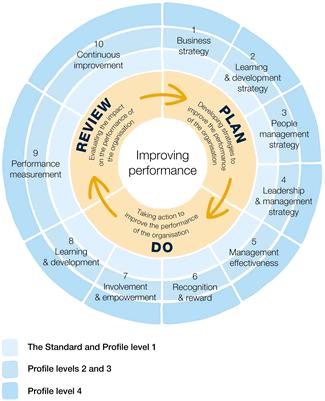
There are many facets to Investors in People.
Investors in people help us to communicate with our staff and for our staff to communicate with our customers.
We are pleased to recognise that our staff are people - and that our customers are people too. Some of our customers are parents. Some customers are the relations who pay the bills. It is possible, however, that our most important customer is each individual child.
If you have any comments to make about where you and your child fit into the circle, you are very welcome to telephone or email.
Sunday, April 27, 2008
The Sweet Music of the Eleven Plus
It would take a very special kind of child who could walk out onto a stage and give a concert without doing a lot of practice.
Preparing for the Eleven Plus examinations is like learning to play a musical instrument.
Your child can attend master classes in musical theory and learn all about the length and pitch of a note. Your child could learn to distinguish the power of a semibreve – and be fully conversant with the fact that a semibreve is the longest note – and is twice as long as a minim.
You could sit night after night with an array of tuning forks – and try to develop your child’s perfect pitch.
You could conduct learned discussions on the range of notes in the piccolo and the tuba.
But your child could not walk out onto the stage and play a piano concerto if he or she had never heard or played one before. It takes considerable practice to be able to apply theory to practice. Your child could pass Grade 5 in theory but would still be unable to execute a trumpet fanfare with learning to play the trumpet.
So it is with the Eleven Plus. We all know and hear about some children who are so naturally gifted that they can pass an Eleven Plus examination with very little work. The rest of the children have to do some work.
Passing an examination is not about learning a few tips.
You are trying to help your child acquire the necessary study skills that will carry him or her through the SATs, GCSE and `A’ level examinations in the years ahead. Working towards the Eleven Plus does not’ however, need to rely on the drudgery of working through paper after paper.
You want your child to be able to appreciate and savour the journey. You want your child to be excited and interested in working towards the examinations.
At the end of all your hard work you want your child to be up there on the stage receiving the congratulations of the teachers and fellow pupils because he or she has passed the Eleven Plus. You want to feel good about yourself too.
Saturday, April 26, 2008
The Dewey Decimal System and the Eleven Plus
Most libraries number books under the Dewey Decimal classification. Under this system, each book is given a class number from 000 to 999. Since this number indicates a class more than one book can have the same number.
All the 999 classes divide up into ten sections. Education is within Social Sciences.
`Social Sciences’ is numbered from 300 to 399.
Education falls within 370 and 379.
The number for information on schools is 371.
Anyone can walk into a library and head straight for 371. Schools and their activities come under 371. The number for Schools and the internet is 371. School Teaching is 371.
Some of your children will any way have some smattering of the Dewey Decimal system – because some school libraries do organise their books in this method,
The next time you take your child to the library take a few moments to share the excitement of rediscovering the Dewey Decimal system together.
Friday, April 25, 2008
Eleven Plus Chance
Adam Smith is on the `other’ side of the Twenty Pounds bank note. Adam Smith (1723-1790) wrote about how wealth was created.
Each bank note has a serial number:
AH28 412833
BE69 010440
AE22 754912
AK64 482001
Pure and unworldly Eleven Plus child will possibly have never played the game, loved by so many gamblers, of guessing the next number. Adult Number 1 holds up a £20.00 bank note, with the number hidden. Relatives, friends and acquaintances have to guess whether the £20.00 note in their pocket will be higher, lower or remarkably similar. The winner, naturally, takes the pot.
Before this is condemned as an Eleven Plus activity we need to look at the advantages.
We need to look at odds. What are the odds that our note will be higher than the other note?
We need to pay our way. Once the roll of £20.00 notes has dried up we need to look at other activities. We can’t play if the money has run out.
We need to look at the personality of the person we are playing against. How likely is our opponent to keep a straight face?
We need to devise sets of rules. We can use the whole number. We can choose only the final two numbers. We can select only the first letter after the letters at the beginning of the series.
We can experience the excitement of winning.
We can feel the dread of losing.
All of these emotions are part of the Eleven Plus.
When parents start working with their child on a course of Eleven Plus lessons they are taking a bit of a gamble. Has their child the ability? Are the books they have chosen the right ones. Are their friends giving them the correct advice? Will a tutor be any good? Can the family co-operate? Is Dad really that good at mathematics?
I am sure the same thrill can be obtained by passing over five and ten pound notes. It is likely, however, that to take chance after chance with a twenty pound note in a game will help to focus the mind.
And this is fact what parents want to happen. They don’t want to tear up and throw away their money. Parents want their child to focus and concentrate fiercely – when the time is ripe.
So keep the money safe. Try to guide your child towards building excitement and interest. After all you really want to take away any aspect of chance in your child’s Eleven Plus preparations.
Thursday, April 24, 2008
Eleven Plus Choices
I met a girl today who has turned down the chance of attending her local grammar school so that she can follow a different range of subjects at her local academy.
The academy specialises in sport, business and technology.
Her grammar school has a special interest in science.
She explained that she didn’t mind science but she really wanted to do business studies.
Naturally I asked why – and she replied, very pragmatically, that she thought there was more money in business than in science.
Her local academy has a very bright and highly motivated girl arriving in September!
The grammar school has another place to offer.
Every one is a winner.
Wednesday, April 23, 2008
Eleven Plus Common Sense
A leaflet about the Chelsea Flower Show has appeared or emerged on the kitchen table. This year the show is between the 20 – 24th of May.
Few of us will actually manage to obtain a ticket but full reporting will, no doubt, be on television. We will share the show with earnest and worthy television announcers presenting us with a mixture of gossip, reporting and information. Well known growers from all around the world will be tempting us with an explosion of colours and fragrances.
We won’t, however, be bludgeoned with all that many Latin names. Plants are named first for their genus. This is essentially the surname of the plant. The species give a further subdivision. Of course there are sub species of species. So the radish, much loved by the Egyptians and Ancient Greeks is called: Raphanus sativus.
The radish is first of all a plant. It is then a vascular plant – which means that it has tissues which carry food around the plant. The radish then comes from a family of seed plants. Further down it is a flowering plant. The radish is one of the mustard family – and then – and only then - can it be named as a genus: Raphanus. Later on the word sativus is added – and this means cultivated.
If only we could teach some of our Eleven Plus children to tackle a question in a step by step manner.
Take the question:
Anna, who wanted to go to grammar school, will be eleven on Friday the 27th of June 2008. She would like to have a few friends to her party. Why was the party not set on a Friday?
To select the correct answer from a range of multiple choices our Eleven Plus child will need to read the question – at least twice. He or she should then eliminate the answers that are obviously wrong. The detective work will then need to start.
First of all the question is from the family of Verbal Reasoning. The question, however, does not easily make sense.
The Latin Name? Verbalosa Nonsensensica.
If you can’t find a radish at the Chelsea Flower Show you may possibly be able to meet an Eleven Plus expert who will be able to explain to you that there are some questions that simply need a smattering of common sense.
Tuesday, April 22, 2008
Your Family and the Eleven Plus
It could be interesting to try to follow the family tree of all who have attempted the Eleven Plus examination in your family.
Of course you would start with the rest of your children. Then look at both parents – and their siblings. Look too at their children. A form of a pattern should be emerging.
Now look at the parents of all the adults. This will add to the drama.
You need now to abandon any hope of serious Eleven Plus research and continue with tracing your ancestry. Try adding the collateral lines from a distant forebear by adding the whole of the rest of the family.
While you are doing this mammoth research ask for any details of education. Degrees? Awards? Professional Development?
You may need to look for clues in any family documents. Church and family gravestones are often sources of information.
Print out the whole tree. Use a highlighter to pick out key points. Explain to your child the research you have done. Explain why you did the research.
When your child turns to you to ask why, you have the evidence to say:
There has been no one with a degree in our side of the family. You are going to be the first.
Look – all of our side of the family have been to university. You can not break the line.
You will be the sixth one in our family to try the eleven plus. You can not let us down.
If you pass the Eleven Plus – well and good. If not we won’t mind and will do our best to try to find a place for you in a good school.
It will depend on your aspirations and your background to determine which answer you think will be most appropriate for your child.
Monday, April 21, 2008
Eleven Plus Bribes
What is a worthwhile bribe for doing well on an Eleven Plus paper?
Should parents opt for lots of little bribes that add up to the same value as one big bribe?
Do children need to be bribed at all?
I am not sure if Edmund Clerihew Bentley was talking about Eleven Plus bribes when he wrote:
When their lordships asked Bacon
How many bribes he had taken
He had at least the grace
To get very red in the face.
The problem with a bribe and its influence on the behaviour of a bright Eleven Plus child is that if you offer the bribe you have to deliver.
“If you tidy your room you can have the last ice cream.”
“If you reach 25% on this very hard paper we will go to the cinema.”
If you offer a bribe, and then renegade, then you will never ever be forgiven. This will haunt you for ever – even if it was something really small. But think of the consequences of offering a trip to Disney for a good examination result.
Does your child actually have the ability to carry out the task?
Is your child likely to become defeated if a successful outcome can’t be achieved?
If your child does hold a grudge for an `unfair bribe’ the think how he or she will explain to the whole world just how unfair the whole `deal’ was. Who would have the red face then?
Eleven Plus Codes
A POMEGRANATE, BLUEBERRY & CRANBERRY SMOOTHIE has the following ingredients:
Pomegranate juice 23%, apple, banana, blueberry 10%, cranberry puree 7%. As Eleven Plus contenders we need to count the percentages. If we count the 23%, the 10% and the 7% the percentages add up to 40%. A percent adds up to 100 – so something is clearly missing.
If we count 23%, 10%, 10%, 10% and 7% we reach 60%. To repeat - a percent adds up to 100 – so something is clearly missing.
There was another figure of 30% on the label – but this referred to the 30% of RECYCLED MATERIAL. Even if we add the 60% and the 30% we still do not arrive at 100%.
All our Eleven Plus children need their five a day – and this smoothie can count towards Five A Day.
Children don’t need to rely on working through tedious Eleven Plus papers. Real life mathematics is all around them. Encourage discussion on `Energy kcal’, fibre and sodium.
Talk about time. How long does it take to complete a question? How long can be spent on all the different types of papers? Why does a smoothie have to be consumed within two days? How long does it take to read all the small print on a `super berry smoothie’?
Talk about reading the question. What ingredient could be used in a smoothie to `make it up’ to 100%? Explain why a `Five a Day’ can be in a bottle as well as being a tasty fresh apple.
Ask your child to explain why purchasing 3 for £5 is an attractive proposition for a retailer. Is 6 for £9 still a viable selling price for the manufacturer and the retailer? How much could one single `super berry smoothie’ be sold for?
And finally – on the lid of the bottle are the magic numbers and letters:
DU 18th Apr
UB 18th Apr
Does your bright and able Eleven Plus child treat these symbols as a type of code? Are they an anagram? Would wider reading help to solve the puzzle? Do Verbal Reasoning papers actually contain examples like these? Is this a fair test of intelligence? Should a child win a place in grammar school if he or she can decode:
DU 18th Apr
UB 18th Apr
Saturday, April 19, 2008
Eleven Plus Safety
I read some basic safety suggestions today. They were connected to that most valuable Eleven Plus device - the mobile phone.
The Mobile Phone
Always treat your device and its accessories with care and keep it in a clean and dust free place.
The Eleven Plus Mantra
Always keep your room and desk as tidy as possible and keep everything in a clean and dust free environment.
The Mobile Phone
Do not drop, throw or try to bend your device or its accessories.
The Eleven Plus Mantra
Do not throw your books, papers and pencil case to the floor if you suddenly flip.
The Mobile Phone
Do not carry your device in your back pocket as it could break when you sit down.
The Eleven Plus Mantra
Carry your Eleven Plus dreams in your head and your heart. Do not sit on your dreams.
The Mobile Phone
Always treat your device and its accessories with care and keep it in a clean and dust free place.
The Eleven Plus Mantra
Always keep your room and desk as tidy as possible and keep everything in a clean and dust free environment.
The Mobile Phone
Do not drop, throw or try to bend your device or its accessories.
The Eleven Plus Mantra
Do not throw your books, papers and pencil case to the floor if you suddenly flip.
The Mobile Phone
Do not carry your device in your back pocket as it could break when you sit down.
The Eleven Plus Mantra
Carry your Eleven Plus dreams in your head and your heart. Do not sit on your dreams.
Friday, April 18, 2008
Ten Eleven Plus Points.
Every good Eleven Plus child needs make two little prayers to Thomas Edison.
The first prayer could be about his light bulb – as he was the first recorded inventor of light bulb. The light bulb allows Eleven Plus children to work into the night.
The second prayer could be about Edison’s invention of the phonograph. Surely this was the forerunner of the MP3 player, the Ipod and all music on mobile phones.
Serious Eleven Plus children could possibly try to remember one of his most famous statements.
“I never allow myself to be discouraged under any circumstances. The three great essentials to achieve anything while are, first, hard work; second, stick-to-itiveness; third, common sense.”
1. Your child can be helped to understand the need to study and `see the light’.
2. The importance of being able to study without the TV on – and with the aid of music.
3. The need for hard work.
4. The importance of being able to stick to a task.
5. The application of common sense to work and play.
6. Understanding why questions have to be read at least twice.
7. The reason why work should be set out neatly.
8. Why even a tired child should work against a time limit.
9. Being prepared to admit that a mistake has been made.
10. The total comprehension of the statement that he or she is not expected to get every thing right.
Thursday, April 17, 2008
Eleven Plus Questions
I am very fortunate to have a copy of the 1958 EDUCATIONAL RESEARCH Volume 1 No 1.
Educational Research was published for the National Foundation for Education Research by Newnes Educational Publishing Co. Ltd., once a term in November, February and June. The price, post free throughout the world, was 5/6.
The idea of Educational Research was to try to bridge the gap between the worlds or research and the schools.
The first article was by Professor Philip E. Vernon who was Professor of Educational Psychology at the University of London, Institute of Education. The title was:
A NEW LOOK AT INTELLIGENCE TESTING
He wrote – and here I quote – “One other practical point to emphasise is that non verbal or pictorial group tests, and individual performance tests, are much inferior to verbal ones in predicting educability (except, possibly, in predicting ability for science and technical courses among older pupils).
Thus, their use for scholastic purposes should be avoided.
They may appear to give a fairer chance to very young children, or to older readers who are poor readers.”
In the same article he wrote: “General thinking skills, as well as attainment in junior school subjects, are highly relevant to grammar school success.”
We work with lots of children in Bexley where the Local Authority used to test children in Mathematics, English as well as Verbal and Non Verbal Reasoning. Bexley now tests, for the first time this year, in Verbal Reasoning and Mathematics.
Bexley, therefore, is no longer relying on non verbal reasoning and English – but is using verbal reasoning where `General thinking skills’ are required.
I brought my copy of `Educational Research’ with me when I left Zimbabwe all those years ago. I have subsequently worked with thousands of Eleven Plus children over the years. I still wish that I knew at least some of the answers.
Subscribe to:
Posts (Atom)