Why do parents want their children to do well in the Eleven Plus? For many parents the whole Eleven Plus round is an investment in terms of time, money and effort. Because of this massive investment parents, and some children, will no doubt want a return.
Some parents take their children to Eleven Plus lessons. Some will wait in the car while others go shopping.
Some parents will happily sit with their children working though Eleven Plus papers – when they have time.
There is naturally a cost in terms of books, papers, time, fees (for some) and emotional strain.
So what dividend can parents expect?
A pass at the Eleven Plus offers the opportunity, to some, to obtain good GCSE and A level grades. A good education could lead, if desired, to some form of professional training.
We know of parents who attended a grammar school and left without going on to university. These same parents are now likely to argue vociferously if their grammar school children do not wish to take up the benefits of a university education.
Years ago it was worked out that a young person could catch up relatively quickly on the missed earnings lost through attending university. Many of today’s university students will also end up leaving university owing large sums of money.
The loving parent who sits in a car waiting for a lesson to end is a true investor in education.
Saturday, November 08, 2008

Parents and the Eleven Plus Tue 4th
Parents and Eleven Plus children sometimes argue about how to solve a problem or how to work through an unfamiliar exercise. It is possible that a parent, under extreme duress, could be called upon to say: “Oh God. I have told you that already. Why did you not listen the first time?” When the exasperated mother or father needs to evokes a deity it could be the right time to recall the work done by Thucydides.
Thucydides wrote the definitive account of the Peloponnesian War. He noted that citizens who had been abroad for only a few months had found that the meanings of words had changed. He was also involved in gathering evidence about what had happened in the war. He tried to write his account so that it looked as if actual people influenced the outcome of the war – rather than the Gods themselves.
The question of meanings of words is important. If we think of a married woman returning to teach after a break of ten years it is possible that, for a moment, she may feel slightly out of touch. There have been so many changes in education over the past ten years.
Some parents may all feel a little out of touch. It may be that the last time one of the parents did long division was when they were at school. Some schools have adopted a more informal method called chunking. This is based on how many of us already do division in our head. The Eleven Plus syllabus, if such an animal actually exists seems to expect the more formal short and long division taught years ago.
The well meaning intention of chunking is to encourage children to use mental methods – and provide a shift away from pen and paper methods. Eleven Plus children have to learn that short division is presented in a different manner to long division. Parents have to accept that even if they teach their child in a different way to that taught at school – they may not be wrong or out of date. Chunking is still division. Children still have to know the division facts of tables.
What we are aiming at is trying to guide our Eleven Plus children into open ended learning situations – where the children are motivated to explore and learn for themselves. When this state of grace has been reached then children will stop whining: “We don’t do it like that at school.”
Parents can then, once again, feel valued contributors to the Eleven Plus process. “Yes dear, I am sure you are right. We do need, however, to at least explore an alternative method.” These softly spoken words would probably have made Thucydides happy.
Thucydides wrote the definitive account of the Peloponnesian War. He noted that citizens who had been abroad for only a few months had found that the meanings of words had changed. He was also involved in gathering evidence about what had happened in the war. He tried to write his account so that it looked as if actual people influenced the outcome of the war – rather than the Gods themselves.
The question of meanings of words is important. If we think of a married woman returning to teach after a break of ten years it is possible that, for a moment, she may feel slightly out of touch. There have been so many changes in education over the past ten years.
Some parents may all feel a little out of touch. It may be that the last time one of the parents did long division was when they were at school. Some schools have adopted a more informal method called chunking. This is based on how many of us already do division in our head. The Eleven Plus syllabus, if such an animal actually exists seems to expect the more formal short and long division taught years ago.
The well meaning intention of chunking is to encourage children to use mental methods – and provide a shift away from pen and paper methods. Eleven Plus children have to learn that short division is presented in a different manner to long division. Parents have to accept that even if they teach their child in a different way to that taught at school – they may not be wrong or out of date. Chunking is still division. Children still have to know the division facts of tables.
What we are aiming at is trying to guide our Eleven Plus children into open ended learning situations – where the children are motivated to explore and learn for themselves. When this state of grace has been reached then children will stop whining: “We don’t do it like that at school.”
Parents can then, once again, feel valued contributors to the Eleven Plus process. “Yes dear, I am sure you are right. We do need, however, to at least explore an alternative method.” These softly spoken words would probably have made Thucydides happy.
The Eleven Plus and Money Mon 3rd
In today’s world we need to save money. Years and years ago the village teacher was often in a single room school built by the squire – and the salary was supported by parents bringing money, food and offerings. Children often used to have to leave school early to help their parents with work around the home or the farm.
One of the reasons for the Eleven Plus examinations being introduced was to find children from less well off families – and offer them a fast track form of education.
Some of our grammar school children will be ready to take a range of GCSE topics early. They will then have time to complete their `A’ levels early. Some grammar school children could cut a year off their `A’ levels and leave school a year early. This would save grammar schools considerable money.
We see over and over again the rate at which motivated eleven year old children can absorb information. We sometimes wonder too at their ability to retain facts and methods. Some children are able to demonstrate, very early on, that they can use and apply what they have been taught. The grammar schools are able to absorb these bright and motivated young people – and continue to stimulate and engage them.
There are 168 Grammar Schools. Around five thousand pounds a year is being spent, at the moment, on each child. It would fall to an `consultant’ to be able to work out just how much money could be saved.
One of the reasons for the Eleven Plus examinations being introduced was to find children from less well off families – and offer them a fast track form of education.
Some of our grammar school children will be ready to take a range of GCSE topics early. They will then have time to complete their `A’ levels early. Some grammar school children could cut a year off their `A’ levels and leave school a year early. This would save grammar schools considerable money.
We see over and over again the rate at which motivated eleven year old children can absorb information. We sometimes wonder too at their ability to retain facts and methods. Some children are able to demonstrate, very early on, that they can use and apply what they have been taught. The grammar schools are able to absorb these bright and motivated young people – and continue to stimulate and engage them.
There are 168 Grammar Schools. Around five thousand pounds a year is being spent, at the moment, on each child. It would fall to an `consultant’ to be able to work out just how much money could be saved.
New Eleven Plus Methods Sunday 2nd
The proliferation of free Eleven Plus papers is a relatively new phenomenon. For years teachers, parents and children relied on the papers from well known and highly respected publishers and authors.
The internet has allowed any one to become a publisher of Eleven Plus materials. A web site emerges and then a range of free papers is offered to drive traffic to the site. This is the beauty of the World Wide Web. Who is to say that a paper written by a teacher who is preparing children for specific schools is not as good as a paper offered by one of the `big boys’? If the teacher has good local knowledge of preparing Eleven Plus children for specific schools then his or her free paper could be incredibly valuable.
The problem comes when the results of the free paper are compared with the results on a more traditionally recognised paper. 80% on a free paper may not compare easily with a similar mark on a paper designed for national consumption.
It is difficult to make precise generalisations about the comparability of the papers unless some simple information is gathered. The free paper may have been used by a hundred children, while an established national paper could have taken by thousands of children.
Measurement in education is represented by marks in tests and examinations. A mark of 45 on a free paper does not necessarily mean that a child will not pass the Eleven Plus. In the same way a similar mark on an established national Eleven Plus paper does not establish absolute eleven plus ability. The mark of 45 may come about because the test was given at the wrong time – or it could have been the wrong test.
Do parents need to fear a free online paper? Of course not. The wonderful thing about education in general – and the Eleven Plus in particular - is that there is an ever changing canvas. New ideas will emerge. New methods of teaching will come along. One grammar school is already testing candidates on computers.
The internet has allowed any one to become a publisher of Eleven Plus materials. A web site emerges and then a range of free papers is offered to drive traffic to the site. This is the beauty of the World Wide Web. Who is to say that a paper written by a teacher who is preparing children for specific schools is not as good as a paper offered by one of the `big boys’? If the teacher has good local knowledge of preparing Eleven Plus children for specific schools then his or her free paper could be incredibly valuable.
The problem comes when the results of the free paper are compared with the results on a more traditionally recognised paper. 80% on a free paper may not compare easily with a similar mark on a paper designed for national consumption.
It is difficult to make precise generalisations about the comparability of the papers unless some simple information is gathered. The free paper may have been used by a hundred children, while an established national paper could have taken by thousands of children.
Measurement in education is represented by marks in tests and examinations. A mark of 45 on a free paper does not necessarily mean that a child will not pass the Eleven Plus. In the same way a similar mark on an established national Eleven Plus paper does not establish absolute eleven plus ability. The mark of 45 may come about because the test was given at the wrong time – or it could have been the wrong test.
Do parents need to fear a free online paper? Of course not. The wonderful thing about education in general – and the Eleven Plus in particular - is that there is an ever changing canvas. New ideas will emerge. New methods of teaching will come along. One grammar school is already testing candidates on computers.
Eleven Plus English Sat 1st
We have spent the last week developing a different way of looking at GCSE English papers. Once a GCSE paper has been marked the results have to be analysed and then work needs to be prepared for each child.
The AQA paper of 2008 was made up of two sections. In Section A (27 marks) the candidates had to answer all the questions. They were advised to spend around an hour on this section of the paper. The marks for questions were shown in brackets. The instructions included a reminder for the need for good continuous English and clear presentation of answer.
Section B covered writing to `Argue, Persuade or Advise’. There were 18 marks for answering the question – with 9 marks for spelling, grammar and presentation.
The mark schedule did not allow many marks for grammar. Grammar itself is not as important as the ability to answer clearly and thoughtfully. KS4 pupils are not expected to remember that `To have’ takes after the Past Participle while `To be’ can be either a `Past Participle or a Present Participle’. It would help some KS4 children, however, to remember that a Complex Sentence has a Principal Clause and one or more Subordinate Clauses.
Eleven Plus children are expected to be able to write Simple Sentences (one Subject and one Predicate) and Compound Sentences (two or more Principal Clauses). When parents are reading their child’s work they could be encouraged to remind their children that a Principal Clause is often called an Independent Clause – because it stands on its own.
We started our review of the way we teach our Eleven Plus English by looking at KS4 English because it is an unwise teacher who only prepares a child for an examination. The English our children produce at the Eleven Plus stage must have some bearing on the English they write at GCSE.
It is not, however, our intention to teach our Eleven Plus children some general analysis with:
Please let me know (Principal Clause) where the clothes shop is (Subordinate Noun Clause) with all the beautiful wedding dresses. (Subordinate adjectival Clause).
Some children, however, will love the beauty and the sense of purpose of the grammar. The love of order will enthral some children – and lead them to a university course that will meet all their emotional and intellectual needs.
The AQA paper of 2008 was made up of two sections. In Section A (27 marks) the candidates had to answer all the questions. They were advised to spend around an hour on this section of the paper. The marks for questions were shown in brackets. The instructions included a reminder for the need for good continuous English and clear presentation of answer.
Section B covered writing to `Argue, Persuade or Advise’. There were 18 marks for answering the question – with 9 marks for spelling, grammar and presentation.
The mark schedule did not allow many marks for grammar. Grammar itself is not as important as the ability to answer clearly and thoughtfully. KS4 pupils are not expected to remember that `To have’ takes after the Past Participle while `To be’ can be either a `Past Participle or a Present Participle’. It would help some KS4 children, however, to remember that a Complex Sentence has a Principal Clause and one or more Subordinate Clauses.
Eleven Plus children are expected to be able to write Simple Sentences (one Subject and one Predicate) and Compound Sentences (two or more Principal Clauses). When parents are reading their child’s work they could be encouraged to remind their children that a Principal Clause is often called an Independent Clause – because it stands on its own.
We started our review of the way we teach our Eleven Plus English by looking at KS4 English because it is an unwise teacher who only prepares a child for an examination. The English our children produce at the Eleven Plus stage must have some bearing on the English they write at GCSE.
It is not, however, our intention to teach our Eleven Plus children some general analysis with:
Please let me know (Principal Clause) where the clothes shop is (Subordinate Noun Clause) with all the beautiful wedding dresses. (Subordinate adjectival Clause).
Some children, however, will love the beauty and the sense of purpose of the grammar. The love of order will enthral some children – and lead them to a university course that will meet all their emotional and intellectual needs.
Eleven Plus Listening Skills Fri 31st.
We sometimes have to exhort our Eleven Plus children to listen carefully. Some bright and able children seem to grow out of the habit of listening carefully.
Some examining boards run Listening Comprehension examinations for their students. A cassette recording is usually heard twice. There could be one speaker or a variety of voices. Usually a variety of accents are used.
The pieces could include extracts from broadcasts, interviews, conversations, announcements and talks.
The questions types could include filling in information, completing sentences, answering multiple choice questions and indicating whether statements are true or false.
Imagine how a listening comprehension test would broaden and extend the range of the Eleven Plus. Children would be encouraged to take an interest in current affairs. They would need to learn to listen to programs like the news and recorded excerpts from Question Time.
Teachers and parents would have to change the way they thought about lessons. The need for a verbal reasoning lesson starting with the words: “Let us look at page 23 on Analogies again” could die away. A family could huddle round the radio, once again, listening to current affairs programs and enjoying in-depth discussions.
Eleven Plus authors and publishers would find new markets opening up.
Sales of interactive story books would soar.
The net result of all the change would, hopefully, be a collection of Eleven Plus children prepared for a world where good listening skills are measured and valued.
Some examining boards run Listening Comprehension examinations for their students. A cassette recording is usually heard twice. There could be one speaker or a variety of voices. Usually a variety of accents are used.
The pieces could include extracts from broadcasts, interviews, conversations, announcements and talks.
The questions types could include filling in information, completing sentences, answering multiple choice questions and indicating whether statements are true or false.
Imagine how a listening comprehension test would broaden and extend the range of the Eleven Plus. Children would be encouraged to take an interest in current affairs. They would need to learn to listen to programs like the news and recorded excerpts from Question Time.
Teachers and parents would have to change the way they thought about lessons. The need for a verbal reasoning lesson starting with the words: “Let us look at page 23 on Analogies again” could die away. A family could huddle round the radio, once again, listening to current affairs programs and enjoying in-depth discussions.
Eleven Plus authors and publishers would find new markets opening up.
Sales of interactive story books would soar.
The net result of all the change would, hopefully, be a collection of Eleven Plus children prepared for a world where good listening skills are measured and valued.
Post Eleven Plus Work Thursday 30th
Some of our Eleven Plus children have stayed on for lessons after the Eleven Plus examinations. In some Eleven Plus areas children do not need to be able to write good English to be able to pass an Eleven Plus examination. The children and parents have thus opted to keep having lessons. Work on reasoning skills has been abandoned for enriched English, science and mathematics.
The act of passing the examination seems to bring peace of mind to the children and, to some, a great sense of humility. The children have proved themselves against the odds. They have made their parents, teachers, and schools happy.
These successful children are often highly receptive to taking on challenging work. A few clamour to use Key Stage 3 text books – because they will meet Key Stage 3 work in Year 7. In a sense the children want to personalise their learning. An individualised learning plan can help.
Examinations at KS3 are abandoned. New ways of looking at assessment are being explored. `Assessment for Learning’ has taken place in good schools over the years. There will still need to be a place for assessments within subjects.
QCA has suggested that new assessment methods will include:
Demonstrating ways of collecting evidence of pupil’s knowledge, skill and understanding.
Providing examples of collecting evidence
Exemplification of subject standards.
While our bright and able Eleven Plus children are waiting to start in their new grammar schools they could be stimulated and challenged if they were involved in the trials of new methods of assessments.
The act of passing the examination seems to bring peace of mind to the children and, to some, a great sense of humility. The children have proved themselves against the odds. They have made their parents, teachers, and schools happy.
These successful children are often highly receptive to taking on challenging work. A few clamour to use Key Stage 3 text books – because they will meet Key Stage 3 work in Year 7. In a sense the children want to personalise their learning. An individualised learning plan can help.
Examinations at KS3 are abandoned. New ways of looking at assessment are being explored. `Assessment for Learning’ has taken place in good schools over the years. There will still need to be a place for assessments within subjects.
QCA has suggested that new assessment methods will include:
Demonstrating ways of collecting evidence of pupil’s knowledge, skill and understanding.
Providing examples of collecting evidence
Exemplification of subject standards.
While our bright and able Eleven Plus children are waiting to start in their new grammar schools they could be stimulated and challenged if they were involved in the trials of new methods of assessments.
Eleven Plus Comprehension Wed 29th
Parents and children often think of comprehension as being reading a set exercise from a book and then answering series of questions. Do you remember these words?
“Mind that you answer in full sentences.”
To some children working through a comprehension exercise must be highly frustrating. There could, for example, be difficulty in retaining what has been read. This could mean that a child could read a passage and, by the end, be unsure of what has been read at the beginning.
A number of comprehension passages are based on classics of yester year. The content would therefore be exercises taken from extracts from books long out of print. The subject matter may not be pertinent to today’s world. Other passages, however `old fashioned’, may appeal to different children. The words may evoke imagination and stimulate the mind. (One man’s meat is another man’s poison.)
I have the privilege of seeing GCSE English scripts on a regular basis as children write GCSE Foundation and Higher papers before starting lessons. Some children (even those at grammar school) have difficulty in working out what the passage is about. Some grammar school children have difficulty in establishing what a GCSE question is asking. The basis of good comprehension skills can be built on at the Eleven Plus stage.
Children working on verbal reasoning exercises need strong comprehension skills. They need to be able to read a question and work out what is expected. With multiple choice verbal reasoning exercises the child also needs a good reading vocabulary.
Parents could try discussing the passage to be read in terms of where the selected words sit in an overall story. (It helps if mum or dad has read the book!) The style of writing can also be discussed to try to bring the passage alive. Finally the passage could be skimmed for hard or unfamiliar words. These new words could be discussed.
“Mind that you answer in full sentences.”
To some children working through a comprehension exercise must be highly frustrating. There could, for example, be difficulty in retaining what has been read. This could mean that a child could read a passage and, by the end, be unsure of what has been read at the beginning.
A number of comprehension passages are based on classics of yester year. The content would therefore be exercises taken from extracts from books long out of print. The subject matter may not be pertinent to today’s world. Other passages, however `old fashioned’, may appeal to different children. The words may evoke imagination and stimulate the mind. (One man’s meat is another man’s poison.)
I have the privilege of seeing GCSE English scripts on a regular basis as children write GCSE Foundation and Higher papers before starting lessons. Some children (even those at grammar school) have difficulty in working out what the passage is about. Some grammar school children have difficulty in establishing what a GCSE question is asking. The basis of good comprehension skills can be built on at the Eleven Plus stage.
Children working on verbal reasoning exercises need strong comprehension skills. They need to be able to read a question and work out what is expected. With multiple choice verbal reasoning exercises the child also needs a good reading vocabulary.
Parents could try discussing the passage to be read in terms of where the selected words sit in an overall story. (It helps if mum or dad has read the book!) The style of writing can also be discussed to try to bring the passage alive. Finally the passage could be skimmed for hard or unfamiliar words. These new words could be discussed.
Tuesday, October 28, 2008
Eleven Plus Rules
Always put something down - especially in tests incorporating multiple choice answers.
Read the question and you think you know what you have to do.
Read the question before writing the answer.
A few random guessed answers can not do any harm.
Do not spend too long on a question. It will be a remarkable question that will trip you up completely.
Look for a different approach if you cannot see a solution in a `reasonable' time.
When you can look back over your answers. Concentrate on questions you may have found hard.
Read the question and you think you know what you have to do.
Read the question before writing the answer.
A few random guessed answers can not do any harm.
Do not spend too long on a question. It will be a remarkable question that will trip you up completely.
Look for a different approach if you cannot see a solution in a `reasonable' time.
When you can look back over your answers. Concentrate on questions you may have found hard.
Eleven Plus Thoughts
"If I should die, think only this of me:
That there is some corner of a foreign field
This is for ever England."
Rupert Brook was writing about `The Soldier'.
Perhaps one day one of our Eleven Plus children will become as revered and well known as him. Perhaps someday one will write some stirring lines that begin:
"As I have passed, thank you to all concerned:
Thank you dear parents, and thank you - my teachers too
Without you, I may not have passed."
That there is some corner of a foreign field
This is for ever England."
Rupert Brook was writing about `The Soldier'.
Perhaps one day one of our Eleven Plus children will become as revered and well known as him. Perhaps someday one will write some stirring lines that begin:
"As I have passed, thank you to all concerned:
Thank you dear parents, and thank you - my teachers too
Without you, I may not have passed."
Saturday, October 25, 2008
Eleven Plus Mathematics
The steps an Eleven Plus child, as well as those of the parent, go through when trying to understand a mathematics problem, are many and varied. The child has to understand the problem. The parent also has to understand the problem. Then, after many shifts and turns, one person will start nodding as the argument is proved.
The steps towards full comprehension are many and varied. The order of progress towards that `Eureka’ moment will change according to circumstances.
First of all one or other of the two parties will need to try to come up with a solution.
A period of reflection will then take place. The hypothesis will be examined.
The answer then needs to be explained and while this is going on there will be an element of self verification.
Communicating the steps leading up to the answer needs to be executed in a peaceful and purposeful manner.
This is the stage where the infamous: “But I don’t understand!” comes in.
There then needs to be a very big effort to understand the other person’s take on the solution. The first examination of the answer could be provoke heated discussion.
The words: “I am sorry. You were right,” could be whispered around the house.
The steps towards full comprehension are many and varied. The order of progress towards that `Eureka’ moment will change according to circumstances.
First of all one or other of the two parties will need to try to come up with a solution.
A period of reflection will then take place. The hypothesis will be examined.
The answer then needs to be explained and while this is going on there will be an element of self verification.
Communicating the steps leading up to the answer needs to be executed in a peaceful and purposeful manner.
This is the stage where the infamous: “But I don’t understand!” comes in.
There then needs to be a very big effort to understand the other person’s take on the solution. The first examination of the answer could be provoke heated discussion.
The words: “I am sorry. You were right,” could be whispered around the house.
Friday, October 24, 2008
Understanding Eleven Plus Questions
At a certain stage on our second Eleven Plus course we encourage the children to work together in pairs or a small group for around twenty minutes.
We present a number of problems – and inform the children that the problems represent the final two questions on a demanding eleven plus examination paper. To understand the relevance of this exercise we need to understand the social conditions the children have been working in. On course the children have been exposed to a number of Eleven Plus mathematics questions. The answers are not obvious and the solutions sometimes demand at least two or three working stages.
Because the children are on a pre Eleven Plus course we should be able to take it for granted that at least one of the parents will have used words like: “Do your best, and don’t worry.” It is difficult to imagine any parents saying: “Get in there and beat every other child.” Equally, few parents will say: “If you see another child who is stuck, then slow down and give them as much help as you can.”
Children from different schools and backgrounds readily work together on this problem solving exercise. Some of the questions are not typical eleven plus questions. After all we are trying to give the children confidence in tacking new types of problems and engage in a very different approach to that found in the traditional Eleven Plus papers.
We try not to offer questions like this:
185 (141) 97
89 ( ) 103
In this case the answer is found by adding the numbers outside the brackets and halving the result.
Some questions can be answered with logic:
A portion of the floor of a bathroom is to be covered with 36 tiles arranged in a grid 9 by 4. The decorator only wants back and white tiles.
There can be no straight rows (horizontal, vertical or diagonal) of three adjacent white tiles. What is the smallest number of black tiles that are needed?
Naturally a question like this can not appear in an actual Eleven Plus paper for one reason or another. Children on an Eleven Plus course can, however, enjoy some social interplay while they try to solve the problem.
In a charged situation like the one described it is likely that any last minutes words of advice from a well meaning parent are forgotten. The glory of the hunt for a logical solution will cause the blood to pound and the heartbeat to rise. The children immediately throw out all restraint and challenge each other. The spirit of competition holds sway – but co-operation is also paramount.
Why do we present the children with really difficult questions? We know that many children spend too much time trying to answer a question when they have not read the question carefully. The main idea of the children work in a small group is to try to help them understand just how much time is spent trying to answer a question – when they have not read the question fully.
We present a number of problems – and inform the children that the problems represent the final two questions on a demanding eleven plus examination paper. To understand the relevance of this exercise we need to understand the social conditions the children have been working in. On course the children have been exposed to a number of Eleven Plus mathematics questions. The answers are not obvious and the solutions sometimes demand at least two or three working stages.
Because the children are on a pre Eleven Plus course we should be able to take it for granted that at least one of the parents will have used words like: “Do your best, and don’t worry.” It is difficult to imagine any parents saying: “Get in there and beat every other child.” Equally, few parents will say: “If you see another child who is stuck, then slow down and give them as much help as you can.”
Children from different schools and backgrounds readily work together on this problem solving exercise. Some of the questions are not typical eleven plus questions. After all we are trying to give the children confidence in tacking new types of problems and engage in a very different approach to that found in the traditional Eleven Plus papers.
We try not to offer questions like this:
185 (141) 97
89 ( ) 103
In this case the answer is found by adding the numbers outside the brackets and halving the result.
Some questions can be answered with logic:
A portion of the floor of a bathroom is to be covered with 36 tiles arranged in a grid 9 by 4. The decorator only wants back and white tiles.
There can be no straight rows (horizontal, vertical or diagonal) of three adjacent white tiles. What is the smallest number of black tiles that are needed?
Naturally a question like this can not appear in an actual Eleven Plus paper for one reason or another. Children on an Eleven Plus course can, however, enjoy some social interplay while they try to solve the problem.
In a charged situation like the one described it is likely that any last minutes words of advice from a well meaning parent are forgotten. The glory of the hunt for a logical solution will cause the blood to pound and the heartbeat to rise. The children immediately throw out all restraint and challenge each other. The spirit of competition holds sway – but co-operation is also paramount.
Why do we present the children with really difficult questions? We know that many children spend too much time trying to answer a question when they have not read the question carefully. The main idea of the children work in a small group is to try to help them understand just how much time is spent trying to answer a question – when they have not read the question fully.
Thursday, October 23, 2008
Eleven Plus Levels
We often use the words: “Oh yes, he (she) has reached an Eleven Plus level.
In the narrowest sense this could mean that the child has passed, or has the potential to pass, an Eleven Plus examination.
The words could also mean that the child is mentally ready to cope with not only Eleven Plus work, but also the pressures of an Eleven Plus examination.
Some children may be working at or around an Eleven Plus level for the duration of the pre examination preparation. Other children may have the ability to rise to the occasion and then surprise all concerned.
Reaching an Eleven Plus level may refer to one subject only – and not necessarily to the whole examination.
Some parents may choose to hear that the much loved child has reached an Eleven Plus level through the medium of standardised tests. Another child may be awarded the `Reached Eleven Plus Level’ accolade simply on the basis of the experience of the teacher.
It must be comforting for many parents when they realise that the eleven plus examination does not need to be approached in a set manner. One mother may, for example, prefer to work through eleven plus papers with her child, while a different parent may prefer to adopt a more diverse system.
In the narrowest sense this could mean that the child has passed, or has the potential to pass, an Eleven Plus examination.
The words could also mean that the child is mentally ready to cope with not only Eleven Plus work, but also the pressures of an Eleven Plus examination.
Some children may be working at or around an Eleven Plus level for the duration of the pre examination preparation. Other children may have the ability to rise to the occasion and then surprise all concerned.
Reaching an Eleven Plus level may refer to one subject only – and not necessarily to the whole examination.
Some parents may choose to hear that the much loved child has reached an Eleven Plus level through the medium of standardised tests. Another child may be awarded the `Reached Eleven Plus Level’ accolade simply on the basis of the experience of the teacher.
It must be comforting for many parents when they realise that the eleven plus examination does not need to be approached in a set manner. One mother may, for example, prefer to work through eleven plus papers with her child, while a different parent may prefer to adopt a more diverse system.
Wednesday, October 22, 2008
Eleven Plus Opportunities
Parents must often wonder just how to help their child to make as full a use as possible of all the opportunities that available. We have had some fantastic Eleven Plus Results. In Kent the children sit three papers – covering mathematics as well as verbal and non verbal reasoning. Full marks is represented by a standardised score of 140. One of our boys, in our centre at Dartford, scored 140 on all three papers. Full congratulations to the boy, his teachers at school, our tutor (Jenny) and her assistants. It is the parents, however, who need most praise for affording their child the opportunity to do well.
Sitting down and spending time chatting about examinations is an example of an opportunity.
A different set of opportunities lie in the hands of the teacher and the school. A sympathetic listening head and a caring and involved teacher must help.
Providing the right materials in the form of books, papers, CDs and access to the internet must ensure that the child has the best possible chance.
The magic steps to progress must include making a full analysis of the subject matter.
Looking carefully at examination requirements is required. Earlier a mother brought in around ten different Eleven Plus books that she had used with her son for the Eleven Plus. Her son had written everything in pencil – and the mother explained that she could rub every thing out and thus reuse the books with her daughter. This was all well and good. The boy, however, had sat an examination covering English, mathematics and verbal reasoning. The girl was to sit an examination which entailed a deep study of verbal and non verbal reasoning. Very little of the work the son had done was relevant.
The parents then have to think about providing the best possible emotional setting. I will always be able to recall the hurt on a girl’s face a few years ago when her parents stood outside the classroom door and wanted to talk. The Eleven Plus examination was the following week. The parents announced that they were separating. They followed with a bald statement that because the mother was going to be living in a smaller house, their daughter would not be sitting the Eleven Plus. It seems that the mother would have to move just outside the zoned area.
The bright, able and intelligent girl stood in stony silence. Events had overtaken her. The decision made by the parents was cataclysmic and unwelcome. I hold to today that she would have earned a place in a grammar school by sheer ability.
We never saw the girl again – or heard from her parents. What did happen in the end? Why didn’t the parents wait another five days to allow their much loved daughter to sit the examination? What happened to the poor parents in this drama? We had known the family for just over a year – and had enjoyed many chats about work, the family holidays and life in general.
There never can be a best time for parents to break up. A few days, however, before a `big’ examination, is possibly not the best possible time. What price opportunity?
Sitting down and spending time chatting about examinations is an example of an opportunity.
A different set of opportunities lie in the hands of the teacher and the school. A sympathetic listening head and a caring and involved teacher must help.
Providing the right materials in the form of books, papers, CDs and access to the internet must ensure that the child has the best possible chance.
The magic steps to progress must include making a full analysis of the subject matter.
Looking carefully at examination requirements is required. Earlier a mother brought in around ten different Eleven Plus books that she had used with her son for the Eleven Plus. Her son had written everything in pencil – and the mother explained that she could rub every thing out and thus reuse the books with her daughter. This was all well and good. The boy, however, had sat an examination covering English, mathematics and verbal reasoning. The girl was to sit an examination which entailed a deep study of verbal and non verbal reasoning. Very little of the work the son had done was relevant.
The parents then have to think about providing the best possible emotional setting. I will always be able to recall the hurt on a girl’s face a few years ago when her parents stood outside the classroom door and wanted to talk. The Eleven Plus examination was the following week. The parents announced that they were separating. They followed with a bald statement that because the mother was going to be living in a smaller house, their daughter would not be sitting the Eleven Plus. It seems that the mother would have to move just outside the zoned area.
The bright, able and intelligent girl stood in stony silence. Events had overtaken her. The decision made by the parents was cataclysmic and unwelcome. I hold to today that she would have earned a place in a grammar school by sheer ability.
We never saw the girl again – or heard from her parents. What did happen in the end? Why didn’t the parents wait another five days to allow their much loved daughter to sit the examination? What happened to the poor parents in this drama? We had known the family for just over a year – and had enjoyed many chats about work, the family holidays and life in general.
There never can be a best time for parents to break up. A few days, however, before a `big’ examination, is possibly not the best possible time. What price opportunity?
Tuesday, October 21, 2008
Eleven Plus Motivation
What motivates an Eleven Plus child to do well in the examinations?
For many children the motivation factors will be far more than chocolates, money and approval. There will be a self generated `good feeling’ factor which will grow as the child begins to recognise that a pass at the Eleven Plus is achievable.
Every time a child answers a group of questions correctly the confidence must grow and the child must feel better.
Just think of your child faced with a `big’ puzzle. Piece by piece the puzzle will build. It is highly unlikely that your child will want to complete the puzzle if offered mere `rewards’ of money or similar treats. The child will become driven by the satisfaction of completing the puzzle.
He or she may state: “I am going to finish this puzzle”. But making a statement like that will not be enough to drive the child to complete the task.
It may not be enough for a child working on a puzzle to hear: “Oh, he is so clever. He can do anything. He will finish puzzle come what may.”
Your child will need the inner satisfaction and drive that will come when success begins to tell its own story.
For many children the motivation factors will be far more than chocolates, money and approval. There will be a self generated `good feeling’ factor which will grow as the child begins to recognise that a pass at the Eleven Plus is achievable.
Every time a child answers a group of questions correctly the confidence must grow and the child must feel better.
Just think of your child faced with a `big’ puzzle. Piece by piece the puzzle will build. It is highly unlikely that your child will want to complete the puzzle if offered mere `rewards’ of money or similar treats. The child will become driven by the satisfaction of completing the puzzle.
He or she may state: “I am going to finish this puzzle”. But making a statement like that will not be enough to drive the child to complete the task.
It may not be enough for a child working on a puzzle to hear: “Oh, he is so clever. He can do anything. He will finish puzzle come what may.”
Your child will need the inner satisfaction and drive that will come when success begins to tell its own story.
Monday, October 20, 2008
Eleven Plus Knowledge
Eleven Plus children are not repositories for Eleven Plus `knowledge'.
Eleven Plus children must be able to make use of the different experiences they are offered.
Eleven Plus children must be able to make use of the different experiences they are offered.
Sunday, October 19, 2008
Preparing An Eleven Plus Child
At times children working towards the Eleven Plus must wonder why examinations were invented. Of course examinations have a vital role in education. They provide:
Information to the child about progress
Knowledge to parents about development
Feed back to the teacher to evaluate what has been taught - and where more teaching is needed.
The results of competitive public tests are used to select candidates for further education. Schools allow children into the sixth form if they have gathered a specified number of GCSEs. The admissions departments of universities use results to decide who should be offered a place. Of course employers use examination results to select aspiring candidates.
The earliest formal examinations were conducted by the Chinese Imperial Service over 2000 years ago. The examinations were established to try to eliminate nepotism and other unfair processes.
The aim of the Eleven Plus was to try to predict future success. In order to achieve success parents and children have to work hard.
At the Horniman Museum, in South London, today there were two great attractions.
The first was an entrancing exhibition `UTSAVAM - MUSIC FROM INDIA’. The drummers and dancers were wonderful – not only in their precision but in their willingness to listen and learn.
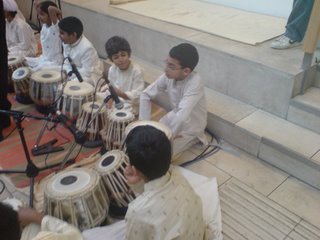
None of this would have happened without the support of the parents.
There was also a new aquarium – with some wonderful creatures of the depth.

So what makes an Eleven Plus child? You need ability. You need imaginative parents. You need a reason to try to pass the examination. Exposing your children to the culture of local museums is likely to contribute towards a well prepared Eleven Plus child.
Information to the child about progress
Knowledge to parents about development
Feed back to the teacher to evaluate what has been taught - and where more teaching is needed.
The results of competitive public tests are used to select candidates for further education. Schools allow children into the sixth form if they have gathered a specified number of GCSEs. The admissions departments of universities use results to decide who should be offered a place. Of course employers use examination results to select aspiring candidates.
The earliest formal examinations were conducted by the Chinese Imperial Service over 2000 years ago. The examinations were established to try to eliminate nepotism and other unfair processes.
The aim of the Eleven Plus was to try to predict future success. In order to achieve success parents and children have to work hard.
At the Horniman Museum, in South London, today there were two great attractions.
The first was an entrancing exhibition `UTSAVAM - MUSIC FROM INDIA’. The drummers and dancers were wonderful – not only in their precision but in their willingness to listen and learn.
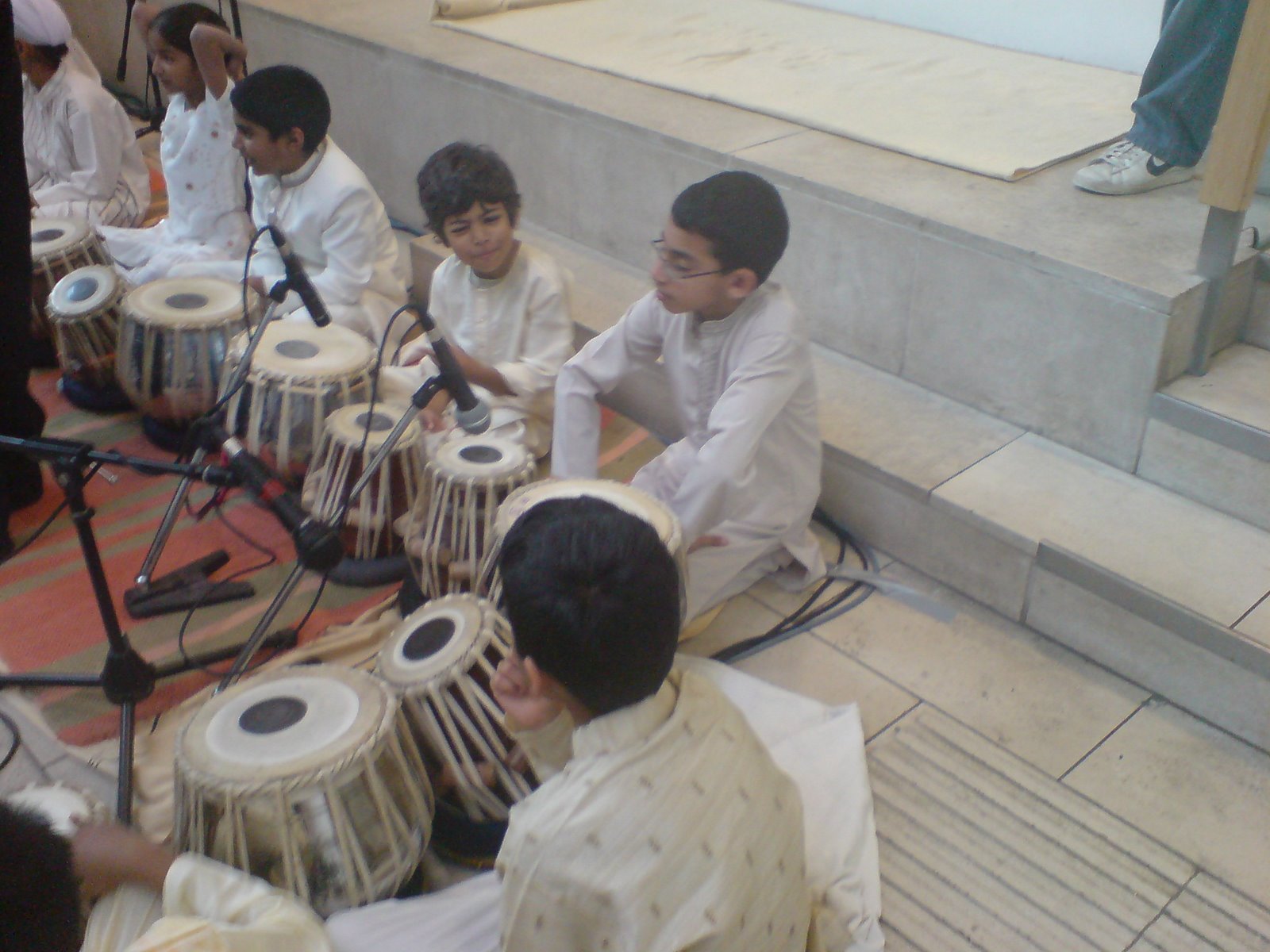
None of this would have happened without the support of the parents.
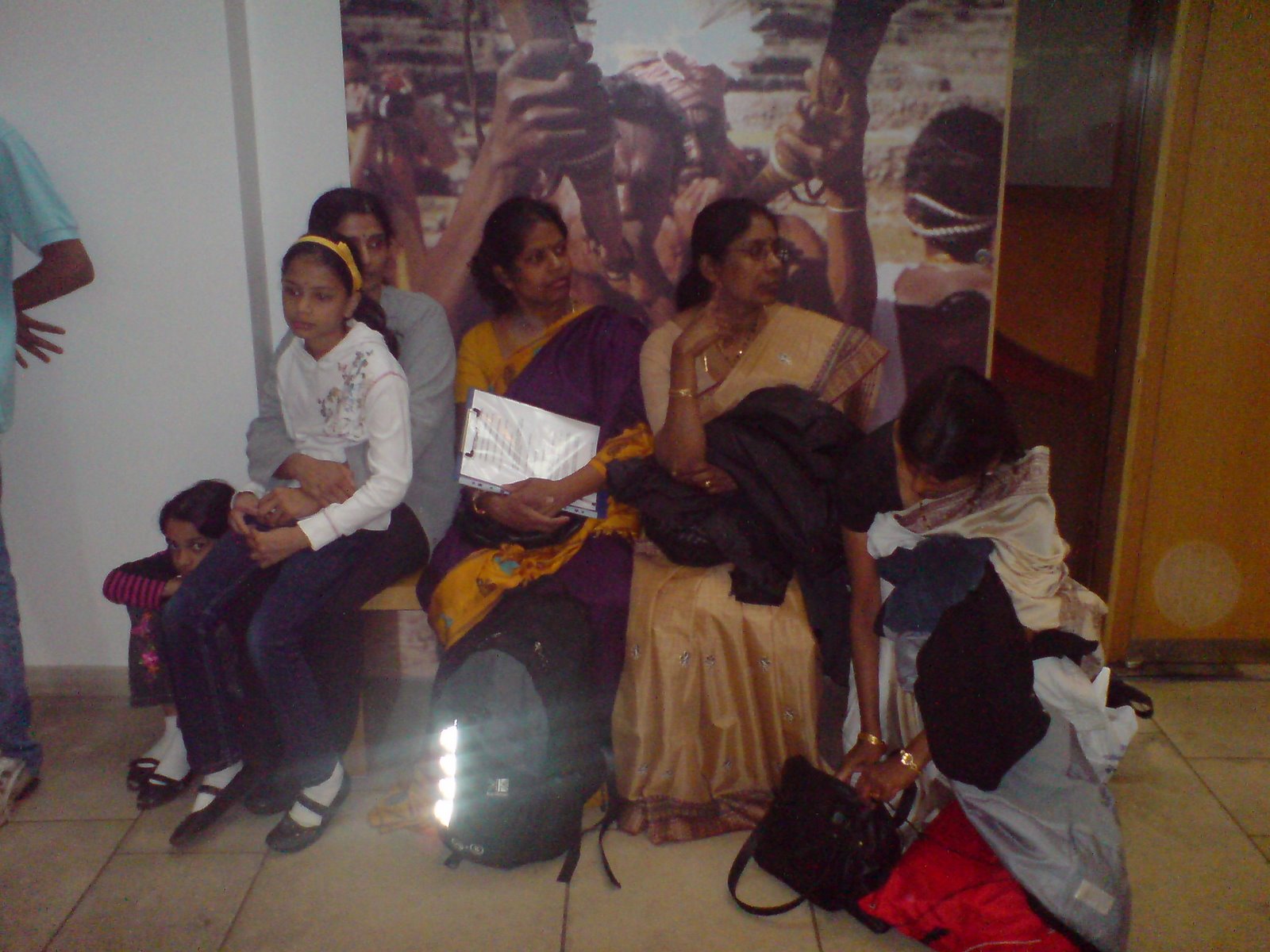
There was also a new aquarium – with some wonderful creatures of the depth.

So what makes an Eleven Plus child? You need ability. You need imaginative parents. You need a reason to try to pass the examination. Exposing your children to the culture of local museums is likely to contribute towards a well prepared Eleven Plus child.
Saturday, October 18, 2008
Eleven Plus Knowledge
How much knowledge does a child need to have in order to pass an Eleven Plus examination?
There is no straight forward answer. Perhaps Sissa ben Dahir could have come close to answering the question. You will, no doubt, recall that he was offered a reward for inventing the game of chess. He asked a grain of wheat to be placed on the first square, two grains on the second square, four grains on the third square and eight grains on the fourth square. He wanted enough wheat to be able to cover all 64 squares on the chess board.
The King asked him why he has coveted so little.
Sissa ben Dahir explained that he had asked for more wheat than was in the whole kingdom. He had asked for two to the power of sixty four grains of wheat! This was 43,252,003,274,489,856,000 grains of wheat!
Eleven Plus parents simply have to start at the beginning and add grains of knowledge one square at a time. A little bit one day, a bit more the next and let the knowledge build and build.
There is no straight forward answer. Perhaps Sissa ben Dahir could have come close to answering the question. You will, no doubt, recall that he was offered a reward for inventing the game of chess. He asked a grain of wheat to be placed on the first square, two grains on the second square, four grains on the third square and eight grains on the fourth square. He wanted enough wheat to be able to cover all 64 squares on the chess board.
The King asked him why he has coveted so little.
Sissa ben Dahir explained that he had asked for more wheat than was in the whole kingdom. He had asked for two to the power of sixty four grains of wheat! This was 43,252,003,274,489,856,000 grains of wheat!
Eleven Plus parents simply have to start at the beginning and add grains of knowledge one square at a time. A little bit one day, a bit more the next and let the knowledge build and build.
Friday, October 17, 2008
Eleven Plus Methods
At times scorn is thrown at `Traditional Teaching’. One objection to formal learning is that the teaching tends to become over generalised and thus becomes inadequate. More progressive methods are intended to try to cater for the needs of individual children. It really depends on what is being taught and by whom. A choir would be hard pressed to learn to sing in parts without a firm conductor.
In an effort to find an appropriate Eleven Plus method teachers and parents may need to experiment with a variety of methods at one time or another in the cycle of an Eleven Plus adventure.
The first, and possible the most obvious, would be to suggest some form of indoctrination. Here the teacher, or the parent, would be trying to instill a set of values and a positive attitude towards being examined.
A different form of Eleven Plus teaching could try to contain strong elements of conditioning. Here the teaching would probably attempt to include elements of the casual assimilation of knowledge.
A successful Eleven Plus tutor might be recognised as being highly skillful in helping a child to pass an examination. An Eleven Plus child, however, may need more than skillful teaching. What to teach and how to teach is a complex and emotional subject. Parents of Eleven Plus children have lots to think and talk about!
In an effort to find an appropriate Eleven Plus method teachers and parents may need to experiment with a variety of methods at one time or another in the cycle of an Eleven Plus adventure.
The first, and possible the most obvious, would be to suggest some form of indoctrination. Here the teacher, or the parent, would be trying to instill a set of values and a positive attitude towards being examined.
A different form of Eleven Plus teaching could try to contain strong elements of conditioning. Here the teaching would probably attempt to include elements of the casual assimilation of knowledge.
A successful Eleven Plus tutor might be recognised as being highly skillful in helping a child to pass an examination. An Eleven Plus child, however, may need more than skillful teaching. What to teach and how to teach is a complex and emotional subject. Parents of Eleven Plus children have lots to think and talk about!
Thursday, October 16, 2008
Eleven Plus Results
Waiting for the Bexley 11+ test results today my mind kept thinking: “to travel hopefully is a better thing than to arrive”.
Just over six hundred Eleven Plus children were tested, or had lessons or came on courses with us last year. We are waiting hopefully for results.
Please let us know!
Thank you.
Just over six hundred Eleven Plus children were tested, or had lessons or came on courses with us last year. We are waiting hopefully for results.
Please let us know!
Thank you.
Wednesday, October 15, 2008
Eleven Plus Selection
I have in my possession a 1901 copy of `A FIRST LATIN COURSE’ (Thirty-Eighth Edition) by the late Sir William Smith. The book is a little battered now but it carries the name `Aubrey E Carr’.
It is pleasant to think of grammar school children over many years learning Latin. I wonder which school `Aubrey E Carr’ attended. Did a deep seated love of the language evolve? Did `Aubrey E Carr’ every use anything at all from all the hours of study? The book does not claim any thing more than: “For the Use of the Lower Forms in Public and Private Schools”.
A quote from the preface reads: “In some cases boys had been compelled to commit to memory all the grammatical forms and syntactical rules without having their knowledge tested by practical application.”
As I looked through some verbal reasoning questions with a very bright nine year old today I was struck by the fact that this boy was gaining knowledge without any practical application.
Page 4 of the primer reads: “When two Nouns in Latin are connected by the verb `to be,’ they are put in the same case: as Britannia est insula, Britain is an island.
I hesitate to copy out the section of the verbal reasoning we were working on today for two reasons. The first is a fear of breaching copyright. The second is that many parents will immediately identify the section.
In one hundred years time some parents may look back on work produced for past generations of Eleven Plus children. The parents could come across some of the content of an `Eleven Plus Primer’. They would turn to each other and say: “How on earth did children manage to be educated to a good standard when they were faced with such an arcane method of selection?”
It is pleasant to think of grammar school children over many years learning Latin. I wonder which school `Aubrey E Carr’ attended. Did a deep seated love of the language evolve? Did `Aubrey E Carr’ every use anything at all from all the hours of study? The book does not claim any thing more than: “For the Use of the Lower Forms in Public and Private Schools”.
A quote from the preface reads: “In some cases boys had been compelled to commit to memory all the grammatical forms and syntactical rules without having their knowledge tested by practical application.”
As I looked through some verbal reasoning questions with a very bright nine year old today I was struck by the fact that this boy was gaining knowledge without any practical application.
Page 4 of the primer reads: “When two Nouns in Latin are connected by the verb `to be,’ they are put in the same case: as Britannia est insula, Britain is an island.
I hesitate to copy out the section of the verbal reasoning we were working on today for two reasons. The first is a fear of breaching copyright. The second is that many parents will immediately identify the section.
In one hundred years time some parents may look back on work produced for past generations of Eleven Plus children. The parents could come across some of the content of an `Eleven Plus Primer’. They would turn to each other and say: “How on earth did children manage to be educated to a good standard when they were faced with such an arcane method of selection?”
Tuesday, October 14, 2008
Eleven Plus Research
It has taken a long time. The penny drops for some people very quickly. Others need `a little more time’. Perhaps this Eleven Plus blog has, at last, come up with a solution.
The question is:
“Who will fund research into finding new ways to assess Eleven Plus children?”
Back in 1890 the good folk of England allowed the `Whiskey Money Act of 1890’ to be promulgated. This was a tax on spirits where the money was credited to the county councils to allocate the money as they thought fit. The original scheme was for the money to be used to for police superannuation and the partly for the purchase of publican’s licences in order to buy up redundant public houses.
This proposal was challenged and the money was used to support technical education in England. Counties were given a free hand and 93 out of 129 councils spent their `whiskey money’ on technical education.
It is easy to see where this line of thought is going. We need to revive a long forgotten tax and use this money to fund research into the Eleven Plus. Naturally the money would need to be collected locally – and there would be no need, initially, for any to land up in the coffers of the treasury.
All it would take is for every mother and father of an Eleven Plus child to buy a bottle of whiskey. The tax would be used to fund researchers, educators and psychologists.
Eventually the Government would want to jump onto the band wagon. An `Eleven Plus Quango’ would be established. There would be a `Minister of the Eleven Plus’. In time the minister would have a full department. The first `Minister of the Eleven Plus’ would be honoured and find a place in the House of Lords.
The Act of Parliament would be called: “The Eleven Plus Whiskey Act’ 2008”.
Every parent who sipped a little dram of 20 year old would be `doing good’ for the youth of England. How proud would they feel?
The question is:
“Who will fund research into finding new ways to assess Eleven Plus children?”
Back in 1890 the good folk of England allowed the `Whiskey Money Act of 1890’ to be promulgated. This was a tax on spirits where the money was credited to the county councils to allocate the money as they thought fit. The original scheme was for the money to be used to for police superannuation and the partly for the purchase of publican’s licences in order to buy up redundant public houses.
This proposal was challenged and the money was used to support technical education in England. Counties were given a free hand and 93 out of 129 councils spent their `whiskey money’ on technical education.
It is easy to see where this line of thought is going. We need to revive a long forgotten tax and use this money to fund research into the Eleven Plus. Naturally the money would need to be collected locally – and there would be no need, initially, for any to land up in the coffers of the treasury.
All it would take is for every mother and father of an Eleven Plus child to buy a bottle of whiskey. The tax would be used to fund researchers, educators and psychologists.
Eventually the Government would want to jump onto the band wagon. An `Eleven Plus Quango’ would be established. There would be a `Minister of the Eleven Plus’. In time the minister would have a full department. The first `Minister of the Eleven Plus’ would be honoured and find a place in the House of Lords.
The Act of Parliament would be called: “The Eleven Plus Whiskey Act’ 2008”.
Every parent who sipped a little dram of 20 year old would be `doing good’ for the youth of England. How proud would they feel?
Monday, October 13, 2008
Eleven Plus Competition
Competition for entry to grammar schools is heavy; not only because of the limited number of places, but because of the associated prestige.
To qualify for entry does not, however, guarantee a place.
What we need is a new White Paper that will look at a new shape for entrance requirements.
To qualify for entry does not, however, guarantee a place.
What we need is a new White Paper that will look at a new shape for entrance requirements.
Sunday, October 12, 2008
Eleven Plus Planning
“This is my first Eleven Plus child. I have heard so many different stories about the eleven plus that I am not all that sure what I should do. Some say get a tutor, others say why bother – do it all yourself. I have heard that last year’s examination was quite hard, and I don’t know how much I will need to push my child.”
Step 1: Find out what subjects your child will need to study. Some English papers, for example, are called `English’ because there is a multiple choice comprehension exercise. Other English papers may require a written story.
Step 2: Make a plan. It is easy to change the plan in the light of further knowledge – but you do need to start somewhere.
Step 3: What ever you do, it is wrong to rely simply on working your child through paper after paper – you, and your child, will need a lot more structure.
Step 4: Work out when and how your child will learn. Once again, this needs to be a flexible arrangement to fit in with the rest of the family
Step 5: Work out how you are going to evaluate progress.
“Oh, he is doing fine,” will suit some mothers but not others.
To help new parents through the mysteries of the Eleven Plus there is a large body of literature, a wealth of opinion and a network of interested people. All that parents can do is to listen, share, wonder and participate.
Step 1: Find out what subjects your child will need to study. Some English papers, for example, are called `English’ because there is a multiple choice comprehension exercise. Other English papers may require a written story.
Step 2: Make a plan. It is easy to change the plan in the light of further knowledge – but you do need to start somewhere.
Step 3: What ever you do, it is wrong to rely simply on working your child through paper after paper – you, and your child, will need a lot more structure.
Step 4: Work out when and how your child will learn. Once again, this needs to be a flexible arrangement to fit in with the rest of the family
Step 5: Work out how you are going to evaluate progress.
“Oh, he is doing fine,” will suit some mothers but not others.
To help new parents through the mysteries of the Eleven Plus there is a large body of literature, a wealth of opinion and a network of interested people. All that parents can do is to listen, share, wonder and participate.
Saturday, October 11, 2008
The Eleven Plus and Communication
Over many years the word mandrake has conjured up a vision of a drug that so powerful that men and women have craved it.
In `Anthony and Cleopatra’ Shakespeare used the word to describe a woman driven to despair.
Cleopatra: Ha, ha! Give me to drink mandragora.
Charmian: Why, madam?
Cleopatra: That I might sleep out this great gap of time. My Antony is away.
Parents may sometimes feel that there is a gap between their knowledge of the Eleven Plus and the steps they need to take to help their child pass the examination.
There could be a gap between what the teacher at school is permitted to say and what the parent wants to hear.
There could be a gap between the dreams of a mother and the needs and desires of the Eleven Plus child.
A gap could arise between a tutor and a pupil.
There could, sometimes, be a gap between the expertise of the teacher and the demands of the child.
In all the above uses of the word `gap’ we are looking at an imbalance – or some form of disparity. The different forms of gap need to be filled in different ways. Some gaps can be completed with knowledge. Understanding some one else’s points of view could help. It does seem, however, that many gaps in Eleven Plus knowledge can be filled by communication.
After all Cleopatra did herself away with an asp – because she thought that all was lost. If only Anthony had been able to text her in real time - and tell her his feelings. Then the two of them may have gone on to produce offspring capable of passing the Eleven Plus.
In `Anthony and Cleopatra’ Shakespeare used the word to describe a woman driven to despair.
Cleopatra: Ha, ha! Give me to drink mandragora.
Charmian: Why, madam?
Cleopatra: That I might sleep out this great gap of time. My Antony is away.
Parents may sometimes feel that there is a gap between their knowledge of the Eleven Plus and the steps they need to take to help their child pass the examination.
There could be a gap between what the teacher at school is permitted to say and what the parent wants to hear.
There could be a gap between the dreams of a mother and the needs and desires of the Eleven Plus child.
A gap could arise between a tutor and a pupil.
There could, sometimes, be a gap between the expertise of the teacher and the demands of the child.
In all the above uses of the word `gap’ we are looking at an imbalance – or some form of disparity. The different forms of gap need to be filled in different ways. Some gaps can be completed with knowledge. Understanding some one else’s points of view could help. It does seem, however, that many gaps in Eleven Plus knowledge can be filled by communication.
After all Cleopatra did herself away with an asp – because she thought that all was lost. If only Anthony had been able to text her in real time - and tell her his feelings. Then the two of them may have gone on to produce offspring capable of passing the Eleven Plus.
Friday, October 10, 2008
Variables Affecting Eleven Plus Results
There are a number of variables that will affect a child’s performance in the Eleven Plus examinations. Each child will affected differently by the preparation and the events of the actual examination. Some factors will include:
Illness
The examination room condition
The extent of preparation
Attitude of the child towards the tests
Mother’s final pep talk. (Don’t worry dear, just do your best.)
Dad’s last minute advice. (Go get them Tiger!)
Visits to the toilet.
Late night.
Examination nerves.
Teachers and tutors have luxury of being able to take some of these factors into account when they are talking to mothers and fathers. Building a coherent picture of the child is easier after a few lessons and tests. “Oh yes, he is doing fine,” may be true at a certain stage of the preparation – but not as valid if offered the day before the actual examination.
The term `continuous assessment’ can be used to describe the terms of a child’s preparation – but the final examination is a one off. The Eleven Plus is one examination that can not be re-taken.
Of course parents could monitor scores on test papers themselves.
Suppose Heather scored:
Paper 1 2 3 4 5
Mark 45 50 40 45 50
The average mark Heather reaches is 46. (Average is total divided by number.)
We can now see how variable these marks are by calculating the variance from the average:
1 45 -1
2 50 +4
3 40 -6
4 45 -1
5 50 +4
If a variation from the mean suddenly grew to a remarkably high number then a fluctuation could be due to far more than `examination nerves’ or `illness’.
Illness
The examination room condition
The extent of preparation
Attitude of the child towards the tests
Mother’s final pep talk. (Don’t worry dear, just do your best.)
Dad’s last minute advice. (Go get them Tiger!)
Visits to the toilet.
Late night.
Examination nerves.
Teachers and tutors have luxury of being able to take some of these factors into account when they are talking to mothers and fathers. Building a coherent picture of the child is easier after a few lessons and tests. “Oh yes, he is doing fine,” may be true at a certain stage of the preparation – but not as valid if offered the day before the actual examination.
The term `continuous assessment’ can be used to describe the terms of a child’s preparation – but the final examination is a one off. The Eleven Plus is one examination that can not be re-taken.
Of course parents could monitor scores on test papers themselves.
Suppose Heather scored:
Paper 1 2 3 4 5
Mark 45 50 40 45 50
The average mark Heather reaches is 46. (Average is total divided by number.)
We can now see how variable these marks are by calculating the variance from the average:
1 45 -1
2 50 +4
3 40 -6
4 45 -1
5 50 +4
If a variation from the mean suddenly grew to a remarkably high number then a fluctuation could be due to far more than `examination nerves’ or `illness’.
Thursday, October 09, 2008
Comparing Eleven Plus Papers
A problem that parents are faced with is how well their child is doing as work towards the Eleven Plus progresses.
“My son always gets over 80% on papers. He finds them easy. His tutor says he should pass the Eleven Plus.”
“My son is only reaching around 50% on papers. His tutor says he should pass the Eleven Plus.”
Which papers were they? Published by whom?
At what stage of the Eleven Plus journey was the paper administered?
Did the tutor or teacher help `just a little’ during the course of the exercise?
Had the child done the paper before? Had the answers been explained?
Had the mum or dad been through the paper the night before pointing out potential problems?
Was the paper done late at night or after a good night’s sleep?
We have children who are being prepared for a number of Eleven Plus boards or entrance tests. The content of the mathematics syllabus could be different for two children sitting side by side. A girl could be asked to write and essay for one board – but only do verbal reasoning for another.
80% on a recognised Eleven Plus paper could be very different from 80% on a downloaded paper. An underlying assumption that parents have to accept is that the papers are comparable.
Naturally any one involved in the extensive Eleven Plus market will try hard to ensure that the elements of a paper are broadly comparable with other papers. As the market stands at the moment any one can build an Eleven Plus paper and publish their work.
Parents, therefore, have the ability to choose what sort of paper they would like their child to work through. If their child is being tutored then the tutor might recommend a particular set of papers. The parent can naturally follow the advice – and then still go out and purchase a different set of papers.
“My son always gets over 80% on papers. He finds them easy. His tutor says he should pass the Eleven Plus.”
“My son is only reaching around 50% on papers. His tutor says he should pass the Eleven Plus.”
Which papers were they? Published by whom?
At what stage of the Eleven Plus journey was the paper administered?
Did the tutor or teacher help `just a little’ during the course of the exercise?
Had the child done the paper before? Had the answers been explained?
Had the mum or dad been through the paper the night before pointing out potential problems?
Was the paper done late at night or after a good night’s sleep?
We have children who are being prepared for a number of Eleven Plus boards or entrance tests. The content of the mathematics syllabus could be different for two children sitting side by side. A girl could be asked to write and essay for one board – but only do verbal reasoning for another.
80% on a recognised Eleven Plus paper could be very different from 80% on a downloaded paper. An underlying assumption that parents have to accept is that the papers are comparable.
Naturally any one involved in the extensive Eleven Plus market will try hard to ensure that the elements of a paper are broadly comparable with other papers. As the market stands at the moment any one can build an Eleven Plus paper and publish their work.
Parents, therefore, have the ability to choose what sort of paper they would like their child to work through. If their child is being tutored then the tutor might recommend a particular set of papers. The parent can naturally follow the advice – and then still go out and purchase a different set of papers.
Wednesday, October 08, 2008
Constructing an Eleven Plus Test
Do the men and women who develop the Eleven Plus tests try to present tests that are theoretically sound or are they building tests to select Eleven Plus children who have had access – and exposure - to T.V., the internet, ipods and mobile phones?
A number of the present Eleven Plus Selection books, that are available in bookshops or over the internet, were developed some years ago. Some children, however, are still confronted with questions like: `Which letter occurs in stream but not in disaster?’ Children today can go on MSN and communicate. Our eleven year old children can download music from a website and then share their labours with friends and family.
The people child write the actual Eleven Plus Tests must have a theoretical picture of what an ideal Eleven Plus child should look like. The picture painted by authors of books designed to help children pass the Eleven Plus does, however, seem rather gloomy at times.
A theoretical psychologist sets up construct a test with an expected outcome. Suppose, for example, one criteria for a successful Eleven Plus child was to be able to cook a cake. Cookery schools would develop in all Eleven Plus areas. We would be offered questions like:
“The correct term used to describe baking a cake is: A. burning B. cooking C. roasting D. freezing.”
If a preset number of children are able to answer the question correctly then the cooking question would be included in the test. (Naturally the question should discriminate between a child who should pass the Eleven Plus, and one who should fail.)
When one day there is a concerted push from parents to demand a rethink of what should be in an Eleven Plus test, then perhaps we may be urged to try to develop our Eleven Plus children in new and innovative ways.
A number of the present Eleven Plus Selection books, that are available in bookshops or over the internet, were developed some years ago. Some children, however, are still confronted with questions like: `Which letter occurs in stream but not in disaster?’ Children today can go on MSN and communicate. Our eleven year old children can download music from a website and then share their labours with friends and family.
The people child write the actual Eleven Plus Tests must have a theoretical picture of what an ideal Eleven Plus child should look like. The picture painted by authors of books designed to help children pass the Eleven Plus does, however, seem rather gloomy at times.
A theoretical psychologist sets up construct a test with an expected outcome. Suppose, for example, one criteria for a successful Eleven Plus child was to be able to cook a cake. Cookery schools would develop in all Eleven Plus areas. We would be offered questions like:
“The correct term used to describe baking a cake is: A. burning B. cooking C. roasting D. freezing.”
If a preset number of children are able to answer the question correctly then the cooking question would be included in the test. (Naturally the question should discriminate between a child who should pass the Eleven Plus, and one who should fail.)
When one day there is a concerted push from parents to demand a rethink of what should be in an Eleven Plus test, then perhaps we may be urged to try to develop our Eleven Plus children in new and innovative ways.
Tuesday, October 07, 2008
Chances of passing the Eleven Plus
How bright do you have to be to pass the Eleven Plus?
Francis Galton learned to read at the age of two and a half. He signed his name at three and wrote a letter at four. The day before his fifth birthday he wrote the following letter to his sister Adele:
Mt dear Adele, I am 4 years old and can read any English book. I can say all the Latin substantives and adjectives and active verbs besides 52 lines of Latin poetry. I can cast up any sum in addition and multiply by 2, 3, 4, 5, 6, 7, 8, 10. I can also say the pence table. I can read French a little and I know the clock.
Francis Galton
February 1827.
It is obvious that Galton had a good start in life. He turned out to be an eminent man. He had the advantage of three elements:
Natural ability
Personality traits
Environment
So how bright do you have to be to pass the Eleven Plus?
It seems you need ability.
You need to have a desire to pass the examination.
You need inspiring support from parents, school, teachers, family and peers.
Parents often ask teachers: “Will my child pass the Eleven Plus?”
All the teacher has to answer is: “Well he has the ability, the desire and the right support. I would say he does have a good chance.”
Francis Galton learned to read at the age of two and a half. He signed his name at three and wrote a letter at four. The day before his fifth birthday he wrote the following letter to his sister Adele:
Mt dear Adele, I am 4 years old and can read any English book. I can say all the Latin substantives and adjectives and active verbs besides 52 lines of Latin poetry. I can cast up any sum in addition and multiply by 2, 3, 4, 5, 6, 7, 8, 10. I can also say the pence table. I can read French a little and I know the clock.
Francis Galton
February 1827.
It is obvious that Galton had a good start in life. He turned out to be an eminent man. He had the advantage of three elements:
Natural ability
Personality traits
Environment
So how bright do you have to be to pass the Eleven Plus?
It seems you need ability.
You need to have a desire to pass the examination.
You need inspiring support from parents, school, teachers, family and peers.
Parents often ask teachers: “Will my child pass the Eleven Plus?”
All the teacher has to answer is: “Well he has the ability, the desire and the right support. I would say he does have a good chance.”
Monday, October 06, 2008
Eleven Plus Common Sense
Today, a little offering of common sense. Which of the following statements are `True' and which are `False'?
The marriage of cousins is likely to result in children of inferior intelligence.
Long slender hands indicate artistic temperament.
Especially intelligent children are likely to be weak and retarded physically.
Eleven Plus children are likely to become stressed.
Common sense observations are likely to be superficial. We need to listen to others - but make up our own minds.
The marriage of cousins is likely to result in children of inferior intelligence.
Long slender hands indicate artistic temperament.
Especially intelligent children are likely to be weak and retarded physically.
Eleven Plus children are likely to become stressed.
Common sense observations are likely to be superficial. We need to listen to others - but make up our own minds.
Sunday, October 05, 2008
Eleven Plus Syllabus
A famous psychologist called J. S. Bruner, although an American would have influenced the education of many of the people reading this account. He was concerned, among other things, with trying to make the curriculum better.
In his book: ‘The Process of Education’ he argued that teaching specific topics or skills without making their context in the broader fundamental structure of the field of knowledge is uneconomical.
In Eleven Plus Terms this is like expecting a child to pass an Eleven Plus examination by working purely through a prescribed range of selection papers.
In the first place it makes it very difficult for the eleven plus child to be able to generalise from what he or she has learnt to what will be encountered later.
In a selection paper there could be a question about division of fraction before a question on lowest terms. Most teachers would agree that it is probably better for the child to have a working knowledge of lowest terms before tackling division of fractions.
If a child feels that a subject is worth knowing then he or she may be in a position to make the knowledge usable is a different situation.
A child may know, for example, that Area = Length times Width, but may be unsure of how to multiply out the area of a shape that 3⅜ cms x 2⅝ cms. To achieve the correct answer a child needs to know what an improper faction is. The mixed number has to be changed to an improper to top heavy fraction. Some children may immediately change the fractions to decimal fractions. We would thus have 3.375 times 2.625. This combination of numbers may be easier for some to handle.
If a child does not have a coherent collection of skills then it is likely that the child, even a very bright eleven plus child, will forget what has been learnt.
Eleven Plus parents who work with their children may find that they are best served by followed a recognised Eleven Plus syllabus.
In his book: ‘The Process of Education’ he argued that teaching specific topics or skills without making their context in the broader fundamental structure of the field of knowledge is uneconomical.
In Eleven Plus Terms this is like expecting a child to pass an Eleven Plus examination by working purely through a prescribed range of selection papers.
In the first place it makes it very difficult for the eleven plus child to be able to generalise from what he or she has learnt to what will be encountered later.
In a selection paper there could be a question about division of fraction before a question on lowest terms. Most teachers would agree that it is probably better for the child to have a working knowledge of lowest terms before tackling division of fractions.
If a child feels that a subject is worth knowing then he or she may be in a position to make the knowledge usable is a different situation.
A child may know, for example, that Area = Length times Width, but may be unsure of how to multiply out the area of a shape that 3⅜ cms x 2⅝ cms. To achieve the correct answer a child needs to know what an improper faction is. The mixed number has to be changed to an improper to top heavy fraction. Some children may immediately change the fractions to decimal fractions. We would thus have 3.375 times 2.625. This combination of numbers may be easier for some to handle.
If a child does not have a coherent collection of skills then it is likely that the child, even a very bright eleven plus child, will forget what has been learnt.
Eleven Plus parents who work with their children may find that they are best served by followed a recognised Eleven Plus syllabus.
Saturday, October 04, 2008
Eleven Plus Mistakes
To pass an Eleven Plus examination means that a child has had to answer a number of questions – with remarkably few mistakes. It is rather sad to think that lots of questions with few mistakes ensure a successful Eleven Plus outcome.
The role of the Eleven Plus teacher then becomes one of trying to make sure that their child makes as few mistakes as possible. The teacher, therefore, has to give the child the methods and techniques of answering questions with out making mistakes.
This ensures that `mistake – avoidance’ becomes one of the main educational aims of eleven plus preparation.
The more experienced the teacher at anticipating where a child will make mistakes, the more likely the child is to pass the examination.
Avoiding mistakes offers us a totally gloomy approach to the eleven plus.
The heads of grammar schools must have at their `disposal’ some of the finest teachers in the land. Surely these `super teachers’ can come together to propose a new battery of eleven plus tests that allow children to make mistakes?
When these dedicated grammar school teachers look at their Year 7 children, they must see children who want to learn, and who have worked hard to earn a place. They must also worry that some of their children may have become preoccupied with a culture of avoiding errors.
Could the eleven plus examinations have provoked a climate where originality is stifled?
The role of the Eleven Plus teacher then becomes one of trying to make sure that their child makes as few mistakes as possible. The teacher, therefore, has to give the child the methods and techniques of answering questions with out making mistakes.
This ensures that `mistake – avoidance’ becomes one of the main educational aims of eleven plus preparation.
The more experienced the teacher at anticipating where a child will make mistakes, the more likely the child is to pass the examination.
Avoiding mistakes offers us a totally gloomy approach to the eleven plus.
The heads of grammar schools must have at their `disposal’ some of the finest teachers in the land. Surely these `super teachers’ can come together to propose a new battery of eleven plus tests that allow children to make mistakes?
When these dedicated grammar school teachers look at their Year 7 children, they must see children who want to learn, and who have worked hard to earn a place. They must also worry that some of their children may have become preoccupied with a culture of avoiding errors.
Could the eleven plus examinations have provoked a climate where originality is stifled?
Friday, October 03, 2008
Eleven Plus Apprentices
In the tale of Oliver Twist Mr Sowerberry took on Oliver as an apprentice. Oliver was not very happy about this so wandered around with a rather miserable face. Mr Sowerberry was an undertaker, so there was no wonder that Oliver was not all that happy. Oliver’s role was to attend funeral of children.
For many poor children becoming an apprentice must have been a wonderful opportunity. An apprentice would usually have had food and lodging along with an opportunity to learn a trade. The ambitious apprentice could, in time, become a master - with all the attendant perks of the job.
Many parents have a dream about their children following an academic career. There could be a real opportunity for a team of CRB checked academics to take on a team of young pre Eleven Plus children and guide them towards an academic career.
The children would have to work through Eleven Plus papers for no more four hours a day. Two hours would be spent in reading improving books. Twenty minutes each day would need to be spent on maintaining an on-line diary that was accessible to their parents. The day would fill up very quickly.
It would not take long for some children to become involved and caught up in the race for academia.
Indeed some children would be able to turn to their savants, and plead in heart breaking tones: “Please Sir, I want some more Verbal Reasoning.”
For many poor children becoming an apprentice must have been a wonderful opportunity. An apprentice would usually have had food and lodging along with an opportunity to learn a trade. The ambitious apprentice could, in time, become a master - with all the attendant perks of the job.
Many parents have a dream about their children following an academic career. There could be a real opportunity for a team of CRB checked academics to take on a team of young pre Eleven Plus children and guide them towards an academic career.
The children would have to work through Eleven Plus papers for no more four hours a day. Two hours would be spent in reading improving books. Twenty minutes each day would need to be spent on maintaining an on-line diary that was accessible to their parents. The day would fill up very quickly.
It would not take long for some children to become involved and caught up in the race for academia.
Indeed some children would be able to turn to their savants, and plead in heart breaking tones: “Please Sir, I want some more Verbal Reasoning.”
Thursday, October 02, 2008
The Eleven Plus Journey
Year 5 parents are no doubt talking about the approaching Eleven Plus examination – after all the September / October 2009 examinations are barely a year away.
An early point of discussion by parents must be as to what kind of experiences are needed to ensure that their child wants to learn.
Parents are also going to endure exhaustive research into what kind of resources are necessary to help their child prepare.
There will need to be some thought about whether the extra work should be formal, informal or a combination.
Parents no doubt will be able to be immensely creative in their desire for answers that will suit their child’s circumstances. Parents also know that rewarding their children for hard work and success is an essential part of the Eleven Plus process.
During the Eleven Plus journey, parents will at some time or another, plan, research, discuss, be creative and also be unafraid of giving praise when it is due.
An early point of discussion by parents must be as to what kind of experiences are needed to ensure that their child wants to learn.
Parents are also going to endure exhaustive research into what kind of resources are necessary to help their child prepare.
There will need to be some thought about whether the extra work should be formal, informal or a combination.
Parents no doubt will be able to be immensely creative in their desire for answers that will suit their child’s circumstances. Parents also know that rewarding their children for hard work and success is an essential part of the Eleven Plus process.
During the Eleven Plus journey, parents will at some time or another, plan, research, discuss, be creative and also be unafraid of giving praise when it is due.
Wednesday, October 01, 2008
True Eleven Plus Ability
When parents are chatting about the Eleven Plus the point is sometimes made that the Eleven Plus fails to get at the true ability of their child. Parents naturally feel that a child’s ability to do well on reasoning and mathematics is affected by his home background and other social factors. “My child comes from a good home. His dad went o grammar. We work on papers every night. He has a wonderful tutor.”
Parents hope that if they find out about the Eleven Plus, buy books and work with their child they will enhance the child’s ability to do well on different types of Eleven Plus tests.
The question of home background affecting scores could possibly be true in a town setting where children come together from many different backgrounds.
Some Eleven Plus children, however, come from a similar background. The children could, for example, come mainly from a leafy suburb. Their primary schools would be generally similar. The backgrounds of the home would also be very comparable.
If the Eleven Plus examination sat by these children only looked at reasoning, then we could expect that the test should be able to find the `true ability’ of the child.
Once we look for `true ability’ in mathematics and English a vast number of other factors could affect the Eleven Plus results.
Parents hope that if they find out about the Eleven Plus, buy books and work with their child they will enhance the child’s ability to do well on different types of Eleven Plus tests.
The question of home background affecting scores could possibly be true in a town setting where children come together from many different backgrounds.
Some Eleven Plus children, however, come from a similar background. The children could, for example, come mainly from a leafy suburb. Their primary schools would be generally similar. The backgrounds of the home would also be very comparable.
If the Eleven Plus examination sat by these children only looked at reasoning, then we could expect that the test should be able to find the `true ability’ of the child.
Once we look for `true ability’ in mathematics and English a vast number of other factors could affect the Eleven Plus results.
Tuesday, September 30, 2008
Eleven Plus Blame
Parents find it easy to accept their child failing the Eleven Plus examination if it is the marks in Mathematics and English that are not high enough. It is possible to blame the school, the national Curriculum, lack of preparation, poor teaching, lack of direction from the Eleven Plus tutor - in fact almost any thing.
The term `intelligence tests', that used to be part of the Eleven Plus examinations, has been replaced with words like: `Verbal Reasoning' and `Non Verbal Reasoning'. Reasoning is, however, one type of investigation of ability.
It is much easier for a parent to be able to rationalise failure if the examination has teachable elements. Parents, naturally, don't like to be told that their child does not have the ability for a grammar school education.
The term `intelligence tests', that used to be part of the Eleven Plus examinations, has been replaced with words like: `Verbal Reasoning' and `Non Verbal Reasoning'. Reasoning is, however, one type of investigation of ability.
It is much easier for a parent to be able to rationalise failure if the examination has teachable elements. Parents, naturally, don't like to be told that their child does not have the ability for a grammar school education.
Monday, September 29, 2008
Eleven Plus Day Dreams
Every time we see the high jump at the Olympic or World games we see a tall long legged athlete perform a form of visualisation.
The legs twitch. The body curves. The athlete starts talking aloud.
Suddenly the arms are raised over the head, the hands are clapped and the athlete bursts into a whirl of action.
The athlete has built a mental picture of a task executed and completed with the desired successful outcome. (He or she jumped over the bar!)
If the high jumper fails then there is a small rueful smile, a slight wave to the watching faithful, followed by a brisk walk back to the tracksuit.
We know that some children day dream – and this comes out in stories over and over again.
Applause for a daring or brilliant performance.
Saving someone, through a rescue or a brave act.
Living happily ever after.
It looks as if we need to add variations of around a fourth type of day dream:
The Child’s Eleven Plus Day Dream
This is where the Eleven Plus child learns to visualise the examination room, builds a picture of reading the instructions carefully, answers a raft of questions correctly, passes the examination and earns the undying love and gratitude of the parents.
The Day Dream of Eleven Plus Parents
A child runs out of school, throws arms around the parent, sobs: “Thank you for everything you have done. Now that I have passed my Eleven Plus I promise that I will love you for ever, never argue with you again, tidy my room and only text my friends on weekends - after I have done my homework.”
If parents see their child staring into space – apparently day dreaming and doing nothing at all – it may be that they are simply trying, like the high jumper mentioned earlier, to visualise success.
If you suddenly see your child dashing over to the nearest rose bush and begin sniffing loudly, you may be simply seeing the seeds of a deeper investigation into the: “Sweet smell of success.”
The legs twitch. The body curves. The athlete starts talking aloud.
Suddenly the arms are raised over the head, the hands are clapped and the athlete bursts into a whirl of action.
The athlete has built a mental picture of a task executed and completed with the desired successful outcome. (He or she jumped over the bar!)
If the high jumper fails then there is a small rueful smile, a slight wave to the watching faithful, followed by a brisk walk back to the tracksuit.
We know that some children day dream – and this comes out in stories over and over again.
Applause for a daring or brilliant performance.
Saving someone, through a rescue or a brave act.
Living happily ever after.
It looks as if we need to add variations of around a fourth type of day dream:
The Child’s Eleven Plus Day Dream
This is where the Eleven Plus child learns to visualise the examination room, builds a picture of reading the instructions carefully, answers a raft of questions correctly, passes the examination and earns the undying love and gratitude of the parents.
The Day Dream of Eleven Plus Parents
A child runs out of school, throws arms around the parent, sobs: “Thank you for everything you have done. Now that I have passed my Eleven Plus I promise that I will love you for ever, never argue with you again, tidy my room and only text my friends on weekends - after I have done my homework.”
If parents see their child staring into space – apparently day dreaming and doing nothing at all – it may be that they are simply trying, like the high jumper mentioned earlier, to visualise success.
If you suddenly see your child dashing over to the nearest rose bush and begin sniffing loudly, you may be simply seeing the seeds of a deeper investigation into the: “Sweet smell of success.”
Sunday, September 28, 2008
Eleven Plus Pressure
Before 1900 Normal Triplett, who was an experimental psychologist, tested how children were stimulated by competition.
He had them compete by winding reels that moved a flag towards a goal.
20 out of 40 worked faster when competing.
10 out of 40 did worse in competition.
10 out of 40 did about the same.
We don’t know if the ratio would still be true if we told our Eleven Plus children that they are entering a competition for places in a grammar school.
Presumably a number of Eleven Plus children would rise to the challenge.
Equally there may be some who would abhor the idea that they were entering into a competition with other children.
Parents are obviously aware that their children are entering a competition – but what percentage put their children under pressure as the examinations approach?
He had them compete by winding reels that moved a flag towards a goal.
20 out of 40 worked faster when competing.
10 out of 40 did worse in competition.
10 out of 40 did about the same.
We don’t know if the ratio would still be true if we told our Eleven Plus children that they are entering a competition for places in a grammar school.
Presumably a number of Eleven Plus children would rise to the challenge.
Equally there may be some who would abhor the idea that they were entering into a competition with other children.
Parents are obviously aware that their children are entering a competition – but what percentage put their children under pressure as the examinations approach?
Saturday, September 27, 2008
Eleven Plus Latin and Greek
There used to be many more grammar schools some years ago.
A Royal Commission in 1819 looked at why Latin and Greek were the preferred languages of the grammar school. The commission did a long term study over twenty years.
Think of the impact on Eleven Plus preparation if Eleven Plus children were expected to have more than a smattering of Latin and Greek in the entrance tests.
This would return tutoring for the Eleven Plus to a select few.
“My son has his Eleven Plus examinations in October of 2009. I have a number of questions, please, that I would like answered:
Do you do mathematics and verbal reasoning together in the same lesson – or do I have to have more than one tutor?
Is your Latin and Greek tutor able to communicate a love of learning as well as impart the basic elements of grammar?”
An Act of Parliament in 1840 allowed governors and trustees of grammar schools to be able to apply discretion in the matter of compulsory Latin and Greek.
It would probably take more than an Act of Parliament in today’s world to secure Latin and Greek as part of the selection process.
A Royal Commission in 1819 looked at why Latin and Greek were the preferred languages of the grammar school. The commission did a long term study over twenty years.
Think of the impact on Eleven Plus preparation if Eleven Plus children were expected to have more than a smattering of Latin and Greek in the entrance tests.
This would return tutoring for the Eleven Plus to a select few.
“My son has his Eleven Plus examinations in October of 2009. I have a number of questions, please, that I would like answered:
Do you do mathematics and verbal reasoning together in the same lesson – or do I have to have more than one tutor?
Is your Latin and Greek tutor able to communicate a love of learning as well as impart the basic elements of grammar?”
An Act of Parliament in 1840 allowed governors and trustees of grammar schools to be able to apply discretion in the matter of compulsory Latin and Greek.
It would probably take more than an Act of Parliament in today’s world to secure Latin and Greek as part of the selection process.
Friday, September 26, 2008
Eleven Plus Questions
The Hadlow report into `The Primary School’ in 1931 said:
“the curriculum is to be thought of in terms of activity and experience rather than knowledge to be acquired and facts to be stored”.
What a pity that the early proponents of the Eleven Plus chose to ignore this approach to education – and set about creating vast batteries of tests.
Just think of how some of the very brightest children in the country would react if their parents, teachers and tutors all worked on trying to develop activity and experience.
Some Eleven Plus questions rely very heavily on acquired knowledge and facts.
“the curriculum is to be thought of in terms of activity and experience rather than knowledge to be acquired and facts to be stored”.
What a pity that the early proponents of the Eleven Plus chose to ignore this approach to education – and set about creating vast batteries of tests.
Just think of how some of the very brightest children in the country would react if their parents, teachers and tutors all worked on trying to develop activity and experience.
Some Eleven Plus questions rely very heavily on acquired knowledge and facts.
Thursday, September 25, 2008
Eleven Plus Teaching Methods
Teachers and parents, working with Eleven Plus children, use a variety of teaching methods.
As well as monitoring the intellectual side, they have to take into account the physical and emotional side or learning.
Sometimes, for example, it may be deemed to be necessary to use a straightforward drill. A fact needs to be learnt. This is how you learn it. Now learn it. The problem is that the dullness of constant repetition tends to destroy interest. Teachers and parents will therefore use a variety of methods to try to help their child learn new facts.
It is very difficult, however, to be able to describe a single method that could be used to inculcate values or attitudes towards Eleven Plus work.
The school, for example, could have a positive attitude towards the Eleven Plus. A different school would be less enthusiastic. One Year 6 teacher could work hard with the class to prepare as many children as possible for the examination – while another teacher in the same school could, perfectly rightly, disagree with the whole idea of selective education. After all personal choice is at the heart of education.
Within a family there could be different attitudes towards the Eleven Plus. One parent could be highly focused – while another could murmur: “What will be, will be.”
An older brother or sister, or close relation, could have had a positive Eleven Plus outcome – while another could regard any discussion on the Eleven Plus as heresy. (Punishable by ostracism!)
All the new teaching aids exposed by the internet could lead to the assumption that new methods of teaching are being developed. In reality, among the most valuable methods of teaching Eleven Plus children, are probably those of warmth, interest and subject expertise.
As well as monitoring the intellectual side, they have to take into account the physical and emotional side or learning.
Sometimes, for example, it may be deemed to be necessary to use a straightforward drill. A fact needs to be learnt. This is how you learn it. Now learn it. The problem is that the dullness of constant repetition tends to destroy interest. Teachers and parents will therefore use a variety of methods to try to help their child learn new facts.
It is very difficult, however, to be able to describe a single method that could be used to inculcate values or attitudes towards Eleven Plus work.
The school, for example, could have a positive attitude towards the Eleven Plus. A different school would be less enthusiastic. One Year 6 teacher could work hard with the class to prepare as many children as possible for the examination – while another teacher in the same school could, perfectly rightly, disagree with the whole idea of selective education. After all personal choice is at the heart of education.
Within a family there could be different attitudes towards the Eleven Plus. One parent could be highly focused – while another could murmur: “What will be, will be.”
An older brother or sister, or close relation, could have had a positive Eleven Plus outcome – while another could regard any discussion on the Eleven Plus as heresy. (Punishable by ostracism!)
All the new teaching aids exposed by the internet could lead to the assumption that new methods of teaching are being developed. In reality, among the most valuable methods of teaching Eleven Plus children, are probably those of warmth, interest and subject expertise.
Wednesday, September 24, 2008
Eleven Plus Spelling
We need to spare a thought for the first spelling reformer – a monk called `Orm’.
Orm lived about 1200 AD. He tried to introduce a reform to spelling.
It would not help the writers of Eleven Plus Verbal Reasoning papers if spellings had not been reformed and free for all still existed.
In spite of a wide variety of reformers, spelling remained an essential element of the curriculum until the Education Act of 1870. It was then thought that spelling took up too much time in the curriculum.
If a spelling free for all existed it is unlikely that writers of Eleven Plus Verbal Reasoning papers would be able to get away with:
“Write down the two letters which occur in each word in each of the following lines.
Secret, plaster, storage, terrace, turnip.”
We know that the English language has some 40 sounds – and around 2 000 ways of writing the sounds.
Just think of the combinations that bright Eleven Plus children could invent if they were not tied down by conventions and rules.
Orm lived about 1200 AD. He tried to introduce a reform to spelling.
It would not help the writers of Eleven Plus Verbal Reasoning papers if spellings had not been reformed and free for all still existed.
In spite of a wide variety of reformers, spelling remained an essential element of the curriculum until the Education Act of 1870. It was then thought that spelling took up too much time in the curriculum.
If a spelling free for all existed it is unlikely that writers of Eleven Plus Verbal Reasoning papers would be able to get away with:
“Write down the two letters which occur in each word in each of the following lines.
Secret, plaster, storage, terrace, turnip.”
We know that the English language has some 40 sounds – and around 2 000 ways of writing the sounds.
Just think of the combinations that bright Eleven Plus children could invent if they were not tied down by conventions and rules.
Tuesday, September 23, 2008
Eleven Plus Free Writing
Many children will enter grammar school today thanks to Miss Dora Pym. Miss Pym was a lecturer in the Department of Education at Bristol University. She found that giving students an essay title caused the students to become inhibited in their writing.
She presented her students with a collection of objects – for example a carrot, an ebony elephant and a safety pin – and then asked them to write. The students touched the elephant, smelt the carrot and, presumably, pricked themselves with the safety pin. The ideas then flowed in a different manner to the ideas that came from a given title.
Eleven Plus children would need to be offered the tools of the trade –awareness of the need for careful planning, paragraphs, punctuation, spelling and neat presentation.
This method of stimulating ideas was used as part of the Eleven Plus test in Wiltshire between the years 1947 and 1951.
I bet some of the children who had to write on the topics offered in the recent Kent Eleven Plus tests wished that whoever set the examination had heard of Mrs Dora Pym.
She presented her students with a collection of objects – for example a carrot, an ebony elephant and a safety pin – and then asked them to write. The students touched the elephant, smelt the carrot and, presumably, pricked themselves with the safety pin. The ideas then flowed in a different manner to the ideas that came from a given title.
Eleven Plus children would need to be offered the tools of the trade –awareness of the need for careful planning, paragraphs, punctuation, spelling and neat presentation.
This method of stimulating ideas was used as part of the Eleven Plus test in Wiltshire between the years 1947 and 1951.
I bet some of the children who had to write on the topics offered in the recent Kent Eleven Plus tests wished that whoever set the examination had heard of Mrs Dora Pym.
Monday, September 22, 2008
Eleven Plus Stress
Parents of Eleven Plus children, almost by definition, want high quality education. The parents will hope that the schools are making sure that their children will have a well balanced education. A high quality education, and a well balanced education, is one where parents hope that there are no gaps in key areas, and also an education where their children are stimulated and involved.
Most parents are reasonably confident that they can provide a quality education outside of school for their Eleven Plus children. This does not necessary mean that there is a need to engage a top quality tutor – quality education can simply be an environment where a child feels secure and accepted.
The Eleven Plus examinations are a challenge for the whole family. After all the Eleven Plus examination is essentially looking at aspects of cognitive development. The intellectual skills of children are measured. Contrasts between boys and girls can be highlighted – not only in sex roles but in the ability and desire to assimilate information.
Relationships between mothers and fathers may alter as the examination grows close. For parents to be effective in their `Guidance Role’ they also need to be very aware of the changes that will take place in their children during the Eleven Plus year. Some families will find the whole experience stressful – while others will take it all in their stride.
Most parents are reasonably confident that they can provide a quality education outside of school for their Eleven Plus children. This does not necessary mean that there is a need to engage a top quality tutor – quality education can simply be an environment where a child feels secure and accepted.
The Eleven Plus examinations are a challenge for the whole family. After all the Eleven Plus examination is essentially looking at aspects of cognitive development. The intellectual skills of children are measured. Contrasts between boys and girls can be highlighted – not only in sex roles but in the ability and desire to assimilate information.
Relationships between mothers and fathers may alter as the examination grows close. For parents to be effective in their `Guidance Role’ they also need to be very aware of the changes that will take place in their children during the Eleven Plus year. Some families will find the whole experience stressful – while others will take it all in their stride.
Sunday, September 21, 2008
Passing the Eleven Plus
The challenge of the Eleven Plus examination starts in many different ways. Some children learn about the Eleven Plus through their friends at school. Others will know about the examination from older siblings. Some children will have been offered the: “Eleven Plus Talk.”
Children will be shown eleven plus materials in a variety of ways. First glimpses may be offered as the family walk purposely past Eleven Plus papers in local book shops. Other children will be handed down books and papers from friends, relations and friends of friends. (“If they were good enough for your sister, they will be good enough for you.” Sometimes an unsuspecting child will see a pile of books placed prominently on the table. (“Aren’t you lucky dear? Just look at all those lovely books. We are going to have fun.”)
There could be preliminary visits to tutors who have previously worked with family and friends. (“I know you will just love Mrs. H. Your sister thought she was wonderful.”) Some families will be looking for a new tutor or a fresh start. Other children will start with an assessment and then lessons.
“Why not try this little test on the computer? It does not matter if you make any mistakes. We are just going to try it out.”
“Mum, you know I hate the computer. I don’t like having to do all the working out in my head. You know I like to write my tables down when I am doing multiplication and division.”
“Oh mum, these C.D.s are fantastic. They are so helpful. I like the way they tell me if where I am going wrong.”
Some children will ease into regular lessons gracefully and thankfully. There will always be a few who resist any advice and help. There will be some children entering lessons smiling, happy and confident. There have also been the children who will walk in with downcast eyes, and never seem to attempt to engage the tutor. (Often these are the children who fail to say thank you.)
Some families will prefer to work at home on their own with their children. There will be some adults and children who will be privileged enough to be able to share the journey. These families will experience many ups and downs – but it will be a personal experience.
Naturally there will be some factors that parents feel they have no control over. Some children will be ready to become involved in regular study. Other children may be very able – but emerge with no desire to be competitive. There will also be the also be the children who will need to work very hard and will be prepared to do that `little bit extra”.
Finally there are the parents who will be talking in the play ground:
“Last year twenty nine children out of sixty in our school passed the Eleven Plus.”
“We managed five passes in the whole of our school. I am not sure if it is going to be any better this year.”
“What do you mean that your child goes to two different tutors? Why do you think that is really necessary?”
“Oh well, we will just do the best we can. After a pass is a pass.”
Children will be shown eleven plus materials in a variety of ways. First glimpses may be offered as the family walk purposely past Eleven Plus papers in local book shops. Other children will be handed down books and papers from friends, relations and friends of friends. (“If they were good enough for your sister, they will be good enough for you.” Sometimes an unsuspecting child will see a pile of books placed prominently on the table. (“Aren’t you lucky dear? Just look at all those lovely books. We are going to have fun.”)
There could be preliminary visits to tutors who have previously worked with family and friends. (“I know you will just love Mrs. H. Your sister thought she was wonderful.”) Some families will be looking for a new tutor or a fresh start. Other children will start with an assessment and then lessons.
“Why not try this little test on the computer? It does not matter if you make any mistakes. We are just going to try it out.”
“Mum, you know I hate the computer. I don’t like having to do all the working out in my head. You know I like to write my tables down when I am doing multiplication and division.”
“Oh mum, these C.D.s are fantastic. They are so helpful. I like the way they tell me if where I am going wrong.”
Some children will ease into regular lessons gracefully and thankfully. There will always be a few who resist any advice and help. There will be some children entering lessons smiling, happy and confident. There have also been the children who will walk in with downcast eyes, and never seem to attempt to engage the tutor. (Often these are the children who fail to say thank you.)
Some families will prefer to work at home on their own with their children. There will be some adults and children who will be privileged enough to be able to share the journey. These families will experience many ups and downs – but it will be a personal experience.
Naturally there will be some factors that parents feel they have no control over. Some children will be ready to become involved in regular study. Other children may be very able – but emerge with no desire to be competitive. There will also be the also be the children who will need to work very hard and will be prepared to do that `little bit extra”.
Finally there are the parents who will be talking in the play ground:
“Last year twenty nine children out of sixty in our school passed the Eleven Plus.”
“We managed five passes in the whole of our school. I am not sure if it is going to be any better this year.”
“What do you mean that your child goes to two different tutors? Why do you think that is really necessary?”
“Oh well, we will just do the best we can. After a pass is a pass.”
Friday, September 19, 2008
Eleven Plus Luck
A mother and daughter came to see us today.
The girl is at grammar school in Year 10.
“My daughter has come to see you to see if she can have a job with you.”
“Good morning. Please take a seat. My name is Shaun Drury.”
“Yes, you tested my daughter some years ago and said that she should be able to pass her Eleven Plus with out the benefit of extra lessons.”
“And how did go?”
“I am enjoying grammar school now. There is lots of work but the school is very good to us.”
“What will you be studying during `A’ levels?”
“Mainly the sciences. I am starting to do some `A’ level subjects all ready. How do I get a job here?”
“It is done through a covering letter and a C.V. The application is a formal process. We have Investors in People status. You will be contacted as soon as we have a vacancy. We then send you an on line Induction Park. The pack covers details of the post and information about how and when you will be trained.
You will then be invited to join our on line staff room where you will meet the other members of staff in all our centres. Your training will be given by your teacher in charge – and through our on line training suite.”
With this background we will soon have a valuable member of our team. We have a family that trusted us when we said that the work the family doing at home was enough – and that extra lessons were not needed. This is a major benefit of doing standardised tests with children before any lessons are offered.
The parents saved hundred of pounds of extra lessons fees.
The daughter was told that she was bright enough to be able to pass if she kept working hard at school and at home.
We will have the opportunity of working with an extremely bright young woman – who, if we can capture her imagination, will be a bright and loyal member of the team. We feel sure she will pass her enthusiasm and dedication on to the children she works with. What a role model for our young Eleven Plus candidates.
Does this sound like a lucky organisation?
You are not granted luck at the Eleven Plus stage – you earn it.
The girl is at grammar school in Year 10.
“My daughter has come to see you to see if she can have a job with you.”
“Good morning. Please take a seat. My name is Shaun Drury.”
“Yes, you tested my daughter some years ago and said that she should be able to pass her Eleven Plus with out the benefit of extra lessons.”
“And how did go?”
“I am enjoying grammar school now. There is lots of work but the school is very good to us.”
“What will you be studying during `A’ levels?”
“Mainly the sciences. I am starting to do some `A’ level subjects all ready. How do I get a job here?”
“It is done through a covering letter and a C.V. The application is a formal process. We have Investors in People status. You will be contacted as soon as we have a vacancy. We then send you an on line Induction Park. The pack covers details of the post and information about how and when you will be trained.
You will then be invited to join our on line staff room where you will meet the other members of staff in all our centres. Your training will be given by your teacher in charge – and through our on line training suite.”
With this background we will soon have a valuable member of our team. We have a family that trusted us when we said that the work the family doing at home was enough – and that extra lessons were not needed. This is a major benefit of doing standardised tests with children before any lessons are offered.
The parents saved hundred of pounds of extra lessons fees.
The daughter was told that she was bright enough to be able to pass if she kept working hard at school and at home.
We will have the opportunity of working with an extremely bright young woman – who, if we can capture her imagination, will be a bright and loyal member of the team. We feel sure she will pass her enthusiasm and dedication on to the children she works with. What a role model for our young Eleven Plus candidates.
Does this sound like a lucky organisation?
You are not granted luck at the Eleven Plus stage – you earn it.
Comparing Eleven Plus Children.
Many Eleven Plus parents want to know how their child compares with other children.
It should be able to offer parents information about their children based on marks their child has achieved on tests. We could then discuss a child based on performance versus ability.
A normal and happy child should have normal and happy parents.
It should be able to offer parents information about their children based on marks their child has achieved on tests. We could then discuss a child based on performance versus ability.
A normal and happy child should have normal and happy parents.
Thursday, September 18, 2008
Eleven Plus Parents
Parents approach the Eleven Plus examinations in a variety of ways. This discussion, therefore, needs to be more theoretical than an attempt to place parents into categories.
The Rule Follower
This is the Eleven Plus mother who thinks that she has to follow rules to help her child.
She wants the best books, the best tutor, the best information and the best possible chance for her child.
She thinks that if she surrounds herself with expert advice from other parents, a wide range of websites and every possible source of information, then her child will have a better chance.
The Loving and Accepting Parent
These are the parents who believe that their child can do no wrong.
They do the best they can.
Other parents may think they are quite soft.
Parents who understand the system
These could be second timers. They are both informed and laid back.
They have been there before. They are confident of their child’s ability.
Parents who understand how their behaviour affects their children
There are mums and dads who understand that if they are too intense they may place pressure on their children.
They understand that if they never read then they can not expect their children to read.
They know if they speak about school, the teachers and the tutors in uncomplimentary terms it is possible that their children who react accordingly.
At different times parents will feel the need to follow rules, at other times the same parents will be accepting and understanding. They will also realise that they can not run the institution down before their children. The different roles will merge and flow during the course of week in the life of an Eleven Plus child.
The Rule Follower
This is the Eleven Plus mother who thinks that she has to follow rules to help her child.
She wants the best books, the best tutor, the best information and the best possible chance for her child.
She thinks that if she surrounds herself with expert advice from other parents, a wide range of websites and every possible source of information, then her child will have a better chance.
The Loving and Accepting Parent
These are the parents who believe that their child can do no wrong.
They do the best they can.
Other parents may think they are quite soft.
Parents who understand the system
These could be second timers. They are both informed and laid back.
They have been there before. They are confident of their child’s ability.
Parents who understand how their behaviour affects their children
There are mums and dads who understand that if they are too intense they may place pressure on their children.
They understand that if they never read then they can not expect their children to read.
They know if they speak about school, the teachers and the tutors in uncomplimentary terms it is possible that their children who react accordingly.
At different times parents will feel the need to follow rules, at other times the same parents will be accepting and understanding. They will also realise that they can not run the institution down before their children. The different roles will merge and flow during the course of week in the life of an Eleven Plus child.
Wednesday, September 17, 2008
What can the Eleven Plus predict?
We assume that because children have passed their Eleven Plus and have `Gone to Grammar’, that they will do well academically. There are, however, bright children who pass the examination, win a place in a grammar school, and then do not enjoy the nature of the school.
There also must be some unspoken assumption, from parents and teachers, that just because a child has attended a grammar school, that he or she will move on to a successful career. One measure of success could be the big house or the big car. A different measure could be job happiness.
There is a pretty general idea that strength on verbal reasoning papers can be used to try to predict strong general ability. If this is true, then a good mark on a verbal reasoning paper could be likely to result in a good `A’ Level pass in key subjects.
It would be interesting to find out just how good the Eleven Plus examination is at predicting future occupational success. Different types of tests look to measure different skills. Different jobs use different abilities. Some kinds of tests may turn out to be better predictors of ability.
Is a boy who goes to grammar school, reads American Politics at Warwick University, and lands up with a job as editor on a large New York news paper, likely to have a higher verbal reasoning score than a girl who also goes to grammar, avoids reading and T.V., likes mountain bikes and reads Astrophysics at Cambridge?
Verbal reasoning tests are built around testing the strength of a vocabulary along with comprehension and the ability to think and reason. The girl reading Astrophysics may never have read a full book in her life. She could, however, have lost her place at grammar school because she did not know the answer to a rather specious verbal reasoning question.
It is clear that combinations of tests will have the best predictive strength. A single test can measure only some of the abilities and success in a particular job. Too many tests may cloud the issue – and fail to be effective in predicting future occupational success.
There also must be some unspoken assumption, from parents and teachers, that just because a child has attended a grammar school, that he or she will move on to a successful career. One measure of success could be the big house or the big car. A different measure could be job happiness.
There is a pretty general idea that strength on verbal reasoning papers can be used to try to predict strong general ability. If this is true, then a good mark on a verbal reasoning paper could be likely to result in a good `A’ Level pass in key subjects.
It would be interesting to find out just how good the Eleven Plus examination is at predicting future occupational success. Different types of tests look to measure different skills. Different jobs use different abilities. Some kinds of tests may turn out to be better predictors of ability.
Is a boy who goes to grammar school, reads American Politics at Warwick University, and lands up with a job as editor on a large New York news paper, likely to have a higher verbal reasoning score than a girl who also goes to grammar, avoids reading and T.V., likes mountain bikes and reads Astrophysics at Cambridge?
Verbal reasoning tests are built around testing the strength of a vocabulary along with comprehension and the ability to think and reason. The girl reading Astrophysics may never have read a full book in her life. She could, however, have lost her place at grammar school because she did not know the answer to a rather specious verbal reasoning question.
It is clear that combinations of tests will have the best predictive strength. A single test can measure only some of the abilities and success in a particular job. Too many tests may cloud the issue – and fail to be effective in predicting future occupational success.
Tuesday, September 16, 2008
Eleven Plus Laughter
We know from watching Television that producers expect us to laugh at a show if they expose us to canned laughter. A canned laugh used to be a laugh reproduced from some previous show. It is likely that some canned laughs are produced digitally.
"No one likes to laugh alone."
Perhaps, if there is enough groundswell, we can have the Eleven Plus canned laugh. This is the laugh that parents give when their child says, "Fine." It is sometimes better to laugh than to cry.
"No one likes to laugh alone."
Perhaps, if there is enough groundswell, we can have the Eleven Plus canned laugh. This is the laugh that parents give when their child says, "Fine." It is sometimes better to laugh than to cry.
Monday, September 15, 2008
Fuzzy Eleven Plus Questions
A few last minute thoughts as many of our Eleven Plus children enter the Eleven Plus examinations this week.
“Read the instructions at the front of the paper very carefully.”
“Work out when the examination will end. Watch the time as you are working.”
“Answer the questions you can first, then, go back if you have time.”
“If there are calculations with hours and minutes then remember that there are 60 minutes in an hour and 60 seconds in a minute if you are doing any addition or subtraction?”
Remind your child that if he or she gets a question like this to keep calm:
You have just been on holiday in France where your family meet a wine grower. The French man convinced your father to purchase part of the vineyard. The farmer suggested mixing Chardonnay with Pinot Noir. He had an excess of Chardonnay while a fellow farmer, a few farms away, had excess Pinot Noir. (Possibly caused by the down turn in the markets?) The idea was to produce a tasty `Vin de Table’. This would save the wine being turned into industrial alcohol.
The experiment begins:
One 12 litre container is half filled with Chardonnay, and half filled with Pinot Noir.
Another 12 litre container is one third filled with Chardonnay and two thirds filled with oil.
Both these containers are then emptied into a 24 litre container that will in time become the `Vin de Table’.
In the larger container what fraction is filled with Chardonnay, and what fraction is filled with Pinot Noir?
If you have been working with your children through a sensible Eleven Plus syllabus you will no doubt work out well within thirty seconds that there was seven twelfths Chardonnay and five twelfths Pinot Noir.
The night before an Eleven Plus examination is not the time to start explaining an example of this nature. By all means chat about wine and where it comes from, how to distinguish different flavours and why a few glasses can give a `Pre Eleven Plus’ buzz.
Leave the fractions part out of it all together. After all just before an examination you, and your child, need reassurance – not a protracted struggle with an unfortunate example.
A sudden thought:
Suppose the blog had advocated a few glasses of wine before tacking the question …. Would it still be possible to answer a question like the one above in around thirty seconds?
“Read the instructions at the front of the paper very carefully.”
“Work out when the examination will end. Watch the time as you are working.”
“Answer the questions you can first, then, go back if you have time.”
“If there are calculations with hours and minutes then remember that there are 60 minutes in an hour and 60 seconds in a minute if you are doing any addition or subtraction?”
Remind your child that if he or she gets a question like this to keep calm:
You have just been on holiday in France where your family meet a wine grower. The French man convinced your father to purchase part of the vineyard. The farmer suggested mixing Chardonnay with Pinot Noir. He had an excess of Chardonnay while a fellow farmer, a few farms away, had excess Pinot Noir. (Possibly caused by the down turn in the markets?) The idea was to produce a tasty `Vin de Table’. This would save the wine being turned into industrial alcohol.
The experiment begins:
One 12 litre container is half filled with Chardonnay, and half filled with Pinot Noir.
Another 12 litre container is one third filled with Chardonnay and two thirds filled with oil.
Both these containers are then emptied into a 24 litre container that will in time become the `Vin de Table’.
In the larger container what fraction is filled with Chardonnay, and what fraction is filled with Pinot Noir?
If you have been working with your children through a sensible Eleven Plus syllabus you will no doubt work out well within thirty seconds that there was seven twelfths Chardonnay and five twelfths Pinot Noir.
The night before an Eleven Plus examination is not the time to start explaining an example of this nature. By all means chat about wine and where it comes from, how to distinguish different flavours and why a few glasses can give a `Pre Eleven Plus’ buzz.
Leave the fractions part out of it all together. After all just before an examination you, and your child, need reassurance – not a protracted struggle with an unfortunate example.
A sudden thought:
Suppose the blog had advocated a few glasses of wine before tacking the question …. Would it still be possible to answer a question like the one above in around thirty seconds?
Sunday, September 14, 2008
Eleven Plus Reading
“What can I read? I am so bored of all the books we have at home. I know you say we have a library but I don’t want to read any of them. They are so boring.”
This is a familiar tale to many parents.
Your child feels frustrated because it is apparent that you just won’t listen,
You feel frustrated because you have bought all those lovely books and they simply sit on the shelf unread and unwanted.
There is a lot to be said for parents continuing to read aloud. This is one way that you and your child can share all the books you have bought. Reading aloud gives you the opportunity to be able to discuss the books – and it allows you to have a valuable time together as you go on an adventure through words. Books allow children and adults to experience and share thoughts and ideas. Books can also offer common ground for Eleven Plus children and their parents where the learning side can be covert rather than overt. (A bit sneaky but could be highly effective.)
You could do worse than to start with school books. These will give you the opportunity to be able to reminisce about your school days. Even better it could offer the grandparents a chance to tell about school in the `olden days’. The Gillian Cross books are a good example of books about school. There is a series about a Demon Headmaster who wants and demands power. The pupils are given the opportunity to be able to try to outwit the head teacher. This type of book offers good material for an “I remember” outburst.
Some families may enjoy fantasy stories. Books like these offer real escapism. It is true that Eleven Plus children need to read `important’ books to develop their vocabulary and broaden their thinking – but they do all need, at times, to be able to transported away.
I am asked on a fairly regular basis by mothers about suitable books for Eleven Plus children to read. A typical conversation could be:
“What is a good book for an Eleven Plus child to read?”
“Before we look at what may interest your child, what are you reading at the moment?”
“I never have time to read. I only read on holiday.”
This is a familiar tale to many parents.
Your child feels frustrated because it is apparent that you just won’t listen,
You feel frustrated because you have bought all those lovely books and they simply sit on the shelf unread and unwanted.
There is a lot to be said for parents continuing to read aloud. This is one way that you and your child can share all the books you have bought. Reading aloud gives you the opportunity to be able to discuss the books – and it allows you to have a valuable time together as you go on an adventure through words. Books allow children and adults to experience and share thoughts and ideas. Books can also offer common ground for Eleven Plus children and their parents where the learning side can be covert rather than overt. (A bit sneaky but could be highly effective.)
You could do worse than to start with school books. These will give you the opportunity to be able to reminisce about your school days. Even better it could offer the grandparents a chance to tell about school in the `olden days’. The Gillian Cross books are a good example of books about school. There is a series about a Demon Headmaster who wants and demands power. The pupils are given the opportunity to be able to try to outwit the head teacher. This type of book offers good material for an “I remember” outburst.
Some families may enjoy fantasy stories. Books like these offer real escapism. It is true that Eleven Plus children need to read `important’ books to develop their vocabulary and broaden their thinking – but they do all need, at times, to be able to transported away.
I am asked on a fairly regular basis by mothers about suitable books for Eleven Plus children to read. A typical conversation could be:
“What is a good book for an Eleven Plus child to read?”
“Before we look at what may interest your child, what are you reading at the moment?”
“I never have time to read. I only read on holiday.”
Saturday, September 13, 2008
The Eleven Plus and Co-Education
Parents of our present Eleven Plus children will have started thinking about the relative merits of co-educational and single sex grammar schools.
The word co-educational was used around 1927 to describe a school where boys and girls were admitted on equal terms – usually in the same classes and studying the same work. The co-educational school was different from the dual school where boys and girls shared the same building but were taught separately.
The Education Act of 1876 made the attendance of girls at school compulsorily. In village school girls usually attended the same school as their brothers – but in urban communities boys and girls were often taught in separate schools.
It did not take long for the girls to prove that they could learn as quickly as the boys. Many girls proved that they were able to learn even quicker than the boys. (Not much change here!)
The early arguments about co-education were focused around a fear that to educate boys and girls together would cause some form of emotional disturbance – and work would suffer. Those for co-education felt that it was essential that boys and girls worked together so that both sexes could grow and develop together.
Some single sex grammar schools use the same Eleven Plus examination for boys and girls. Other single sex grammar schools rely on setting their own entrance tests.
Parents will want to discuss the relative merits of both systems with their child – if there is a choice in their area between a co-educational and single sex school.
The word co-educational was used around 1927 to describe a school where boys and girls were admitted on equal terms – usually in the same classes and studying the same work. The co-educational school was different from the dual school where boys and girls shared the same building but were taught separately.
The Education Act of 1876 made the attendance of girls at school compulsorily. In village school girls usually attended the same school as their brothers – but in urban communities boys and girls were often taught in separate schools.
It did not take long for the girls to prove that they could learn as quickly as the boys. Many girls proved that they were able to learn even quicker than the boys. (Not much change here!)
The early arguments about co-education were focused around a fear that to educate boys and girls together would cause some form of emotional disturbance – and work would suffer. Those for co-education felt that it was essential that boys and girls worked together so that both sexes could grow and develop together.
Some single sex grammar schools use the same Eleven Plus examination for boys and girls. Other single sex grammar schools rely on setting their own entrance tests.
Parents will want to discuss the relative merits of both systems with their child – if there is a choice in their area between a co-educational and single sex school.
Friday, September 12, 2008
Reading Eleven Plus Questions
Literally hundreds of our Eleven Plus children will be writing their practice tests for the Eleven Plus tomorrow.
Some children may not read some of the questions carefully enough. After the practice examination, possibly even waiting until Monday, read through some questions with your child.
Errors that may hold up answering questions carefully include:
Using a finger or pencil to read a question on a word by word basis – as this tends to focus the eyes on the words in the question rather than on the content of the question.
Vocalising the words – or even sub vocalising the question as this tends, sometimes, to slow the reading of the question down so much that your child may have to keep reading a question over and over.
Regressing along a line of the question – this is where the eye goes back to look at a word. This can develop into a poor examination habit as the mind can then lose what the question is asking.
What advice can be offered to Eleven Plus parents and their children?
Read the questions at a measured pace.
Reread the question.
Look for spurious and unlikely multiple choice answers. This will help to eliminate answers that can not possibly be right.
Practice with your child the art of reading a sentence.
Work on the technique of answering questions rather than encouraging your child to complete yet another paper. Too many papers in the final week will do very little good what so ever.
Some children may not read some of the questions carefully enough. After the practice examination, possibly even waiting until Monday, read through some questions with your child.
Errors that may hold up answering questions carefully include:
Using a finger or pencil to read a question on a word by word basis – as this tends to focus the eyes on the words in the question rather than on the content of the question.
Vocalising the words – or even sub vocalising the question as this tends, sometimes, to slow the reading of the question down so much that your child may have to keep reading a question over and over.
Regressing along a line of the question – this is where the eye goes back to look at a word. This can develop into a poor examination habit as the mind can then lose what the question is asking.
What advice can be offered to Eleven Plus parents and their children?
Read the questions at a measured pace.
Reread the question.
Look for spurious and unlikely multiple choice answers. This will help to eliminate answers that can not possibly be right.
Practice with your child the art of reading a sentence.
Work on the technique of answering questions rather than encouraging your child to complete yet another paper. Too many papers in the final week will do very little good what so ever.
Thursday, September 11, 2008
Post Eleven Plus Blues
As the Eleven Plus examinations, for some children at least, grow closer some parents may need to be aware of a reaction that may come about after the last paper has been written.
The Comanche Indians used to live on a plateau for part of the year. This was a time of great hardship, where the tribe struggled for their existence – and the views of the elders were respected.
Later on in the year the tribe moved down to the plains – and the young men became the dominant force as they brought home the food.
In the whole society the son admired the father because of his ability to hunt and fight.
The father praised the son and took good care of him – because he knew that one day he too would be old and would need his son to look after him.
As the child moved towards being an adult –and indeed an `older’ man – there were periods when he was a vital part of the tribe. He needed to be a fierce warrior – and good a bringing home the food. Every one ran around him and looked after him.
It is a bit like this to some children after the Eleven Plus. In the days leading up the examination parents tip toe around their son – avoiding confrontation and lavishing lots of praise. (Building him up!)
During the examinations some parents may have to turn a blind eye to some behaviour as the stress of the tests may affect their child.
After the examination? Well anything can happen.
Some children will be `cool’ and move on.
Other children may worry.
Some children may react to the pressure being taken off.
Some may even find it difficult to find a balance in their lives without the concentrated work from papers.
Some parents may feel the need to sit down and have some `serious’ talks about the present and the future. Some parents will be well prepared – and others will have a more philosophical approach. There are no rules for parents to follow other than common sense.
The Comanche Indians used to live on a plateau for part of the year. This was a time of great hardship, where the tribe struggled for their existence – and the views of the elders were respected.
Later on in the year the tribe moved down to the plains – and the young men became the dominant force as they brought home the food.
In the whole society the son admired the father because of his ability to hunt and fight.
The father praised the son and took good care of him – because he knew that one day he too would be old and would need his son to look after him.
As the child moved towards being an adult –and indeed an `older’ man – there were periods when he was a vital part of the tribe. He needed to be a fierce warrior – and good a bringing home the food. Every one ran around him and looked after him.
It is a bit like this to some children after the Eleven Plus. In the days leading up the examination parents tip toe around their son – avoiding confrontation and lavishing lots of praise. (Building him up!)
During the examinations some parents may have to turn a blind eye to some behaviour as the stress of the tests may affect their child.
After the examination? Well anything can happen.
Some children will be `cool’ and move on.
Other children may worry.
Some children may react to the pressure being taken off.
Some may even find it difficult to find a balance in their lives without the concentrated work from papers.
Some parents may feel the need to sit down and have some `serious’ talks about the present and the future. Some parents will be well prepared – and others will have a more philosophical approach. There are no rules for parents to follow other than common sense.
Wednesday, September 10, 2008
Eleven Plus Calm
It is immediately obvious to any self respecting Eleven Plus parent that their child could never do enough wrong to warrant a reprimand. Of course parents are able to observe the relationship between other Eleven Plus parents and their offspring. Parents deal with misdemeanours in different ways.
Picture the setting. A mother organises a birthday party for eight at the cinema. (This is the weekend just before the Eleven Plus examination.) A meal at a smart restaurant is part of the treat. The eleven year old children will order for themselves – but the birthday mum will pick up the tag. Parents, mothers and fathers, are seated in a different restaurant – but within visual contact. One child plays up. All eyes look directly at the poor mother – or stare studiously in the future. Silence reigns.
All eight mothers would have different strategies for dealing with misbehaviour:
Oral
“Stop that or I will remove you from the meal – and you will not attend the cinema treat.”
“Oh dear, Jimmy is at it again. I told him not to eat our hamster before we came out.”
“If you do that again, you will have to go home.”
“Jimmy, dear, please leave that `kind waiter’ alone. When he returns, treat him nicely like the sweet boy you really are.”
Non Verbal
Mum shakes her head and frowns.
Mum collects the misbehaving child without a word, and moves him to a spare seat.
Punishment
The child is ejected by the hostess, and the mother takes her unruly son hone following an apology by the mother.
Mum says: “When we get home, you will do an Eleven Plus paper and will achieve full marks in no more than fifty minutes. Or else!
All the other mums, and the other children, will be pleased and impressed if the situation is dealt with calmly. Every `good’ mother will know that idle threats are pointless. In any case the last thing any one wants is any degree of upset just before the examinations.
(P.S. The film was great, the food was good and in the end there was no more confrontation. Every cloud, just before the examinations, has to have a silver lining.)
Picture the setting. A mother organises a birthday party for eight at the cinema. (This is the weekend just before the Eleven Plus examination.) A meal at a smart restaurant is part of the treat. The eleven year old children will order for themselves – but the birthday mum will pick up the tag. Parents, mothers and fathers, are seated in a different restaurant – but within visual contact. One child plays up. All eyes look directly at the poor mother – or stare studiously in the future. Silence reigns.
All eight mothers would have different strategies for dealing with misbehaviour:
Oral
“Stop that or I will remove you from the meal – and you will not attend the cinema treat.”
“Oh dear, Jimmy is at it again. I told him not to eat our hamster before we came out.”
“If you do that again, you will have to go home.”
“Jimmy, dear, please leave that `kind waiter’ alone. When he returns, treat him nicely like the sweet boy you really are.”
Non Verbal
Mum shakes her head and frowns.
Mum collects the misbehaving child without a word, and moves him to a spare seat.
Punishment
The child is ejected by the hostess, and the mother takes her unruly son hone following an apology by the mother.
Mum says: “When we get home, you will do an Eleven Plus paper and will achieve full marks in no more than fifty minutes. Or else!
All the other mums, and the other children, will be pleased and impressed if the situation is dealt with calmly. Every `good’ mother will know that idle threats are pointless. In any case the last thing any one wants is any degree of upset just before the examinations.
(P.S. The film was great, the food was good and in the end there was no more confrontation. Every cloud, just before the examinations, has to have a silver lining.)
Tuesday, September 09, 2008
The role of mothers in the Eleven Plus
Back in October of 1789 the population in Paris was clamouring for bread. The women were not impressed by the new constitution that was being drafted. They were also very unhappy because there was not enough bread to go around.
On October the 5th the amazing procession of women took place from Paris to Versailles. The commune had been able to keep the men in check – but not the women.
The count had to move from Versailles to Tuileries and guarantee that there would be enough bread.
Events moved on in France - and the despotic monarchy was toppled, but the power of a mob of women was established. History was changed for ever.
Women all over Europe – and especially in Britain – began to realise just how powerful their presence was in politics and government.
Over in America we have watched, with great admiration, Hilary Clinton battling against the odds. Now Sarah Palin has bust upon the scene – and has shaken the establishment. We can not be sure how it will all end – but we do know that there will be plenty of excitement and change ahead.
So mothers, as your children approach the Eleven Plus examinations, examine your hearts. You do not need any notes. You do not need a `pep’ talk. Just remind your child to do as well as possible. Remind your child that pass or fail you will still love him or her. Explain in detail that not passing an examination at eleven years old is not failure – but the chance to open up other opportunities.
Keep calm, keep constant but issue a battling war cry: “Just do your best. That is all we can ask for!”
On October the 5th the amazing procession of women took place from Paris to Versailles. The commune had been able to keep the men in check – but not the women.
The count had to move from Versailles to Tuileries and guarantee that there would be enough bread.
Events moved on in France - and the despotic monarchy was toppled, but the power of a mob of women was established. History was changed for ever.
Women all over Europe – and especially in Britain – began to realise just how powerful their presence was in politics and government.
Over in America we have watched, with great admiration, Hilary Clinton battling against the odds. Now Sarah Palin has bust upon the scene – and has shaken the establishment. We can not be sure how it will all end – but we do know that there will be plenty of excitement and change ahead.
So mothers, as your children approach the Eleven Plus examinations, examine your hearts. You do not need any notes. You do not need a `pep’ talk. Just remind your child to do as well as possible. Remind your child that pass or fail you will still love him or her. Explain in detail that not passing an examination at eleven years old is not failure – but the chance to open up other opportunities.
Keep calm, keep constant but issue a battling war cry: “Just do your best. That is all we can ask for!”
Monday, September 08, 2008
Eleven Plus Outcomes
A course of study for an Eleven Plus pupil demands very different outcomes for the teacher, the parents and the pupil.
Naturally the child needs to be attentive, involved, receptive and ambitious.
Naturally the child needs to be attentive, involved, receptive and ambitious.
Sunday, September 07, 2008
"We did not do it like this in my day!"
“We don’t do it like that at school!”
This statement is sometimes stated rather grumpily by some children – who do really do not wish to listen to your explanation.
““We don’t do it like that at school!”
Here we have a triumphant statement – made to try to keep the parent from being involved. (A type of power struggle!)
““We don’t do it like that at school!”
This is quite simply the truth. Events have moved on in education – and children are taught some topics in a very different manner. (Long multiplication is a good example.)
Parents can be bludgeoned into giving up being involved in the parts of the Eleven Plus experience. This sometimes comes about when their much loved child demonstrates a complete inability to recognise that there is more than one way of solving a problem. Parents find this improper inflexibility highly frustrating and, sometimes, quite time consuming.
Some parents also feel that their authority is being undermined when they are not confident of being able to teach and apply the `modern’ methods. When doing Eleven Plus mathematics, for example, a parent could consider purchasing a Foundation GCSE mathematics text book – with clear examples. The right book will offer the correct setting out of examples to parents and their children.
Parents who are enthusiastic and involved in the learning processes can overcome much prejudice on the part of their children. “I am sure you are right, dear, let’s try to find out how solve this together.” (Any parent who then utters the words: “In my day!” is simply riding for a fall!)
Children will often respect the wishes of a parent who insists on neat and careful work. Parents should mark any work done together neatly and respectfully.
This statement is sometimes stated rather grumpily by some children – who do really do not wish to listen to your explanation.
““We don’t do it like that at school!”
Here we have a triumphant statement – made to try to keep the parent from being involved. (A type of power struggle!)
““We don’t do it like that at school!”
This is quite simply the truth. Events have moved on in education – and children are taught some topics in a very different manner. (Long multiplication is a good example.)
Parents can be bludgeoned into giving up being involved in the parts of the Eleven Plus experience. This sometimes comes about when their much loved child demonstrates a complete inability to recognise that there is more than one way of solving a problem. Parents find this improper inflexibility highly frustrating and, sometimes, quite time consuming.
Some parents also feel that their authority is being undermined when they are not confident of being able to teach and apply the `modern’ methods. When doing Eleven Plus mathematics, for example, a parent could consider purchasing a Foundation GCSE mathematics text book – with clear examples. The right book will offer the correct setting out of examples to parents and their children.
Parents who are enthusiastic and involved in the learning processes can overcome much prejudice on the part of their children. “I am sure you are right, dear, let’s try to find out how solve this together.” (Any parent who then utters the words: “In my day!” is simply riding for a fall!)
Children will often respect the wishes of a parent who insists on neat and careful work. Parents should mark any work done together neatly and respectfully.
Saturday, September 06, 2008
Art and the Eleven Plus
Creative writing is part of the syllabus in some eleven plus examinations. Teachers and parents can all help children plan and write a story. Some children will be more successful than others at writing creatively.
We are urged from all sides to suggest to children that they will write better if they write about what they know and have experienced. Writing, however, is a rather complex matter to some children. It is easy to expect a good story to come from a child who reads a lot. Lots of exposure to good stories should, in theory, stimulate creative thoughts.
Other children may find it easier to `talk’ a good story than `write’ a good story. Some children, for example, have a degree of difficulty in communicating in writing where they have no such a problem with being able tell a good story.
Television, videos and the DVD can also provide rich and fertile sources of good story lines.
We are all taught to teach Eleven Plus children that a `story’ needs to have a beginning, a middle and an end. We need to show paragraphs. A story can show higher level thought with some reflection and analysis. Children should be made aware of how potent and effective dialogue can be. Quite simply bright Eleven Plus children can be guided towards writing a creative story strong enough to give pass marks in a competitive examination.
Creative writing then becomes a means to an end. The end is passing the examination.
But creativity is more than words on paper. Why not consider that painting and drawing could be part of the Eleven Plus process? This would force big changes in the way that children were prepared. Think of ten and eleven year old children being able to dip their fingers into paint and being allowed to be creative on paper.
Children could then use fairy tales, stories from T.V., and themes they have encountered in books. Painting could release fantasies that can not be described in mere words. Children could express them selves with symbols for love, fear, devotion – and delve in areas where the written story can not stray.
Visits to art galleries could become the norm – rather than `educative’ visits. Talented art teachers would be recognised and appreciated. Parents would be able to give painting sets for birthday and Christmas presents without any feelings of guilt.
There would be some drawbacks to art being an Eleven Plus subject – but think of the pool of talent that is being masked by questions like:
Select one word which is unlike the others:
Nation, country, tribe, race, people.
We are urged from all sides to suggest to children that they will write better if they write about what they know and have experienced. Writing, however, is a rather complex matter to some children. It is easy to expect a good story to come from a child who reads a lot. Lots of exposure to good stories should, in theory, stimulate creative thoughts.
Other children may find it easier to `talk’ a good story than `write’ a good story. Some children, for example, have a degree of difficulty in communicating in writing where they have no such a problem with being able tell a good story.
Television, videos and the DVD can also provide rich and fertile sources of good story lines.
We are all taught to teach Eleven Plus children that a `story’ needs to have a beginning, a middle and an end. We need to show paragraphs. A story can show higher level thought with some reflection and analysis. Children should be made aware of how potent and effective dialogue can be. Quite simply bright Eleven Plus children can be guided towards writing a creative story strong enough to give pass marks in a competitive examination.
Creative writing then becomes a means to an end. The end is passing the examination.
But creativity is more than words on paper. Why not consider that painting and drawing could be part of the Eleven Plus process? This would force big changes in the way that children were prepared. Think of ten and eleven year old children being able to dip their fingers into paint and being allowed to be creative on paper.
Children could then use fairy tales, stories from T.V., and themes they have encountered in books. Painting could release fantasies that can not be described in mere words. Children could express them selves with symbols for love, fear, devotion – and delve in areas where the written story can not stray.
Visits to art galleries could become the norm – rather than `educative’ visits. Talented art teachers would be recognised and appreciated. Parents would be able to give painting sets for birthday and Christmas presents without any feelings of guilt.
There would be some drawbacks to art being an Eleven Plus subject – but think of the pool of talent that is being masked by questions like:
Select one word which is unlike the others:
Nation, country, tribe, race, people.
Friday, September 05, 2008
Eleven Plus Information
We can look, in fairly general way, at what an Eleven Plus child needs as the examination approaches. First of all he or she needs the physical and mental ability to be able to collect all the information.
After all as the examination grows closer the Eleven Plus child will have been exposed to a wide variety in increasingly complex experiences. All we can hope is that as much information as possible is correct and apposite.
After all as the examination grows closer the Eleven Plus child will have been exposed to a wide variety in increasingly complex experiences. All we can hope is that as much information as possible is correct and apposite.
Thursday, September 04, 2008
Eleven Plus Writing
We were working with a bright nine year old today: planning, writing and marking a story in preparation for future Eleven Plus examinations. The question of books and vocabulary arose.
"How does reading books help my story writing?"
In Eleven Plus terms writing a story means that work has to be set, planned and marked. The story has to be about an A4 page long.
A real book written by the child would have decorated front and rear covers, a thoughtful page layout, supporting illustrations and a carefully prepared script. This is a far cry from a story prepared for an examination. Yet if passing the Eleven Plus examination depended on the production of a book - just think of the lengths that Eleven Plus parents would go to:
Hiring published authors to help with story lines
Engaging illustrators to prepare drawings
Sourcing printers and binders.
It must be far more simple just to offer the pre Eleven Plus child a piece of paper and expect (or accept) a snippet of literature.
"How does reading books help my story writing?"
In Eleven Plus terms writing a story means that work has to be set, planned and marked. The story has to be about an A4 page long.
A real book written by the child would have decorated front and rear covers, a thoughtful page layout, supporting illustrations and a carefully prepared script. This is a far cry from a story prepared for an examination. Yet if passing the Eleven Plus examination depended on the production of a book - just think of the lengths that Eleven Plus parents would go to:
Hiring published authors to help with story lines
Engaging illustrators to prepare drawings
Sourcing printers and binders.
It must be far more simple just to offer the pre Eleven Plus child a piece of paper and expect (or accept) a snippet of literature.
Wednesday, September 03, 2008
Eleven Plus Education
Irrespective of the Eleven Plus examinations eleven year old children from many different social backgrounds and academic abilities will be meeting each other in their new schools over the next few days.
The Eleven Plus examinations allow a distinction to be made between children of different abilities. In theory the successful are educated in grammar schools in a different way to the `unsuccessful’. In practice very able children who were not part of the grammar school race – or who did not gain a grammar school pace, still have the opportunity of an accelerated education.
More selection takes place after the GCSE examinations – where children are offered a wider range of educational opportunities – from 6th forms to college. Once again the children will meet and mix with other children from different backgrounds. For some it may be a girl attending a grammar school for boys, while a different girl could start on a more vocational course at college.
What does seem likely is that a child will respond and gain value from the social environment engineered by the parents – and this in turn will be reinforced by the educational institution itself.
As your children go to school this week in their new school uniforms – with clean and smiling faces – parents will naturally be very aware that their children will be making new friends – and encountering different social values.
As Gustave Flaubert said: “Life must be a constant education; one must learn everything, from speaking to dying.”
The Eleven Plus examinations allow a distinction to be made between children of different abilities. In theory the successful are educated in grammar schools in a different way to the `unsuccessful’. In practice very able children who were not part of the grammar school race – or who did not gain a grammar school pace, still have the opportunity of an accelerated education.
More selection takes place after the GCSE examinations – where children are offered a wider range of educational opportunities – from 6th forms to college. Once again the children will meet and mix with other children from different backgrounds. For some it may be a girl attending a grammar school for boys, while a different girl could start on a more vocational course at college.
What does seem likely is that a child will respond and gain value from the social environment engineered by the parents – and this in turn will be reinforced by the educational institution itself.
As your children go to school this week in their new school uniforms – with clean and smiling faces – parents will naturally be very aware that their children will be making new friends – and encountering different social values.
As Gustave Flaubert said: “Life must be a constant education; one must learn everything, from speaking to dying.”
Tuesday, September 02, 2008
Eleven Plus Print
An awful lot of Eleven Plus children, and their parents, will be blaming Gutenberg for all their problems. He produced his printing press around 1456. He printed a copy of the Bible – and before the century was over books were being produced all over Europe.
Before the books came along family history and events were all communicated orally. Teachers and priests had less influence as people found that they could educate themselves.
By the mid sixteenth century teachers were spending more time teaching reading than passing on the oral history of the land. Since the sixteenth century the written examination has become a key part in testing the effectiveness of teaching – and also the ability of students to be able to write examinations.
Then big changes came to challenge the effectiveness of the written word. Photographs were invented, the Morse code was used for communication, movies changed from silent to talking, T.V. arrived – along with the computers, digital newspapers – and even the blog.
There have been such big changes in the last fifty years that it may be time to challenge the effectiveness of the Eleven Plus examination is being able to select the very brightest in the land.
I should imagine that Gutenberg was very proud of his press – and he may have been overwhelmed to see the proliferation of print that is born every day. What would he have felt about?
Which letter of the alphabet comes immediately before the sixth letter of the fifth word in this sentence?
Before the books came along family history and events were all communicated orally. Teachers and priests had less influence as people found that they could educate themselves.
By the mid sixteenth century teachers were spending more time teaching reading than passing on the oral history of the land. Since the sixteenth century the written examination has become a key part in testing the effectiveness of teaching – and also the ability of students to be able to write examinations.
Then big changes came to challenge the effectiveness of the written word. Photographs were invented, the Morse code was used for communication, movies changed from silent to talking, T.V. arrived – along with the computers, digital newspapers – and even the blog.
There have been such big changes in the last fifty years that it may be time to challenge the effectiveness of the Eleven Plus examination is being able to select the very brightest in the land.
I should imagine that Gutenberg was very proud of his press – and he may have been overwhelmed to see the proliferation of print that is born every day. What would he have felt about?
Which letter of the alphabet comes immediately before the sixth letter of the fifth word in this sentence?
Monday, September 01, 2008
The Eleven Plus Invigilator
I had my car windows cleaned inside and out with vinegar over the weekend. This was not any old vinegar – it was honest to goodness white virgin vinegar. The windscreen wipers were also burnished.
Vinegar is an acid – and old fashioned spinsters are sometimes referred to as `vinegarish’ if they have a tart tongue and an acid disposition. Some children do not mind being taught by what is commonly called an `old battleaxe’ because they know exactly where they stand. The children expect no favors and do not seek any. We all know, however, that beneath that heart of stone there always lies a warm hearted and compassionate educator.
Children are never sure of where they stand if their teacher is happy and makes jokes one moment – and then bawls them out the next.
It may be worth while discussing the role of the invigilator in the Eleven Plus process.
Reiterate that the invigilator may appear to be stearn and unyielding but explain that an invigilator can not show any preferences or favours.
Explain that just because a person does not smile it does not mean that you are not liked.
Talk about how the invigilator is there to do a job.
Remind your child, if necessary, to be unfailingly polite.
Above all remind your child that he or she can communicate with adults. Remind your child of all the occasions when he or she has showed maturity and confidence with adults.
Remind your child of why adults enjoy his or her company.
Let your child go into the examination with a smile for the invigilator - and confidence in the heart.
Vinegar is an acid – and old fashioned spinsters are sometimes referred to as `vinegarish’ if they have a tart tongue and an acid disposition. Some children do not mind being taught by what is commonly called an `old battleaxe’ because they know exactly where they stand. The children expect no favors and do not seek any. We all know, however, that beneath that heart of stone there always lies a warm hearted and compassionate educator.
Children are never sure of where they stand if their teacher is happy and makes jokes one moment – and then bawls them out the next.
It may be worth while discussing the role of the invigilator in the Eleven Plus process.
Reiterate that the invigilator may appear to be stearn and unyielding but explain that an invigilator can not show any preferences or favours.
Explain that just because a person does not smile it does not mean that you are not liked.
Talk about how the invigilator is there to do a job.
Remind your child, if necessary, to be unfailingly polite.
Above all remind your child that he or she can communicate with adults. Remind your child of all the occasions when he or she has showed maturity and confidence with adults.
Remind your child of why adults enjoy his or her company.
Let your child go into the examination with a smile for the invigilator - and confidence in the heart.
Subscribe to:
Posts (Atom)